Wine decanter: when to use it, what it is for and which model to choose
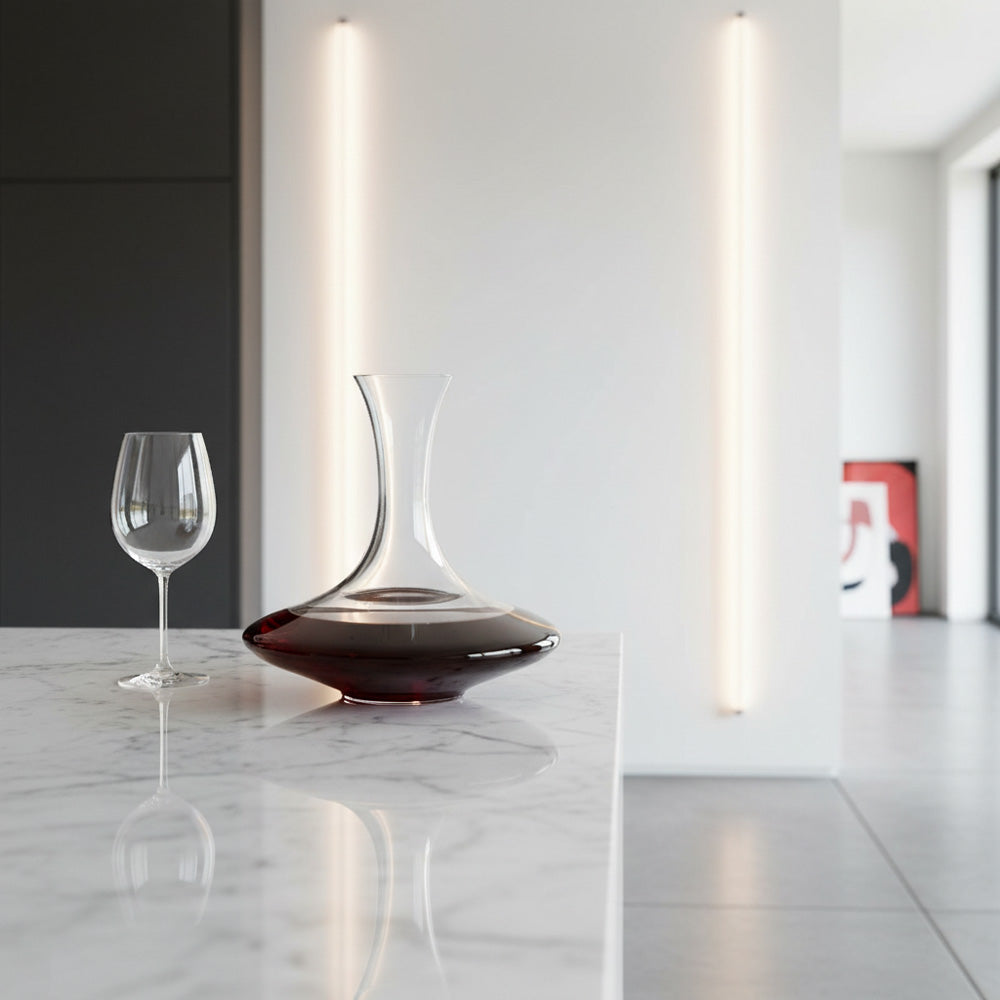
The wine decanter is one of the most recognisable accessories in the world of tasting, but it is often confused with a simple decorative carafe. In reality, the decanter has a precise technical function: helping wine express itself better in the glass, through oxygenation or the separation of sediments.
Knowing when to use the decanter is important because not all wines react to contact with air in the same way. Some young and structured reds improve noticeably after being transferred, becoming softer and more open in their aromas. Other wines, especially very old or delicate ones, must instead be handled with extreme care.
In this Alberoshop.it guide, we look at what the decanter is for, which wines to decant, when to avoid it and how to choose between a wide-base decanter and a narrow-neck decanter, with a selection of Riedel and Nude Glass models designed for those who want to serve wine with greater care and awareness.
The decanter is not just for “show”: it can help a young wine open up or separate the sediments of a mature wine. The right shape depends on the type of bottle you want to serve.
What a wine decanter is for
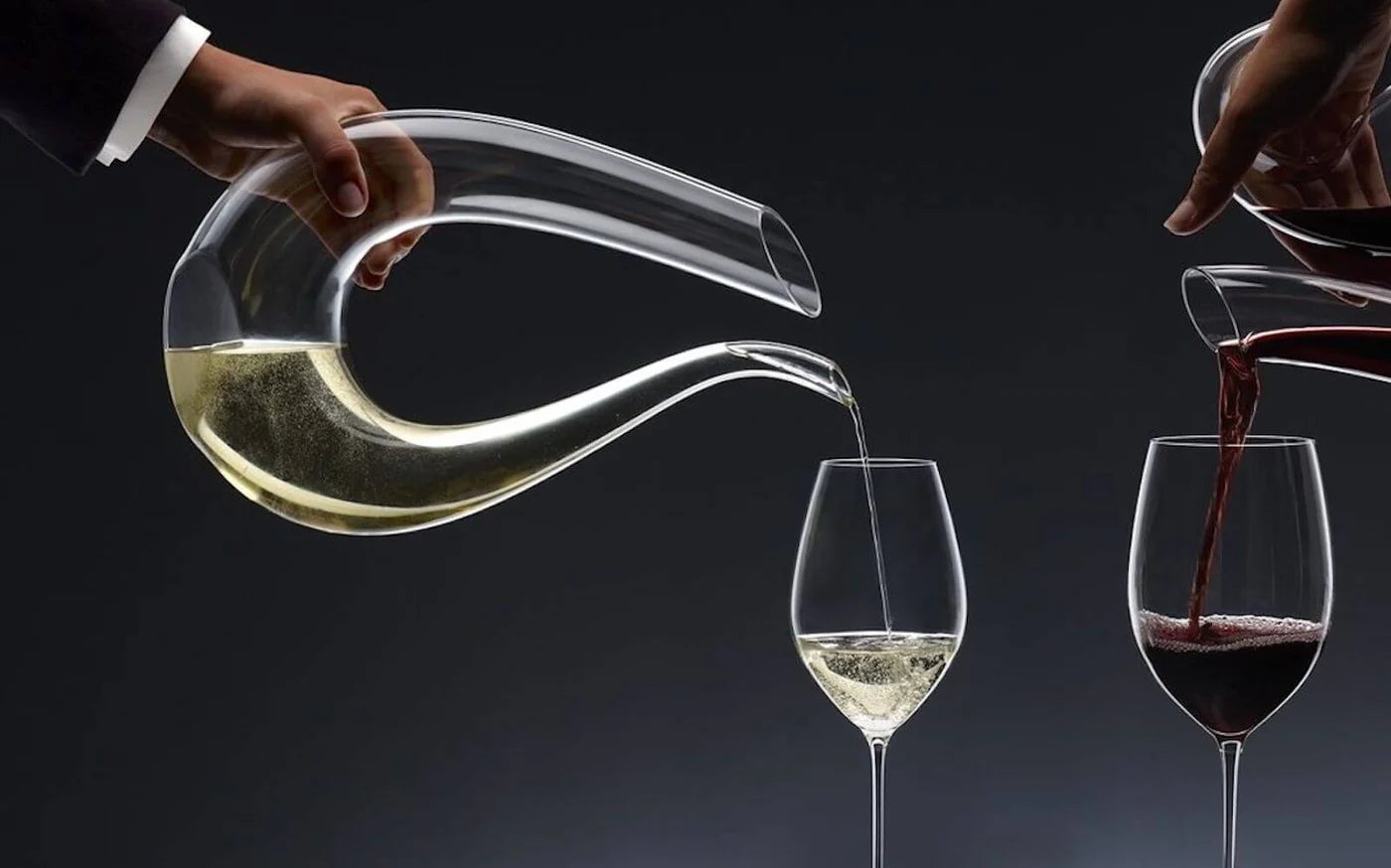
The decanter has two main functions: oxygenating the wine and separating sediments. These are two different operations, often confused with each other, but both important for correctly serving certain types of wine.
1. Oxygenating the wine
Oxygenation, also called aeration, consists of increasing contact between wine and air. This process is especially useful for young, tannic and structured red wines, which can seem closed, harsh or not very expressive when first opened.
Contact with oxygen can soften the perception of tannins and encourage aromas to open up. Notes of ripe fruit, spices, herbs, wood or balsamic nuances may become easier to read after a passage in the decanter.
Oxygenation is especially suitable for wines such as young Barolo, Brunello di Montalcino, Amarone, Cabernet Sauvignon, Syrah, Aglianico, structured Primitivo and other important reds that need time to relax.
2. Separating sediments
In aged red wines, it is normal to find solid deposits at the bottom of the bottle. These sediments are not a defect, but they can be unpleasant in the glass in terms of texture and appearance.
In this case, the decanter is used to slowly transfer the wine, leaving the sediments in the bottle. The aim is not aggressive oxygenation, but to obtain a clearer wine that is more pleasant to serve.
With mature wines, it is important to proceed gently: decanting too energetically can quickly make complex and fragile aromas fade.
When to use the decanter
The decanter should be used when the wine can benefit from contact with air or when it is necessary to separate any deposits. It is not mandatory for every bottle and, in some cases, can even worsen the tasting experience.
Wines to put in the decanter
- Young and structured reds: young Barolo, Brunello, Amarone, Cabernet, Syrah, Aglianico, important Primitivo.
- Tannic wines: bottles that taste harsh, closed or very dry at first sip.
- Wines with reductive notes: when, just opened, they show closed, cellar, sulphur or rubber notes that often fade with air.
- Mature red wines with sediments: to be transferred slowly in order to serve a clearer glass.
Wines not to put in the decanter
- Sparkling wines: Champagne, sparkling wines and Prosecco would quickly lose their perlage.
- Light whites: many fresh and aromatic wines do not need intense oxygenation.
- Young rosés: they are generally served fresh and direct, without passing through a decanter.
- Very old and fragile wines: they can oxidise quickly if exposed to too much air.
Practical rule: if the wine is young, powerful and closed, it can benefit from oxygenation. If it is very old, it should be handled gently and served immediately after transfer.
Wide-base or narrow-neck decanter: which one to choose
The shape of the decanter is not just an aesthetic matter. It directly affects the amount of wine exposed to air and therefore the type of effect you want to achieve.
A wide-base decanter increases the contact surface between wine and oxygen and is ideal for young and structured wines. A narrow-neck decanter, on the other hand, limits exposure to air and is more suitable for mature, delicate wines or wines that need to be separated from sediments.
Wide-base decanter: for young and structured wines
Wide-base decanters are designed to encourage oxygenation. The wide shape allows the wine to spread over a larger surface, accelerating contact with air.
They are suitable for important, young, intense reds rich in tannins. If a bottle just opened seems closed, angular or not very expressive, a wide decanter can help the wine open gradually.
For young, full-bodied and tannic red wines, choose a wide-base decanter: it increases contact with air and helps the wine open before service.
Riedel Ultra Magnum: scenic decanter for great reds
For those looking for a scenic and technical decanter, the Riedel Ultra Magnum Glass Decanter 200 cl is an important choice, suitable for structured wines and high-impact service.
Its generous capacity and wide shape make it suitable for young, full-bodied and complex red wines that need to oxygenate before service. It is a solution suited both to conscious tasting and to an elegant table, where wine service becomes part of the experience.
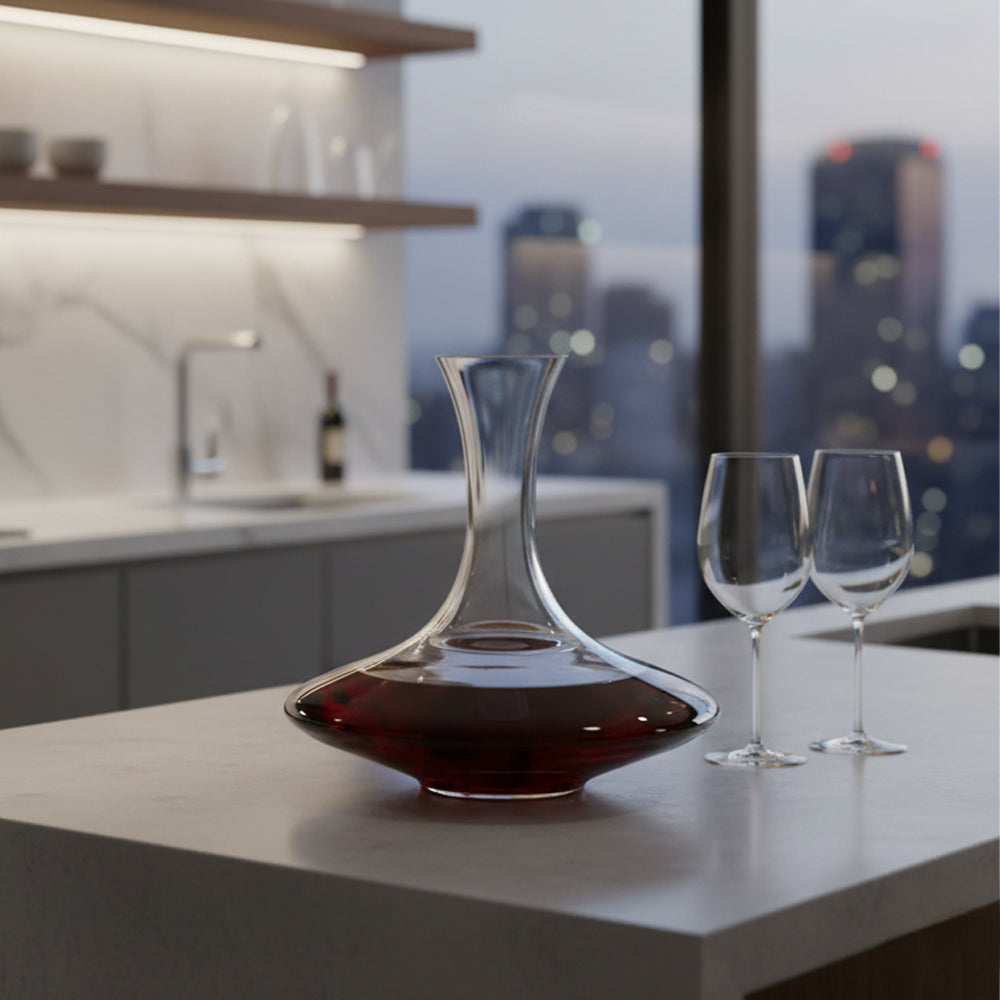
Riedel Ultra Magnum is suitable for young, important and structured red wines: the wide base encourages oxygenation and makes service scenic, ideal also for bottles to share at the table.
Nude Glass Balance: modern and essential decanter
A more essential and contemporary solution is the Nude Glass Balance 1 litre Glass Decanter, suitable for those who want an elegant, functional accessory that is easy to integrate into a modern mise en place.
Its clean line makes it suitable for those looking for a less scenic but very versatile decanter, perfect for dinners at home, informal tastings and everyday service of red wines that need brief aeration.
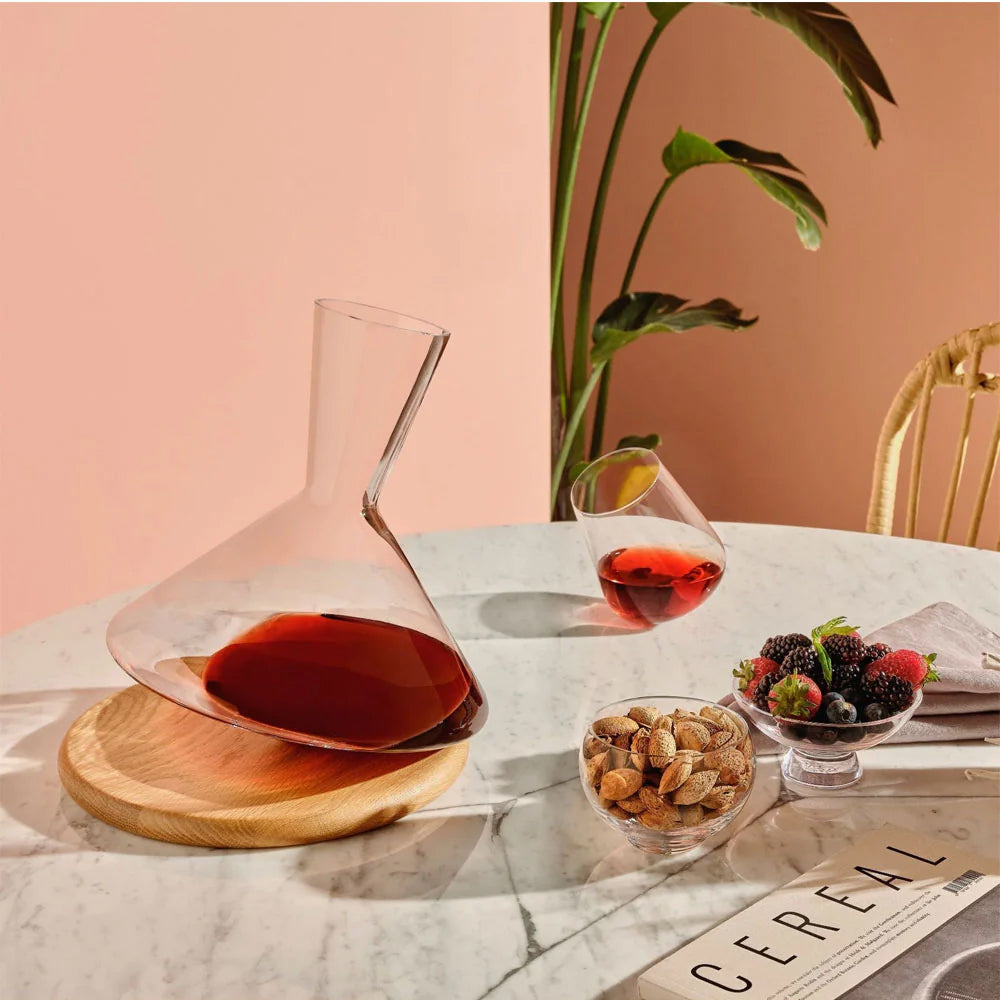
Nude Glass Balance is an essential and modern decanter, perfect for those looking for a clean shape, practical 1 litre capacity and an elegant accessory to use both at dinner and during an informal tasting.
Narrow-neck decanter: for mature wines and controlled service
Narrow-neck decanters have a more slender shape and are designed for a more delicate transfer. They limit the wine’s exposure to air and allow greater control during service.
They are particularly useful with mature bottles, evolved red wines or labels with sediments. In these cases, the decanter should not “push” oxygenation, but gently accompany the wine into the glass.
For mature or delicate wines, a narrow-neck decanter is better: it allows a more controlled transfer and reduces the risk of oxygenating the wine too quickly.
Riedel Swan: elegant decanter for scenic service
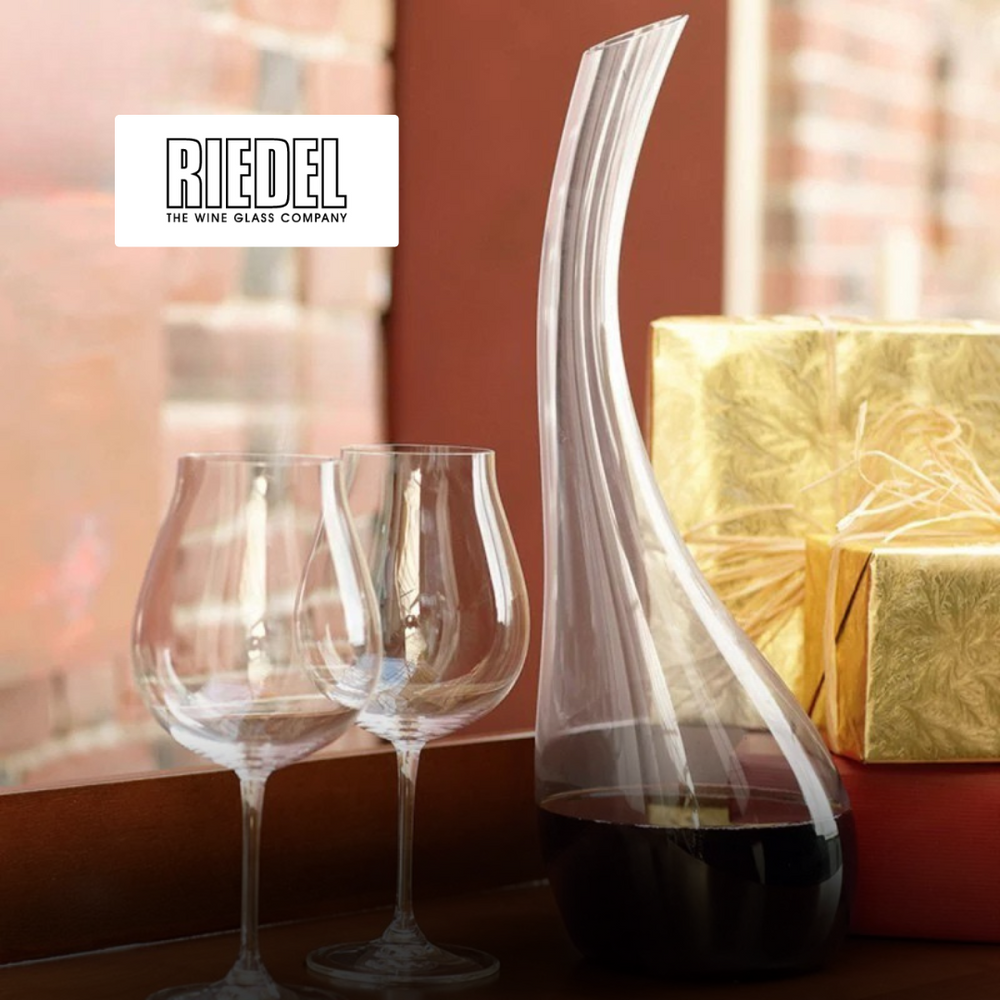
The Riedel Swan Glass Decanter 157 cl is a scenic model, with a slender and distinctive shape, designed for those looking for a decanter that combines technical function and strong aesthetic presence.
Its swan-inspired silhouette makes it a very recognisable table accessory. It is suitable for those who want to enhance the moment of service, especially with mature wines or bottles to present with greater care.
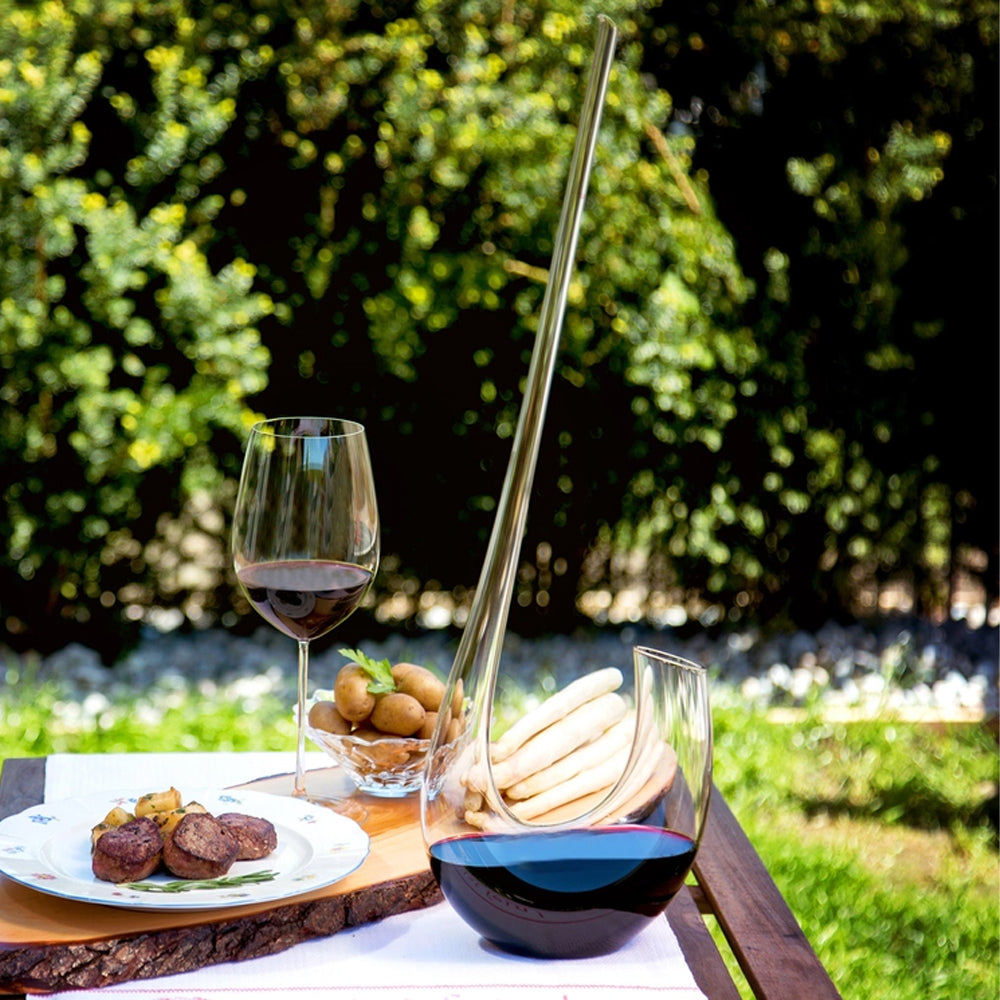
Riedel Swan combines a scenic silhouette with controlled service: it is suitable for those who want to bring an elegant decanter to the table, ideal for mature wines or for a more delicate transfer.
Riedel Amadeo: iconic decanter for tasting and gifting
The Riedel Amadeo Glass Decanter 150 cl is another iconic model, suitable for those who want to bring an elegant, refined and recognisable accessory to the table, also ideal as a gift idea for wine enthusiasts.
Its sculptural shape makes it particularly suitable for those looking for a decanter with strong aesthetic impact, without giving up the technical function of controlled transfer and service.
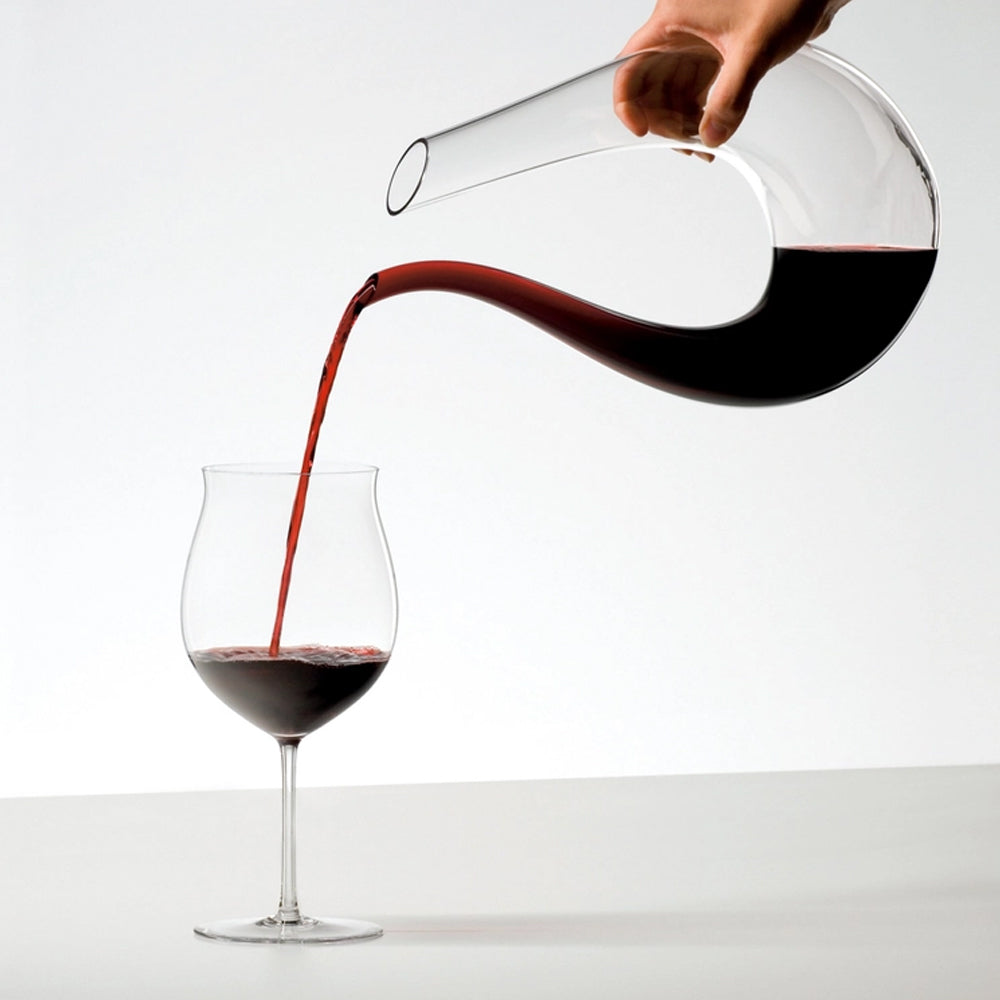
Riedel Amadeo is an iconic and refined decanter, designed for those looking for a tasting accessory with strong aesthetic value: a suitable choice for wine service and also as an important gift.
Quick table: which decanter to choose
| Type of decanter | Ideal for | Main function | Recommended products |
|---|---|---|---|
| Wide base | Young, tannic and structured reds | Broad and rapid oxygenation | Riedel Ultra Magnum, Nude Glass Balance |
| Narrow neck | Mature, delicate wines or wines with sediments | Controlled transfer and more delicate service | Riedel Swan, Riedel Amadeo |
How long before serving to decant wine
Decanting time depends on the type of wine, the age of the bottle and its structure. There is no rule valid for all wines, but some practical indications help guide the choice.
- Young and powerful reds: from 30 minutes to 2 hours before service, depending on structure.
- Medium-structured reds: around 20-40 minutes may be sufficient.
- Mature wines: transfer shortly before service, avoiding prolonged exposure.
- Very old wines: maximum caution; it is often better to open, evaluate and serve quickly.
The best advice is to taste the wine after opening. If it appears closed, tight or dominated by hard tannins, it may be useful to transfer it into a decanter. If, on the other hand, it is already balanced and pleasant, intervention is not always necessary.
How to use the decanter correctly
Using the decanter is not complicated, but some steps allow you to obtain a better result and avoid common mistakes.
1. Prepare the bottle
If the wine is mature and may contain sediments, keep the bottle upright for a few hours before service. This way the deposits collect at the bottom and transfer will be easier.
2. Season the decanter with wine
Before pouring all the wine, you can rinse the decanter with a small amount of the same wine. This step helps eliminate any residual closed or dusty odours.
3. Pour slowly
Let the wine run along the inner wall of the decanter. If the aim is oxygenation, you can use a wider and controlled movement. If you are separating sediments, the transfer must be slow and delicate.
4. Check the sediments
When decanting a mature wine, watch the neck of the bottle while pouring. As soon as the sediments approach the exit, stop the transfer.
5. Serve at the correct temperature
The decanter does not replace the correct serving temperature. A red wine that is too warm will seem heavy and alcoholic, while a wine that is too cold may appear closed and not very expressive.
How to clean the decanter
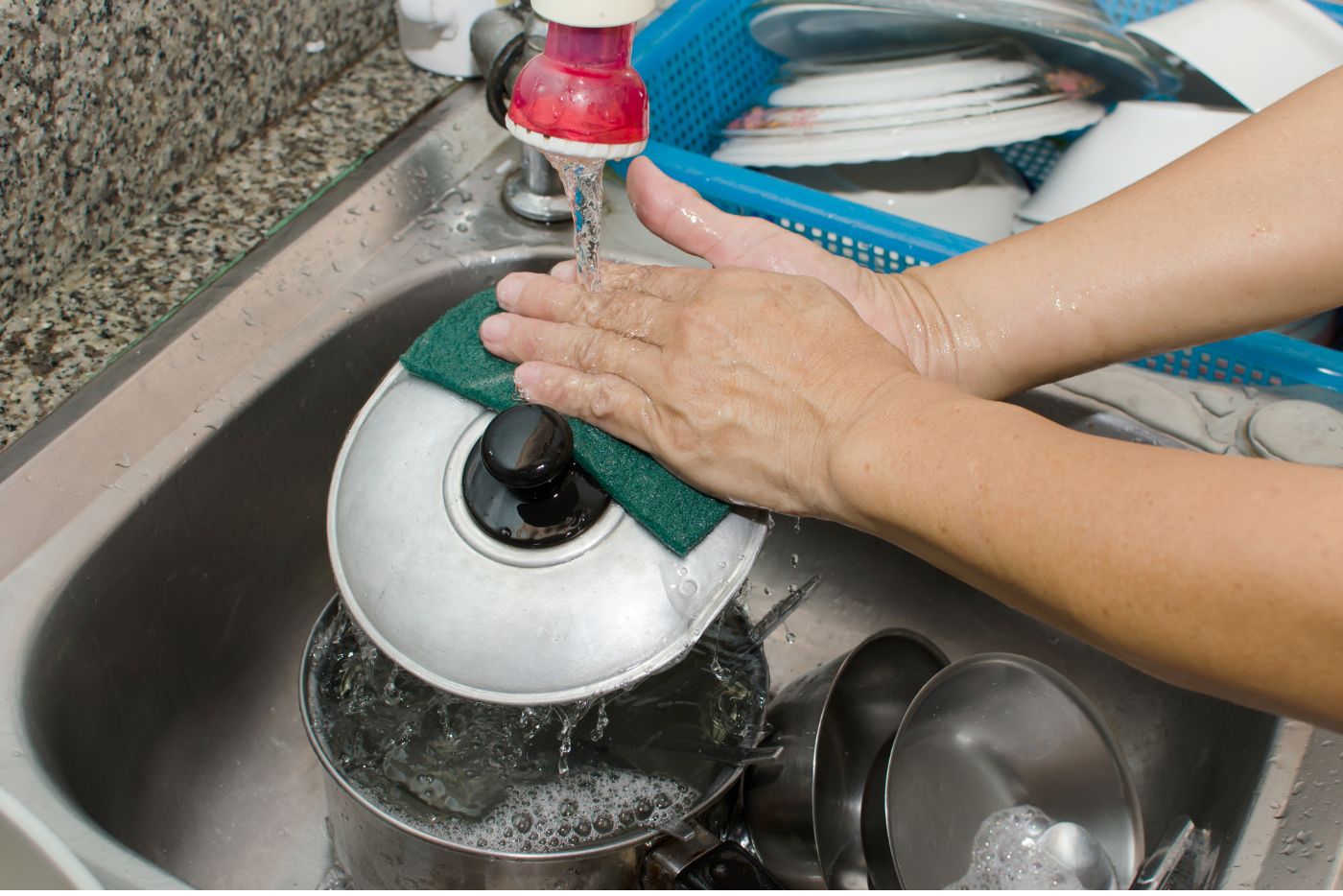
Cleaning the decanter is essential because glass can retain odours, streaks and residues. After use, it is advisable to wash it immediately with hot water, avoiding aggressive or heavily scented detergents.
To dry the glass without leaving lint or marks, it can be useful to use a specific microfibre cloth, such as the Riedel Microfibre Decanter Cleaning Cloth.
Cleaning mistakes to avoid
- Leaving wine residue in the decanter for many hours.
- Using scented detergents that can leave odours.
- Drying with cloths that release fibres.
- Storing the decanter while still damp.
- Using abrasive sponges that can scratch the glass.
After use, wash the decanter immediately with hot water and dry it with a suitable cloth: the brilliance of the glass matters as much as wine service.
Wine decanter: frequently asked questions
Is the decanter really useful?
Yes, but not for all wines. It is especially useful for oxygenating young and structured reds or for separating sediments in mature wines. It should not be used automatically with every bottle.
What is the difference between a decanter and a carafe?
A carafe is mainly used to contain and serve liquids. The decanter, on the other hand, is designed to improve wine service, encouraging oxygenation or controlled transfer.
Which red wines should go in the decanter?
Mostly structured, tannic and young reds should go in the decanter, such as Barolo, Brunello, Amarone, Cabernet Sauvignon, Syrah, Aglianico and important Primitivo. Mature red wines with sediments can also be decanted, but very gently.
Can white wine be put in the decanter?
Some complex and structured whites can benefit from brief oxygenation, but most fresh, young and aromatic whites do not need a decanter. When in doubt, it is better to proceed cautiously.
Should sparkling wines be decanted?
Generally no. Champagne, sparkling wines and Prosecco risk quickly losing their perlage if poured into a decanter. Very specific cases are exceptions, but they are not the norm in home service.
Is a wide-base or narrow-neck decanter better?
The wide-base decanter is more suitable for young wines to be oxygenated. The narrow-neck decanter is preferable for mature, delicate wines or wines with sediments, because it allows more controlled service.
Conclusion: the right decanter enhances wine at the moment of service
The decanter is not just an aesthetic accessory. It is a useful tool for serving wine better, respecting its evolution and enhancing bottles that need air or careful transfer.
For young and structured reds, a wide-base decanter such as the Riedel Ultra Magnum or the Nude Glass Balance can help oxygenation. For more mature or delicate wines, narrow-neck models such as the Riedel Swan and the Riedel Amadeo offer more controlled and refined service.
On Alberoshop.it you will find a dedicated selection of wine decanters for tasting, table service and gift ideas for enthusiasts. Discover the complete collection of wine decanters and choose the model best suited to your bottles.