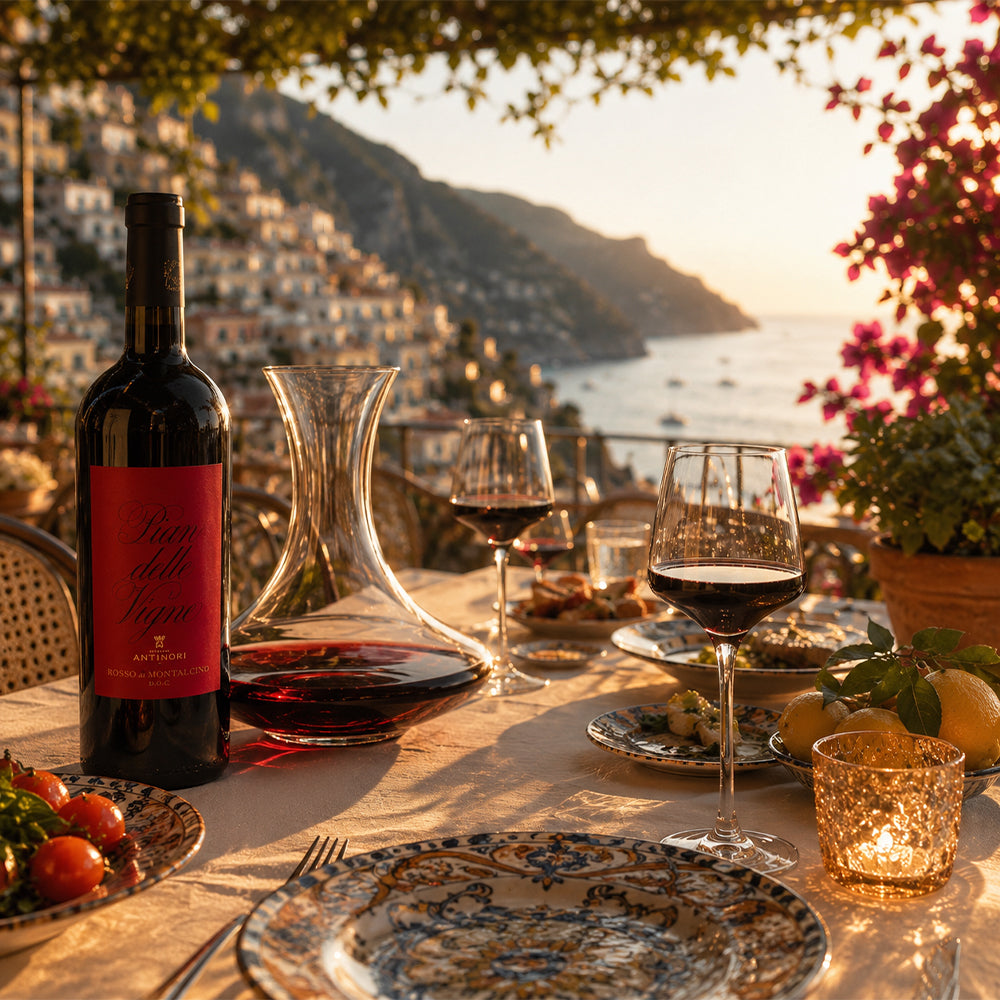
Summer Red Wine: Why a Decanter Can Make a Difference
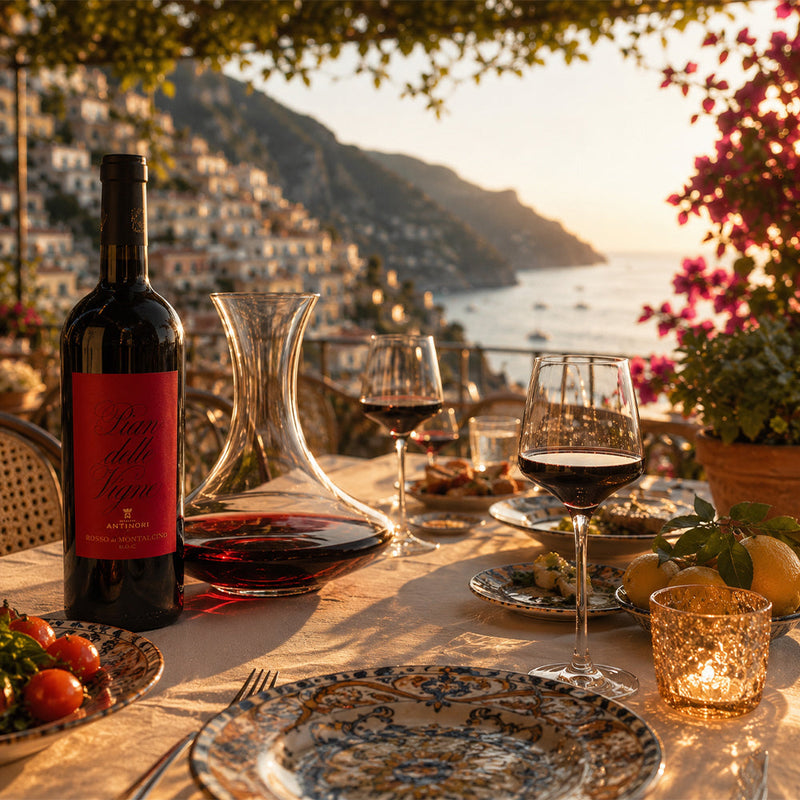
Drinking a good red wine in summer is not a mistake at all. However, when temperatures rise, it's even more important to choose the right bottle and pay attention to serving. A red wine served too warm can feel heavy, alcoholic, and poorly defined, while the same wine, served at the correct temperature, can display freshness, balance, and surprising drinkability.
The quality of the tasting experience mainly depends on three elements: temperature, oxygenation, and the shape of the glass. The decanter can specifically address the second aspect, helping some wines to better express their aromas, structure, and smoothness.
Not all reds need to be decanted, and not all require the same temperature. Understanding how to proceed allows you to avoid common mistakes and enhance young, fruity, or moderately structured wines even during the summer.
Red wine doesn't have to be set aside when the heat arrives. Just choose a balanced label and serve it a few degrees below normal room temperature.
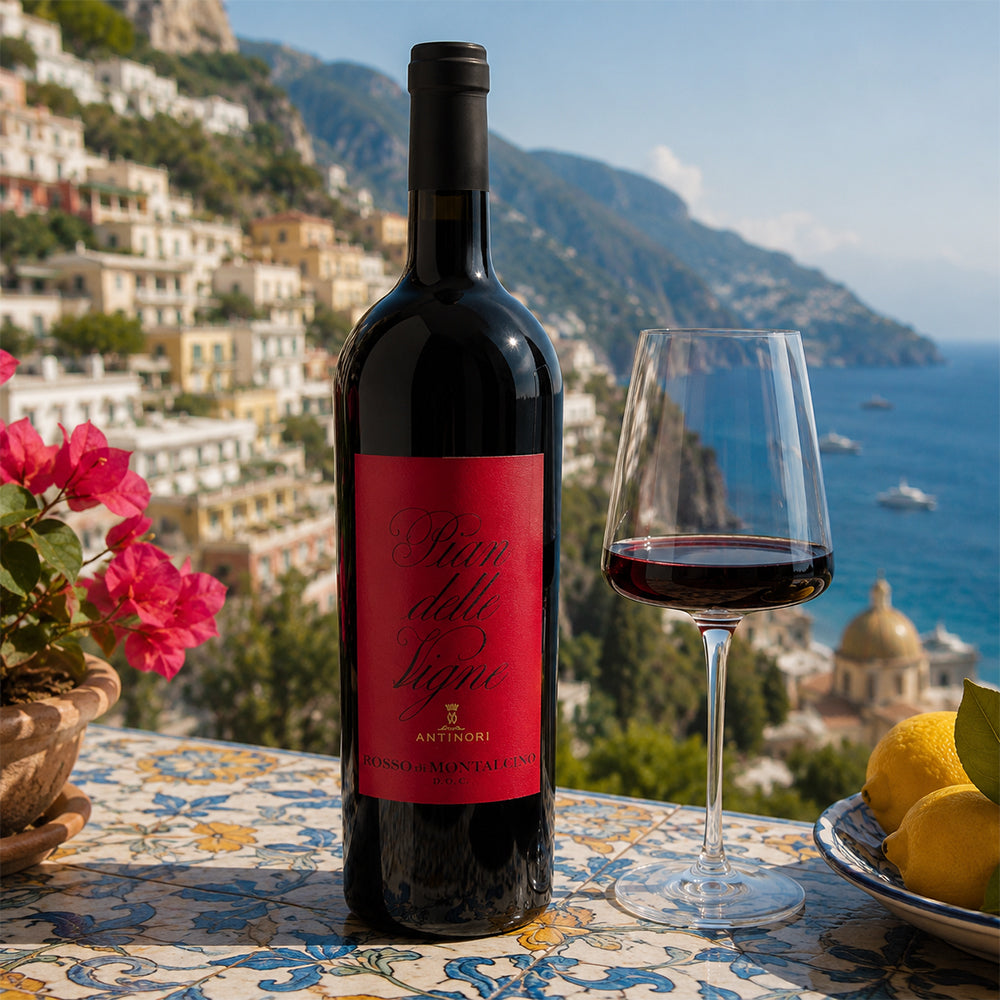
Can you drink red wine in summer?
Yes, red wine can be enjoyed even in summer. The season doesn't necessarily mean switching only to white, rosé, or sparkling wines. It's more useful to choose reds characterized by good acidity, non-aggressive tannins, moderate body, and a well-defined fruity component.
The easiest summer red wines to serve are generally young, not overly concentrated, and without excessive alcohol content. They can accompany appetizers, light first courses, white meats, cured meats, fresh cheeses, grilled vegetables, and outdoor dinners.
A full-bodied and complex red can still be appreciated in the warm months, especially during an important dinner. In this case, it's even more important to control the temperature, choose an appropriate glass, and carefully consider decanting.
What characteristics should a summer red wine have?
A red wine suitable for summer should maintain a fresh and dynamic sensation on the palate. There is no official category of summer red wine, but certain characteristics help identify the most suitable bottles.
- Good acidity: makes the sip fresher and less heavy.
- Soft tannins: avoid an excessively dry or rough sensation.
- Medium or light body: facilitates tasting even on a hot day.
- Fruity aromas: notes of cherry, raspberry, strawberry, and small fruits make the wine more immediate.
- Balanced alcohol content: a non-dominant alcoholic component enhances the sip's pleasantness.
The selection of red wines on Alberoshop.it allows you to compare different labels by origin, structure, and style, choosing the bottle most suitable for the menu and the season.
What is the ideal temperature for summer red wine?
The ideal temperature for summer red wine generally ranges between 12°C and 18°C, depending on the bottle's structure. Young and light reds can be served between 12°C and 15°C, while medium-bodied ones generally show their best between 15°C and 17°C. More complex and structured wines can reach 18°C.
The traditional advice to serve red wine at room temperature comes from a context where environments were significantly cooler than modern homes. In summer, a room can easily exceed 25°C: at this temperature, the wine often becomes unbalanced, and the alcohol component tends to overshadow aromas and freshness.
| Type of red wine | Indicative temperature | Recommended service |
|---|---|---|
| Young and light red | 12-15°C | Brief refrigeration before serving |
| Medium-bodied red | 15-17°C | Cool service and medium-sized glass |
| Structured red | 17-18°C | Temperature control and possible decanting |
| Sparkling red | 10-14°C | Cool service without prolonged oxygenation |
How long should red wine be left in the fridge?
On a typical summer day, it may be sufficient to leave a bottle of red wine in the fridge for about 20-40 minutes before serving. The actual time depends on the starting temperature, the wine's structure, and the fridge's temperature.
It's preferable to cool the wine gradually, avoiding leaving it for hours at too low temperatures. A red served excessively cold may appear closed, less aromatic, and more tannic. However, once poured into the glass, it will regain temperature fairly quickly.
What is wine decanting?
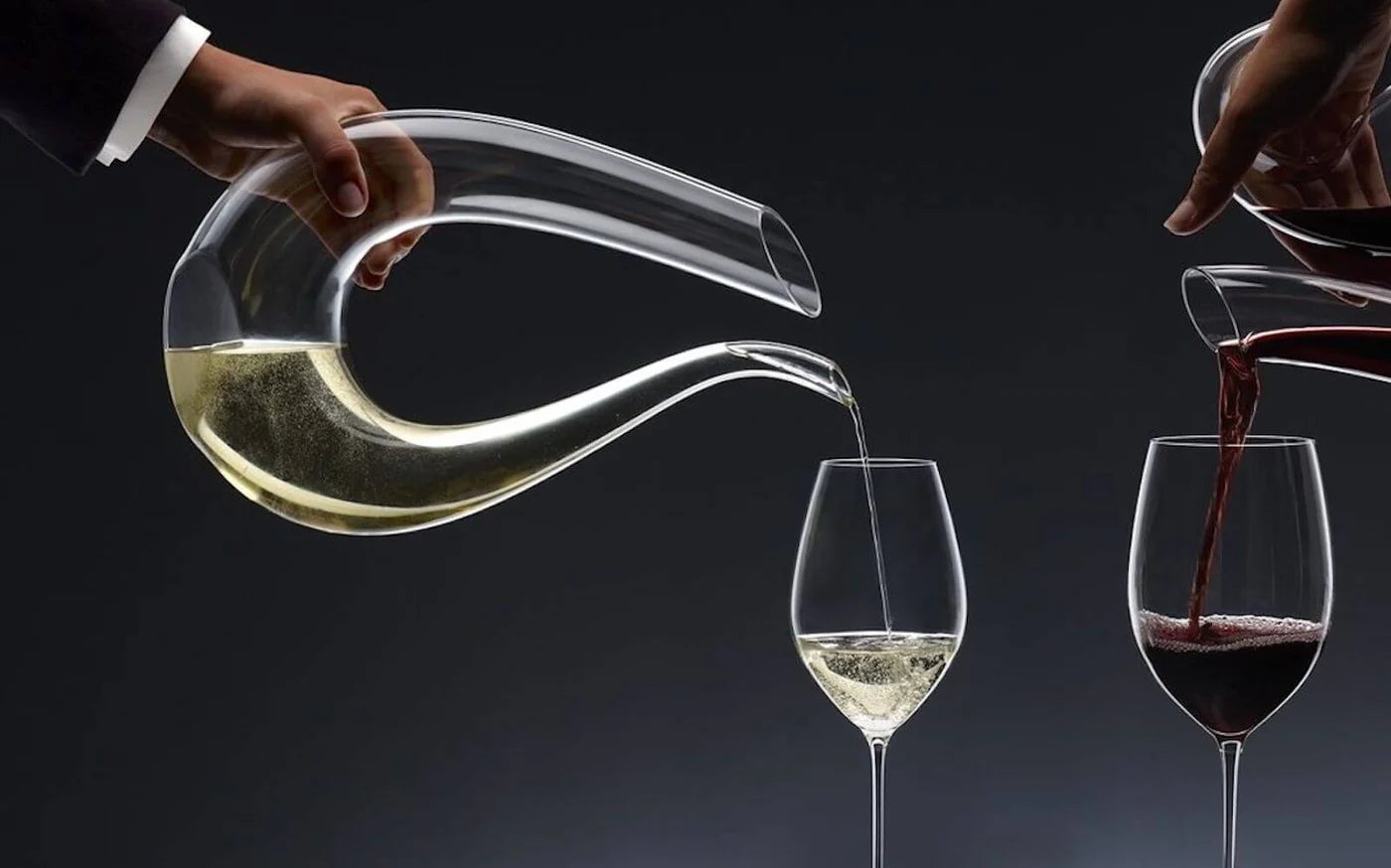
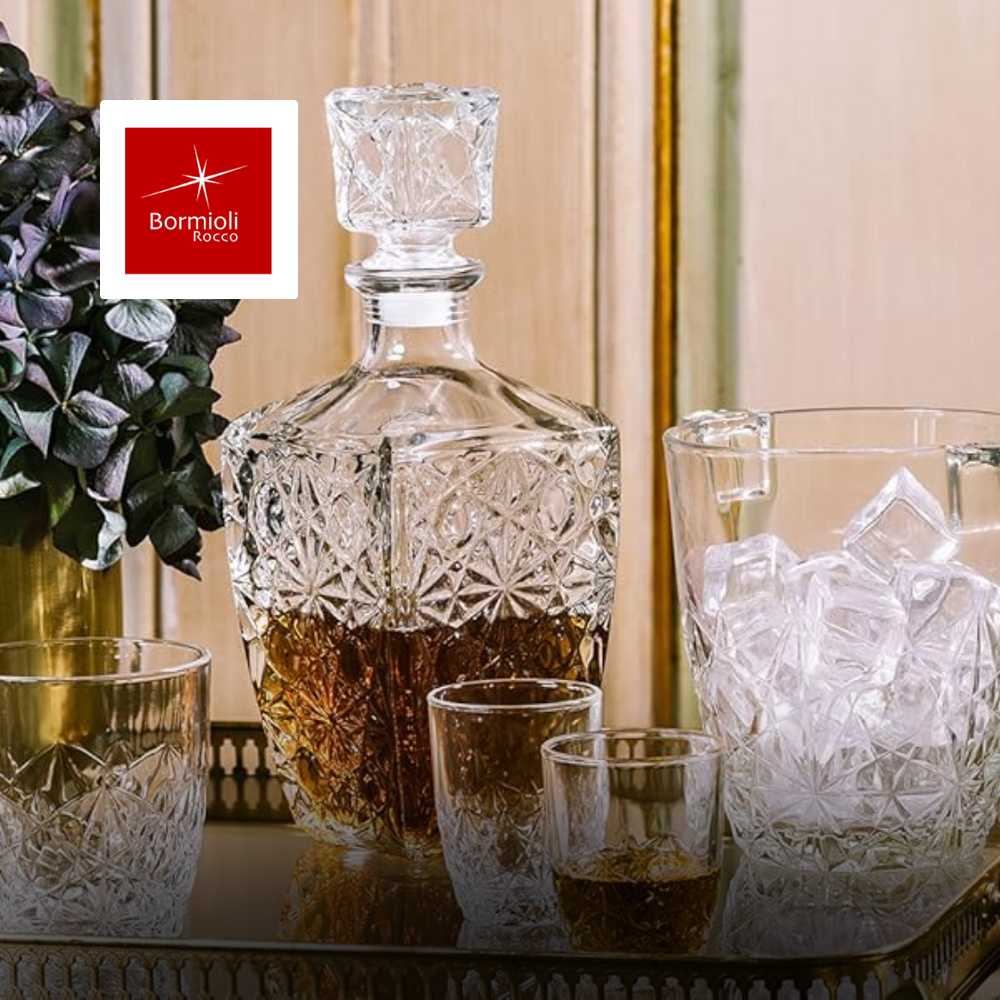
Decanting involves transferring wine from the bottle to a vessel called a decanter. This operation can have two different functions: separating any sediments present in aged bottles or increasing the wine's contact with oxygen.
In common language, decanting and oxygenation are often used as synonyms. Technically, however, a young bottle is usually poured into the decanter to encourage aromatic opening, while an aged wine may be decanted primarily to separate it from deposits.
The wide shape of the decanter increases the contact surface between wine and air. This exposure can make some aromas more distinct, temporarily soften closed sensations, and alter the perception of tannins.
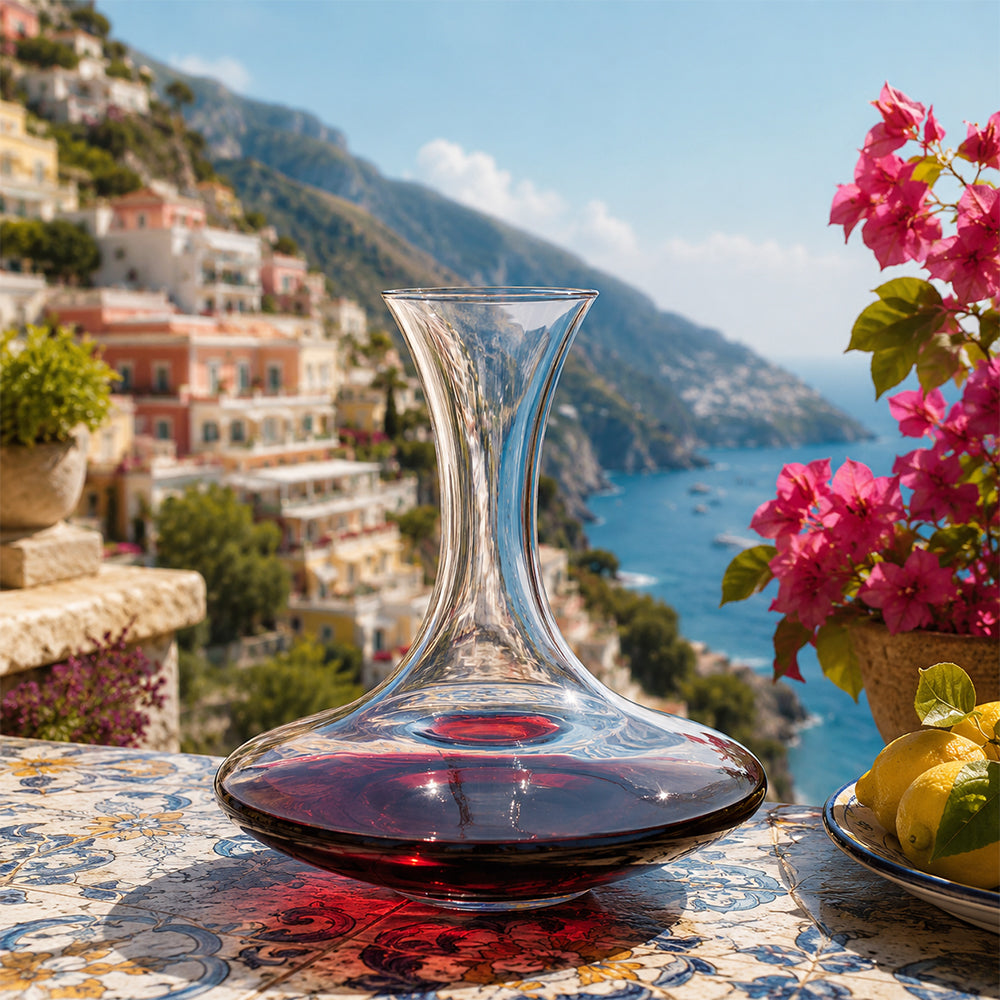
A wide decanter accelerates oxygenation. A narrower shape, on the other hand, allows the wine to evolve gradually and in a controlled manner.
Why use a decanter for summer red wine?
The decanter can enhance the service of summer red wine when the bottle presents initially closed aromas, marked tannins, or a structure that benefits from air contact. It doesn't automatically make the wine cooler, but it can contribute to a more harmonious and readable perception.
During the summer, the decanter can also help organize the service. The bottle can be brought to the desired temperature before decanting, while the wine is left to oxygenate for the necessary time before dinner.
However, it's important to consider that the decanter, especially if very wide, also promotes a rapid increase in temperature. Therefore, it's preferable not to leave it near heat sources or in direct sunlight and not to use excessive oxygenation times.
When should red wine be decanted?
Decanting can be useful for young and structured wines, initially unexpressive bottles, or mature wines with sediments. The procedure varies based on the type.
- Young and structured wine: can benefit from a vigorous pour and increased air contact.
- Mature wine: requires a slow transfer, mainly to separate sediments.
- Initially closed wine: can be tasted and left to breathe for a few minutes.
- Delicate or highly evolved wine: should be handled with care as it may quickly lose its aromas.
When is a decanter not needed?
A decanter is not always necessary. A young, light, and immediately expressive red can be poured directly into the glass. Even very delicate or fully evolved wines can be disadvantaged by excessive oxygenation.
Before decanting the entire bottle, it's advisable to taste a small amount. If the wine is already aromatically open, balanced, and pleasant, it may be sufficient to let it breathe in the glass.
How long should wine stay in the decanter?
The time wine should remain in the decanter can vary from a few minutes to over an hour. There is no one-size-fits-all duration: grape variety, age, structure, storage, and temperature affect how quickly the wine reacts to oxygen.
| Type | Indicative time | Objective |
|---|---|---|
| Young and light red | 0-15 minutes | Brief aromatic opening, if needed |
| Young and structured red | 30-60 minutes | Encourage oxygenation and relaxation |
| Medium-bodied red | 15-30 minutes | Make aromas more readable |
| Mature red with sediments | Decant shortly before serving | Separate wine from deposits |
These guidelines are just a starting point. The most reliable method is to taste the wine before and during oxygenation, observing how aromas, tannins, and balance change.
Decanter or aerator: which to choose?
Both decanters and aerators promote contact between wine and oxygen, but they work with different times and methods. The decanter allows for a gradual evolution, while the aerator acts quickly during pouring.
The aerator is suitable when you want to serve the wine immediately and achieve instant oxygenation. The decanter is more appropriate when you want to follow the bottle's evolution, separate any sediments, or manage the service more gradually.
| Tool | How it works | When to choose it |
|---|---|---|
| Decanter | Gradually exposes wine to air | Tastings, structured wines, bottles with sediments |
| Aerator | Oxygenates wine during pouring | Quick service and young wines |
| Wide glass | Allows slow opening directly in the glass | Already balanced wines or individual tastings |
How to choose the right decanter
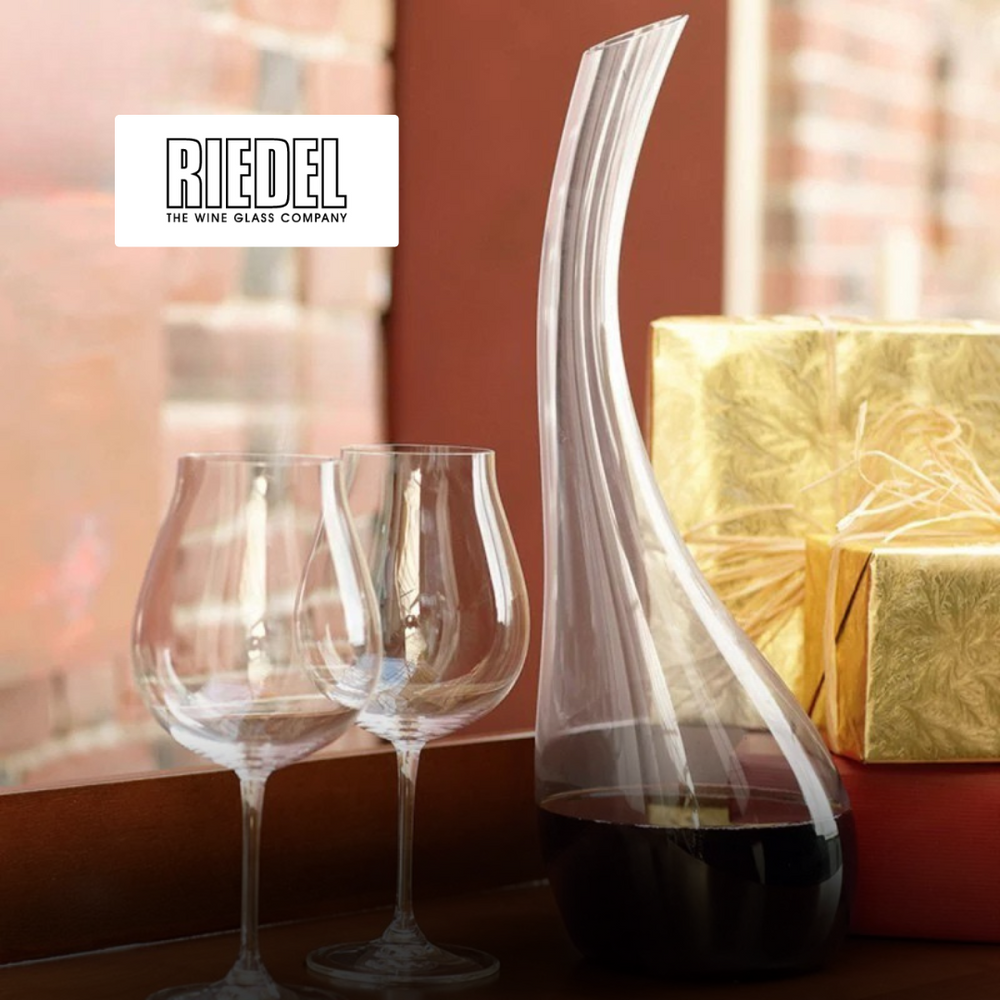
When choosing a decanter, consider shape, capacity, oxygenation surface, and ease of use. A wide base quickly increases contact between wine and air, while a more compact shape allows for gradual evolution.
The spout is also important: it should allow controlled pouring and facilitate cleaning. More elaborate models enhance the service but may require extra care during washing and drying.
Wide decanter
A decanter with a wide base is suitable for young, concentrated, or initially closed wines. The extended surface accelerates oxygenation and makes the process more evident.
Narrow decanter
A model with a narrower shape limits air contact and is suitable for delicate, medium-bodied, or already partially evolved wines.
Large capacity decanter
A larger capacity is useful for magnum bottles, tastings with more people, or wines that require a large oxygenation surface. The nominal capacity doesn't necessarily indicate the amount of wine to pour: the free space serves to increase air contact.
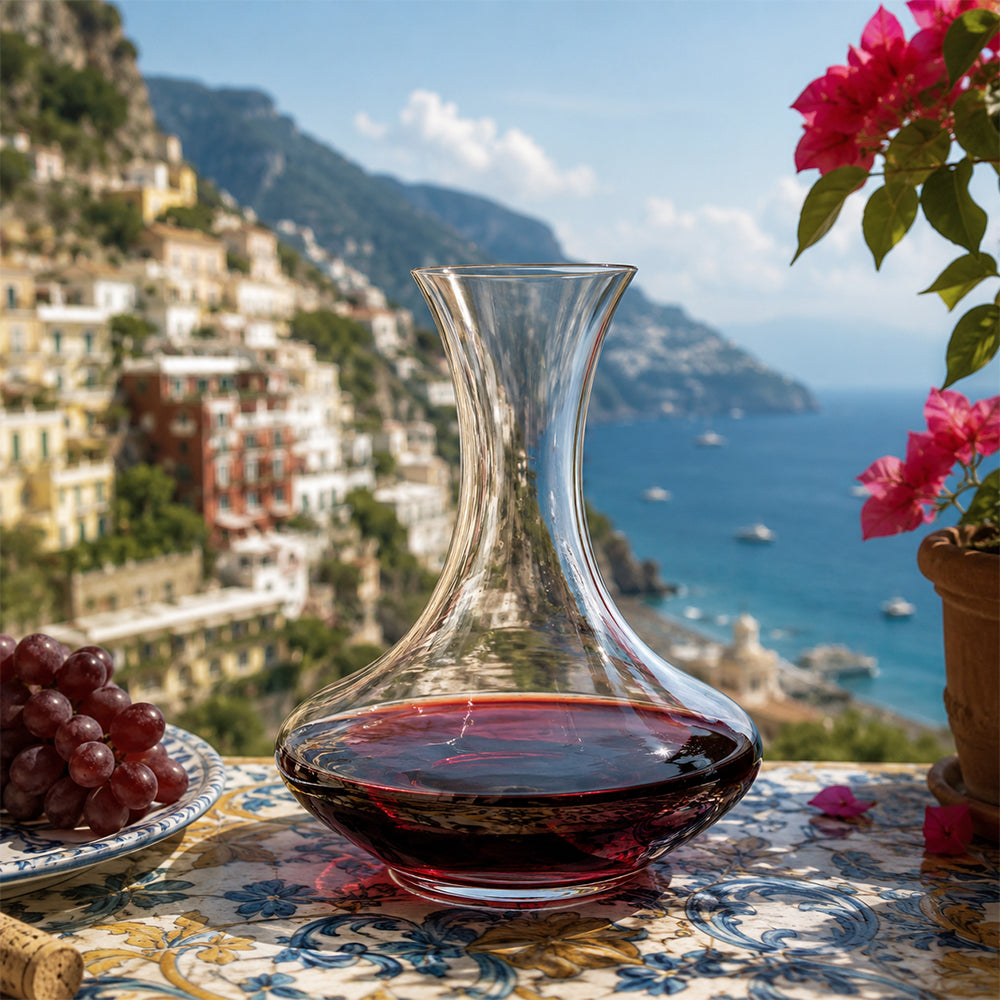
For everyday use, choose a stable decanter that's easy to handle and clean. A more complex shape isn't always the most practical.
Which decanter to choose for everyday use?
For frequent use, it's advisable to choose a versatile, stable, and easy-to-clean decanter. A model with a capacity suitable for a standard bottle and a balanced shape allows for easy management of both young wines and medium-bodied labels.
To compare shapes, capacities, and types, you can consult the collection dedicated to wine decanters.
How to properly serve red wine in summer
To properly serve red wine in summer, it's advisable to organize temperature, opening, and oxygenation with a bit of advance planning. No complex procedures are needed: just adapt the service to the bottle and the ambient temperature.
- Store the bottle away from light and heat sources.
- Cool it gradually before serving.
- Open and taste it before deciding whether to use the decanter.
- Decant only when oxygenation can genuinely improve it.
- Keep the decanter away from the sun and overly warm environments.
- Use a clean, transparent glass proportionate to the wine's structure.
- Pour moderate amounts and refill as needed.
How to keep wine cool during dinner
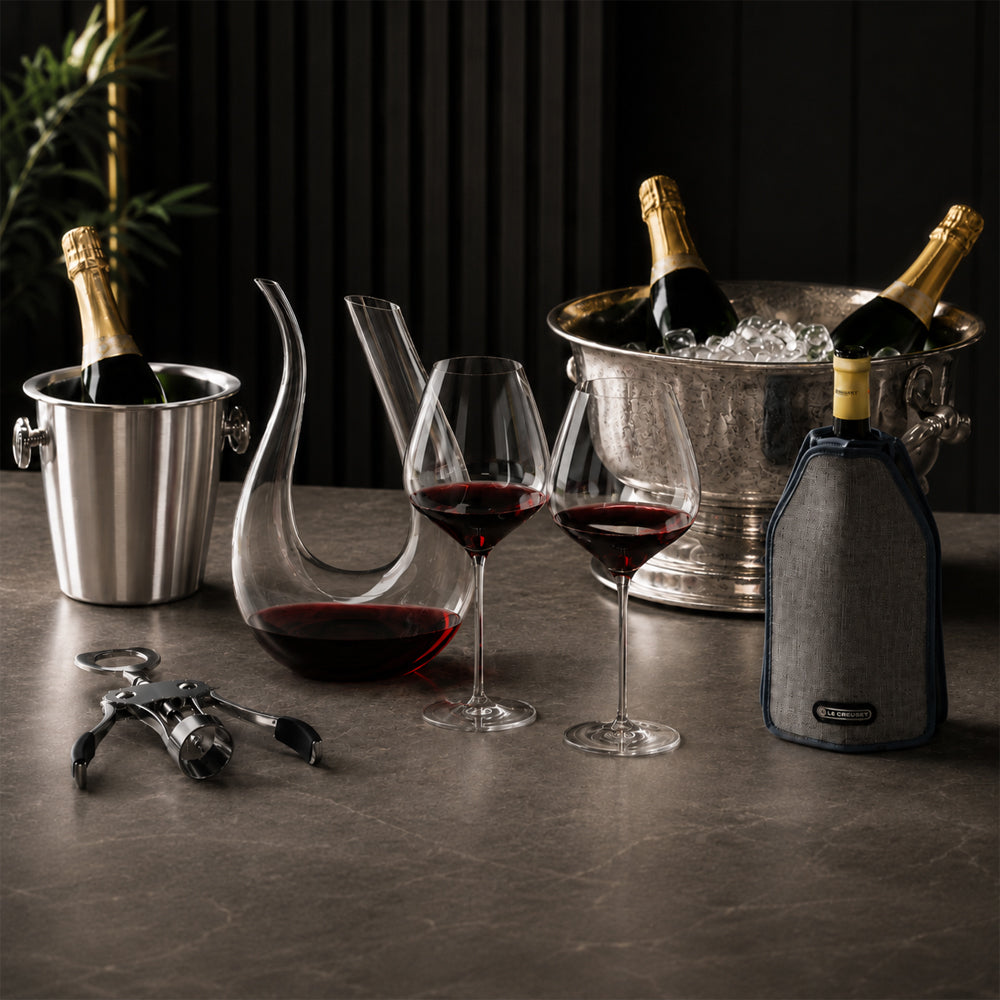
During an outdoor dinner, wine can warm up quickly. You can use a bucket with cool water and a little ice, but avoid over-chilling the bottle. For a red, you don't need to create the same temperature used for a sparkling wine.
Alternatively, you can store the bottle or decanter in a cool indoor environment, bringing it to the table only at the time of service. If the wine is poured in small amounts, it will stay in the glass for a shorter time, making it easier to control its temperature.
Common mistakes with summer red wine
Most mistakes don't concern the choice of wine but how it's stored and served. Avoiding certain habits allows for a more balanced tasting experience.
- Serving wine at 25-30°C: heat accentuates alcohol and heaviness.
- Over-chilling it: very low temperatures reduce aromas and smoothness.
- Decanting every bottle: some wines don't need it and can quickly lose expressiveness.
- Leaving the decanter in the sun: the wide vessel accelerates the temperature increase.
- Overfilling the glass: limits oxygenation and makes the service less controllable.
- Following rigid times: the wine's response to air should be verified through tasting.
- Using warm glasses: a glass just out of the dishwasher can quickly raise the wine's temperature.
Summer red wine and food pairings
A fresh, medium-bodied red wine can accompany many typical summer dishes. The choice should consider intensity, fat content, cooking method, and the presence of spices or sauces.
| Dish | Recommended wine style | Service |
|---|---|---|
| Cured meats and fresh cheeses | Young and fruity red | 12-15°C |
| Pizza and focaccia | Fresh medium-bodied red | 14-16°C |
| Grilled meat | Structured but balanced red | 16-18°C, possible decanting |
| Grilled vegetables | Light red with soft tannins | 12-15°C |
| Tomato-based first courses | Red with good acidity | 14-16°C |
How to properly clean a decanter
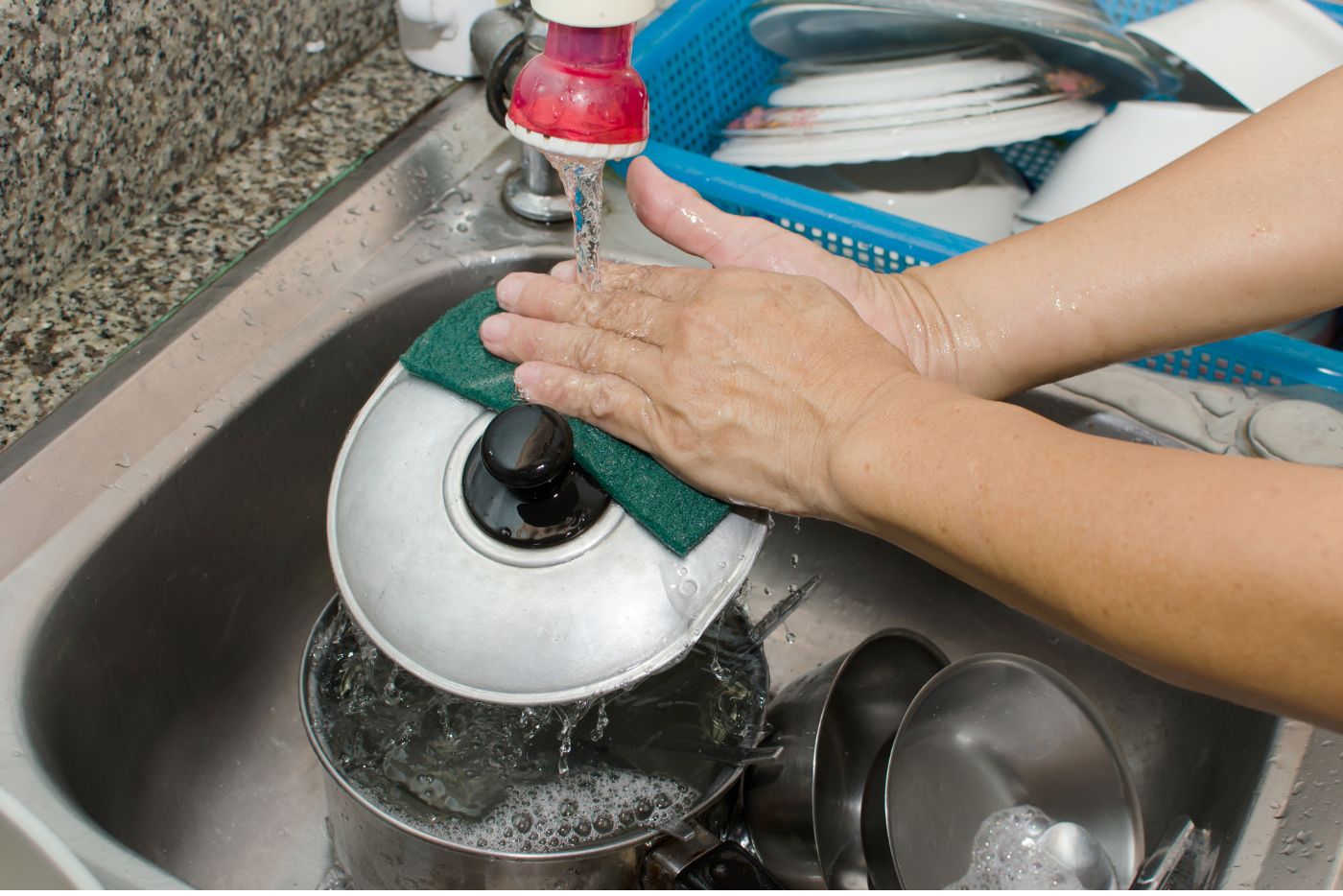
The decanter should be washed immediately after use, avoiding letting residues and pigments dry on the glass. In most cases, warm water and thorough rinsing are sufficient.
Highly scented detergents can leave residues that interfere with the wine's aromas. When the shape makes it difficult to reach the bottom, specific accessories for cleaning decanters can be used.
After washing, the vessel should be allowed to dry completely in a stable and ventilated position. Before reuse, it's important to ensure there are no odors, dust, or water traces.
Serving red wine well even in the hottest months
Summer red wine can be as fresh, balanced, and enjoyable as a white or rosé. The difference mainly depends on the service: controlled temperature, proportionate oxygenation, and an appropriate glass allow the bottle to express itself without feeling heavy.
The decanter is not an obligatory step but a tool to use when the wine can genuinely benefit from it. For young and structured reds, it encourages opening; for mature bottles, it can help separate sediments; for delicate wines, it may be unnecessary.
Choosing among the various wine decanters, using a wine glass proportionate to the wine, and evaluating the bottle before service are small measures that can significantly improve the tasting experience.
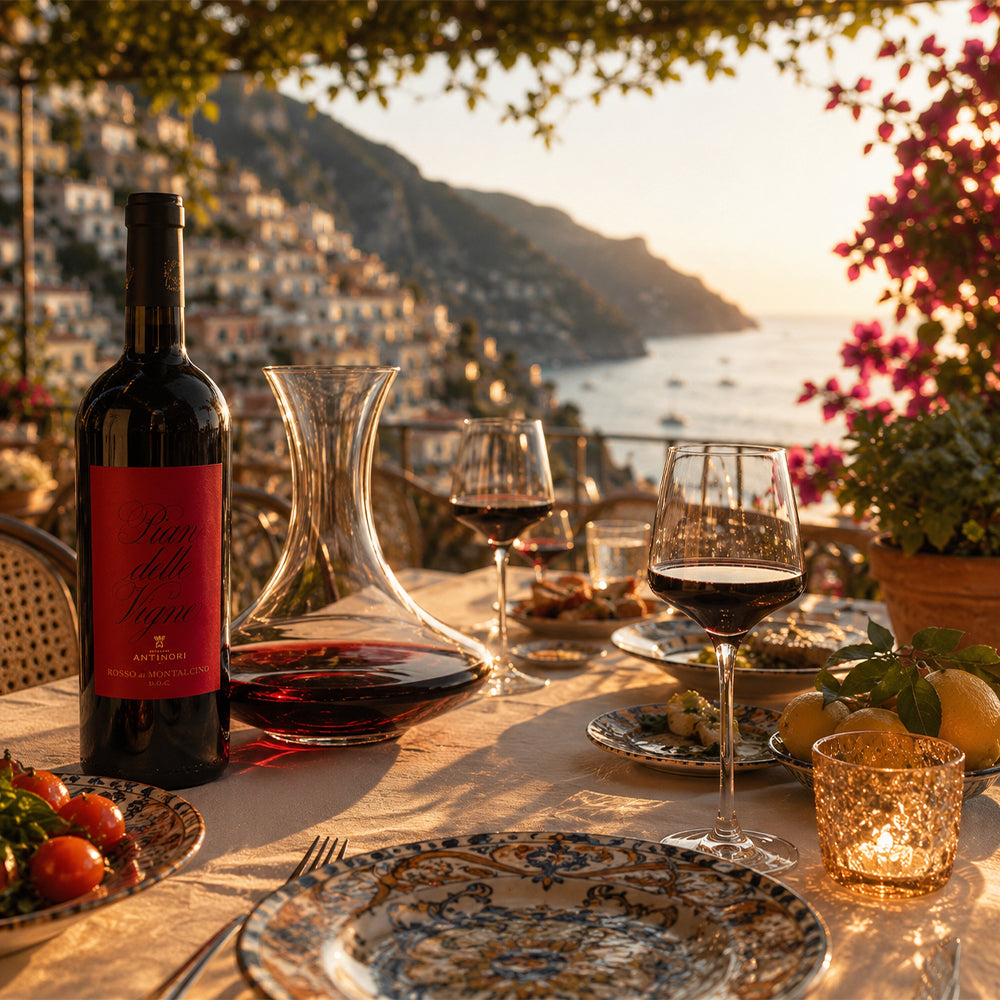
Temperature, decanter, and glass work together. Proper service doesn't change the wine: it simply allows it to express itself better.
Frequently Asked Questions about Summer Red Wine and Decanters
At what temperature should summer red wine be served?
Summer red wine is generally served between 12°C and 18°C. Young and light reds can be brought to the table between 12°C and 15°C, medium-bodied ones between 15°C and 17°C, while structured wines can be served around 18°C.
Can red wine be put in the fridge?
Yes. During the summer, red wine can be left in the fridge for a short period before serving. In many cases, 20-40 minutes are sufficient, but the time depends on the initial temperature of the bottle and the type of wine.
Why does warm red wine seem more alcoholic?
When the temperature rises, the alcohol component becomes more evident and can overshadow aromas, acidity, and freshness. This is why a red wine served too warm can feel heavy and unbalanced.
When should red wine be put in a decanter?
A decanter can be useful for young and structured wines, initially closed wines, or mature bottles with sediments. Before using it, it's advisable to taste the wine to determine if oxygenation can genuinely improve it.
How long before should wine be decanted?
A young and structured wine may require 30 to 60 minutes, while a medium-bodied red may be ready after 15-30 minutes. Mature wines are often decanted shortly before serving to limit oxygen exposure.
Do all red wines need to be decanted?
No. Light, immediately expressive, or particularly delicate reds can be served directly in the glass. Excessive decanting can reduce the aromatic freshness of some wines.
What is the difference between a decanter and an aerator?
A decanter allows wine to gradually oxygenate within a vessel. An aerator accelerates air contact during pouring and offers a more immediate result.
Is a wide or narrow decanter better?
A wide decanter promotes faster oxygenation and is suitable for young and structured wines. A narrow model limits air contact and is more suitable for delicate or already evolved wines.
Does a decanter keep wine cool?
No. A decanter is not designed to cool wine and, by increasing the surface exposed to the environment, can accelerate warming. During summer, it should be kept away from the sun and heat sources.
Which glass should be used for summer red wine?
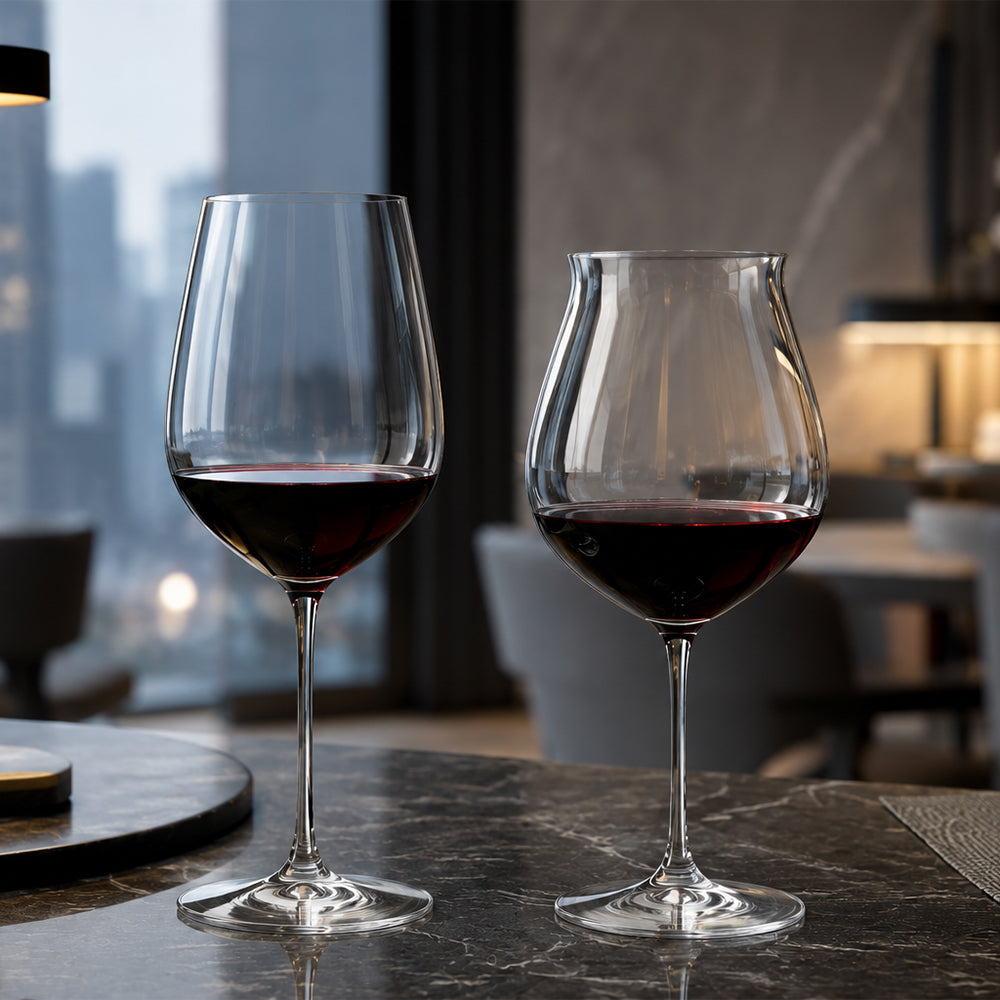
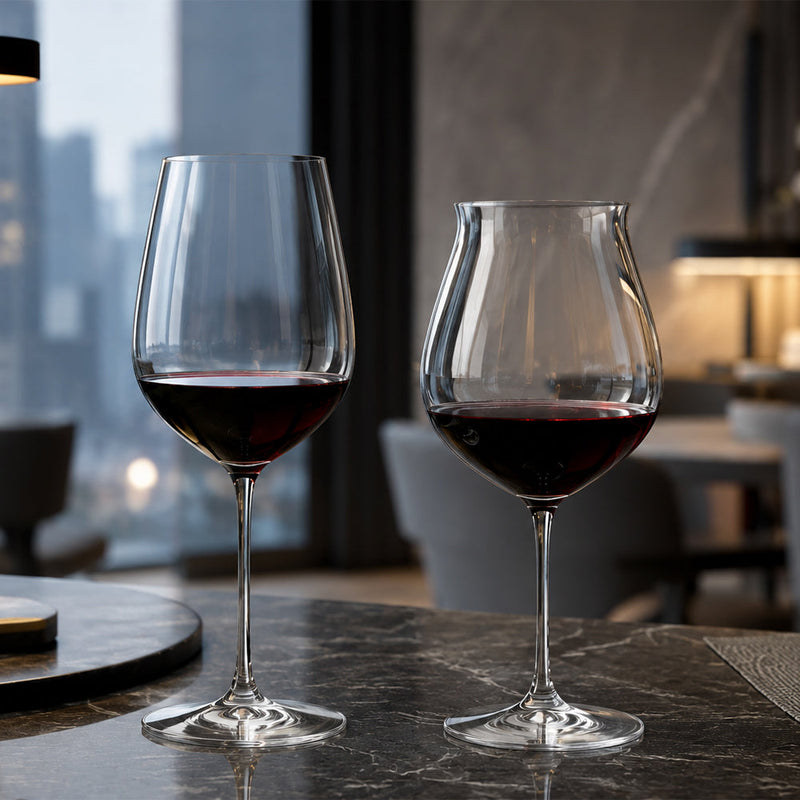
For a young and light red, a medium-sized glass is suitable. More structured wines require a larger bowl, capable of enhancing aroma development and gradual oxygenation.