Autumn wines: which ones to choose and which glass to serve them in
Autumn changes the kitchen. Mushrooms, roasts, braises, mature cheeses, ragù and dishes that, after three months of salads, finally remind us why we bought a casserole dish all come back.
And inevitably, what we feel like pouring into a glass changes too.
But simply saying “red wine” only gets you so far.
Pinot Noir and Brunello di Montalcino are both reds, yet they can have very different structure, tannins, intensity and aromatic profiles. Choosing an autumn red wine therefore means thinking not only about the bottle, but also the dish, serving temperature and glass.
The bottle matters. The glass does too.
Autumn does not force you to drink red. But with mushrooms, roasts, braises and aged cheeses, we have to admit we are practically setting the table for it.

Which wines should you choose in autumn?
There are no wines officially reserved for a season. Nobody will confiscate your Pinot Noir because you opened it in August.
There are, however, wines that find especially interesting ground in autumn food pairings.
More substantial dishes make it possible to enjoy wines with more body, aromatic intensity and tannin. At the same time, you do not have to begin with the most powerful bottle in the cellar.
Your choice should mainly follow the dish.

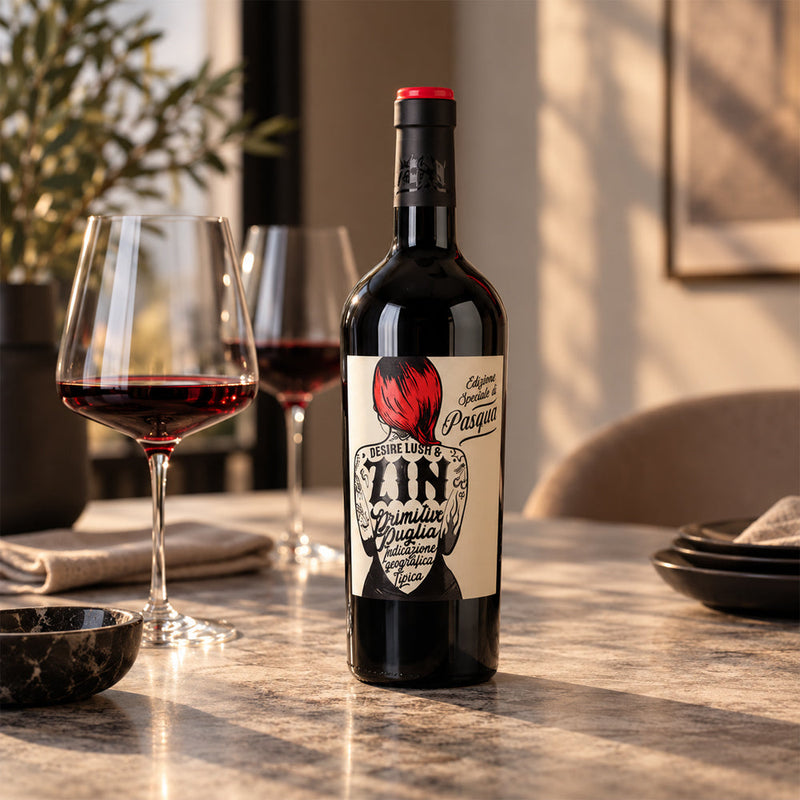
Pinot Noir, Ripasso, Primitivo or Brunello? Before looking at the name on the bottle, look at what is on your plate: pairing always starts there.
Pinot Noir: elegance before muscle
Pinot Noir is a good choice when an autumn menu remains relatively delicate.
Its elegance, aromatic quality and usually less imposing structure than other great reds make it suitable for dishes that do not need to be overwhelmed.
It can pair well with:
- mushrooms;
- white meat;
- risotto;
- pasta dishes with not overly intense sauces;
- medium-aged cheeses.
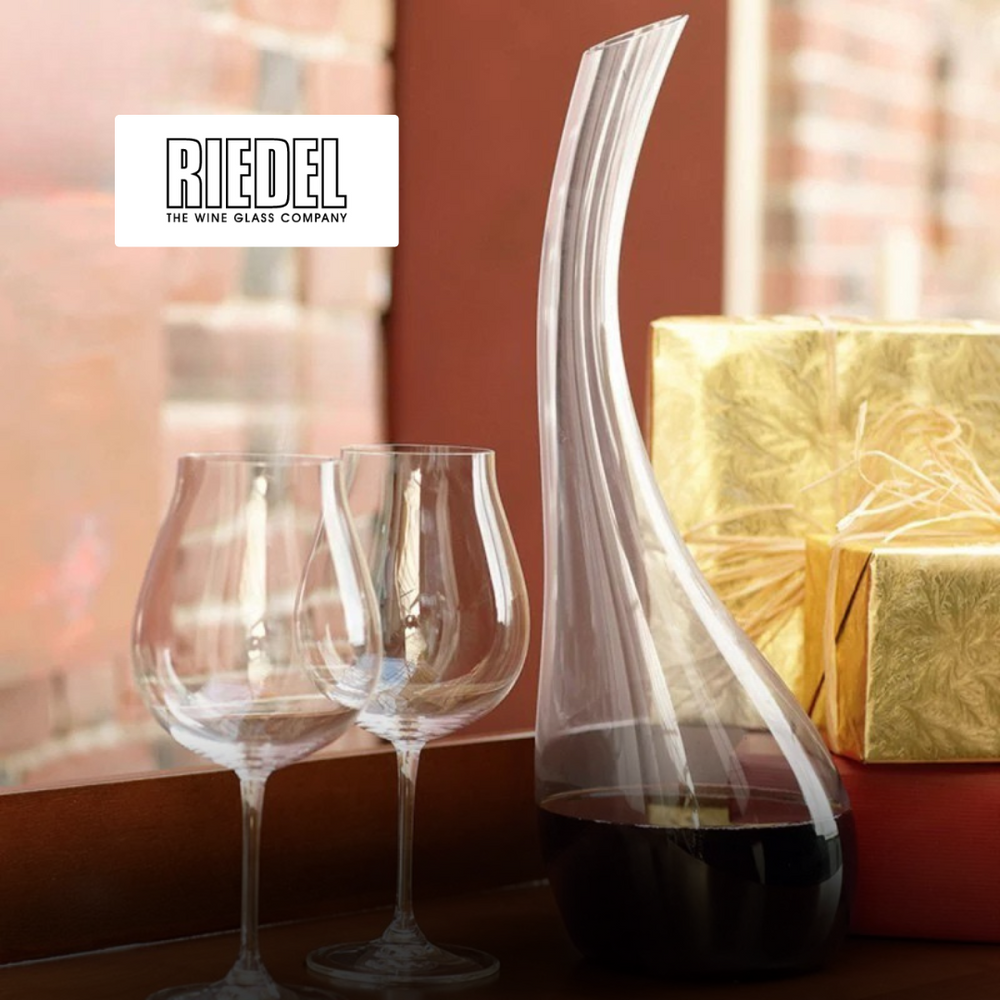
It is also a case in which the glass choice is especially interesting: a wide Burgundy-style glass gives its aromatic profile room to develop.
Ripasso della Valpolicella: when the dish gains substance
With Ripasso della Valpolicella, the wine generally gains structure and softness.
It can sit well alongside flavourful pasta dishes, roast meat, not overly intense braises and mature cheeses.
Here the wine asks for a little more attention—not a solemn ceremony, just a glass wide enough not to confine it to too small a space.
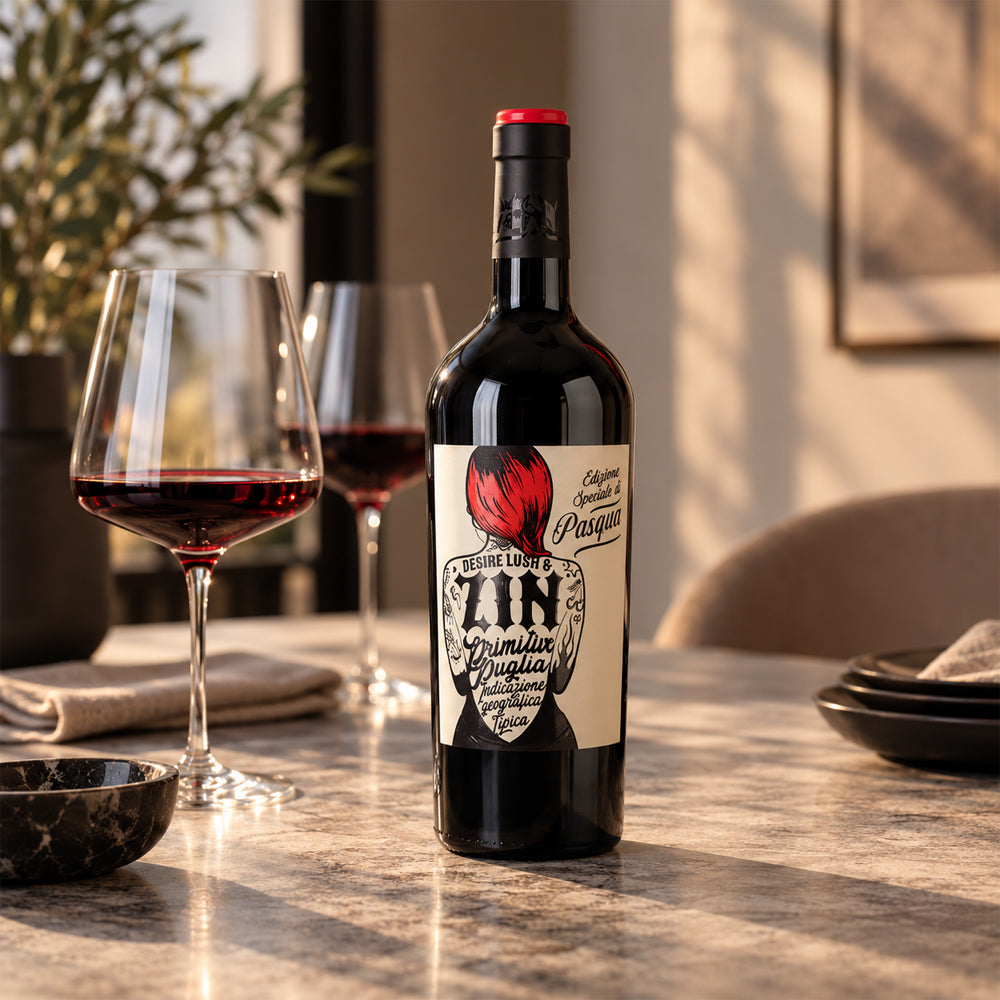
Primitivo di Manduria: when the heavy artillery arrives
Primitivo di Manduria can offer warmth, intensity and significant structure.
In other words, pairing it with a lettuce leaf is probably not the best way to show it off.
It is better with dishes that can hold their own, such as:
- roast meats;
- braises;
- stews;
- spiced, richly flavoured dishes;
- mature cheeses.
A large red-wine glass gives the wine more room and makes its evolution and aromatic intensity easier to perceive.
Brunello di Montalcino: there is no need to hurry
And then comes Brunello di Montalcino.
A structured, complex Sangiovese wine that can evolve over time, it is one of those wines worth slowing down for.
Its natural pairings include:
- game;
- substantial roasts;
- braises;
- red meat;
- mature cheeses.
In this case, it is not only what is on the plate that matters. Temperature, time in the glass and glass shape can make a noticeable difference to tasting.
If you want to start with the bottle, browse the red wines selection to compare labels, regions and styles, then build your autumn menu from there.
Autumn red wines and pairings: a quick guide
| Wine | Style | Autumn pairings | Recommended glass |
|---|---|---|---|
| Pinot Noir | Elegant, aromatic, generally less structured | Mushrooms, risotto, white meat | Wide, Burgundy style |
| Ripasso della Valpolicella | Soft and structured | Flavourful pasta, roasts, cheese | Large red-wine glass |
| Primitivo di Manduria | Rich, warm, intense | Braises, roasts, mature cheeses | Large, developed bowl |
| Brunello di Montalcino | Structured and complex | Game, braises, red meat | Large glass for great reds |
There is more than one red-wine glass
This is where things get interesting.
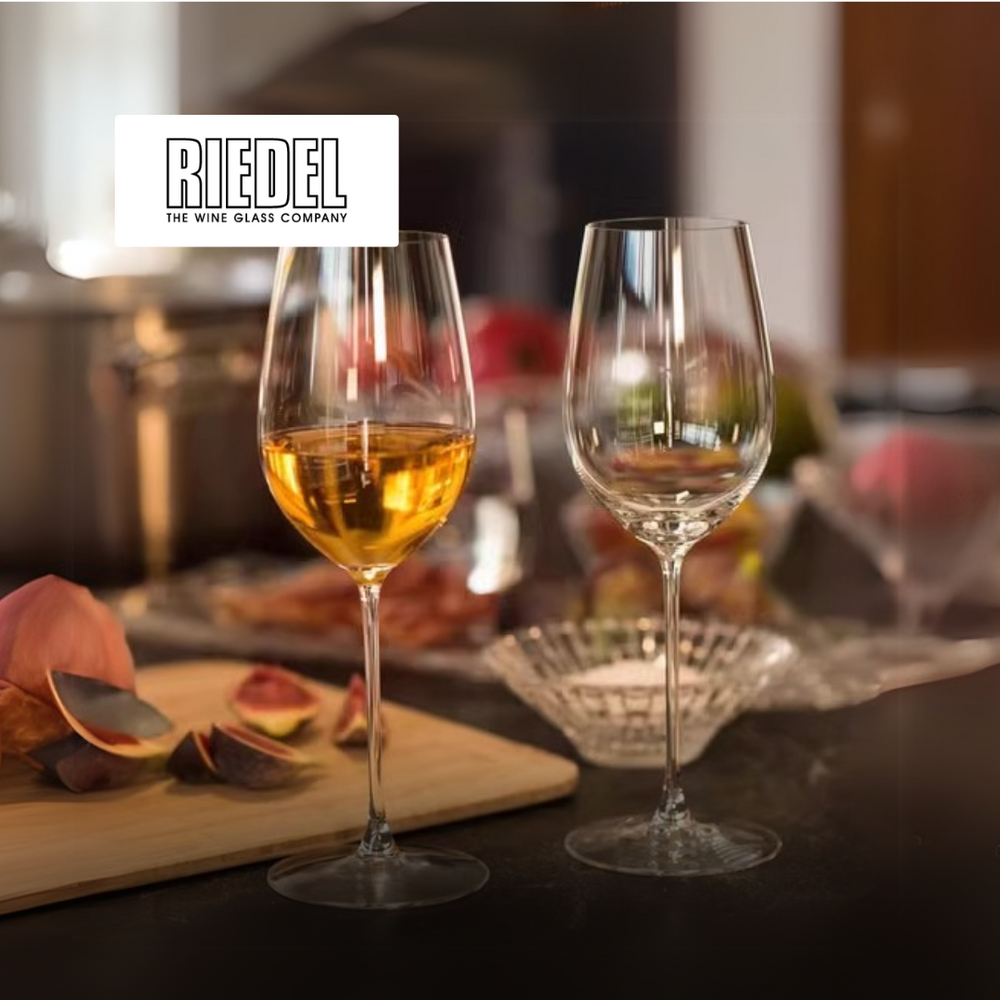
When we talk about a red-wine glass, it is easy to picture a single large stemmed glass. In reality, shape, volume and rim can vary greatly.
And it is not just design.
The geometry of the bowl affects how much wine is exposed to air and how aromas are concentrated towards the nose.
That is why a well-chosen glass can make a wine easier to understand.

You chose the wine with care. Let us not lock it into a glass the size of a toothbrush cup: a good red needs space, too.
In the red-wine glasses collection, compare capacities, shapes and proportions according to the wines you serve most often.
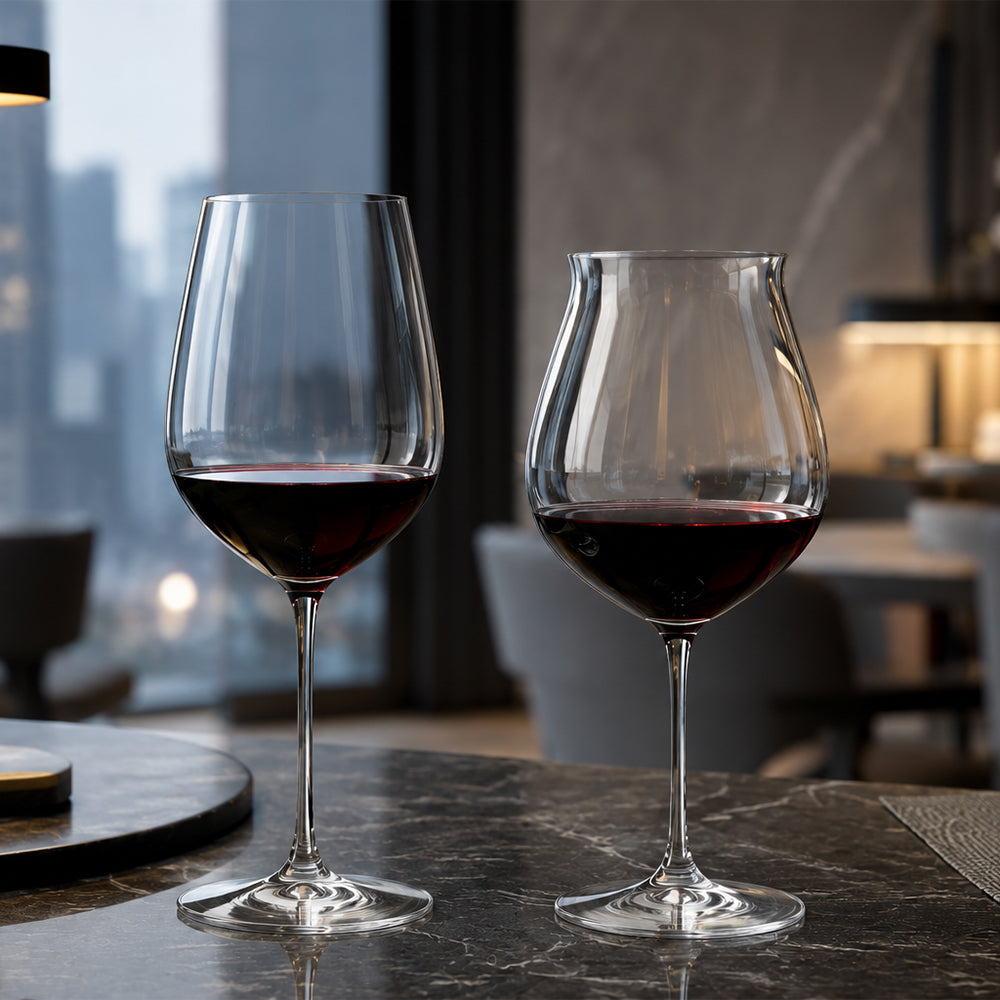
Bordeaux or Burgundy glass: what changes?
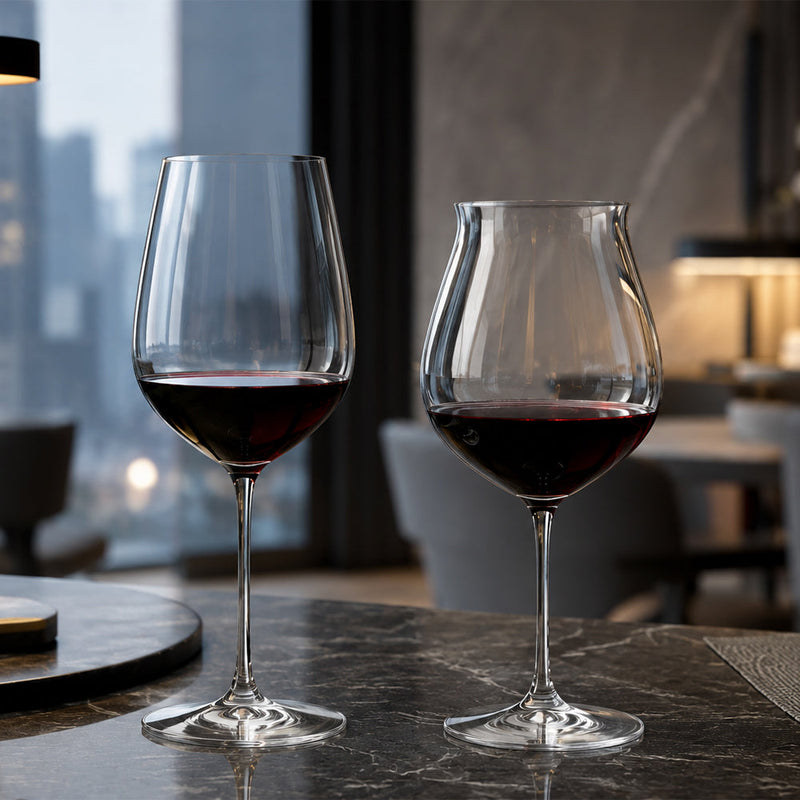
The most recognisable shapes for great reds are Bordeaux and Burgundy.
Bordeaux glass
A Bordeaux-style glass tends to have a generous bowl that is more elongated vertically.
It is often associated with structured, intense wines with a strong tannic component.
It can therefore be a good match for Cabernet, Merlot and many important red wines.
Burgundy glass
A Burgundy glass has a much wider, rounder bowl.
Its larger contact surface with air can help aromatic development, which is why this shape is traditionally associated with Pinot Noir and other wines in which complexity and fragrance are central.
That does not mean there is a mathematical equation of “one wine = one glass”.
A glass is a tool, not a traffic police officer.

Bordeaux is taller; Burgundy is wider and rounder. They were not invented to complicate your cupboard: they work differently with wine.
Which glass should you use for Pinot Noir?
Pinot Noir is often served in a Burgundy glass with a wide, rounded bowl.
The available space allows the wine to open up and makes its aromatic component more evident.
It is especially interesting for complex, mature or highly expressive Pinot Noirs.
Which glass should you use for Brunello and structured reds?
A great wine such as Brunello di Montalcino mainly needs space.
A large glass makes it possible to swirl the wine, increase contact with air and follow its evolution during tasting more closely.
The same principle applies to many structured red wines: avoiding bowls that are too small keeps their aromatic profile from being unnecessarily compressed.
How much wine should you pour into a glass?
The fact that a glass can hold 70, 80 or even 100 cl does not mean we should fill it to the rim.
Quite the opposite.
The empty part of the bowl is essential.
Leaving space lets you swirl the wine without turning tasting into a hand-and-tablecloth coordination test, and gives aromas a volume in which to develop.
For large red-wine glasses, a relatively modest pour is therefore completely normal.
Red-wine temperature: “room temperature” does not mean any room
“Serve red at room temperature” is one of the most misunderstood phrases in wine.
There is an obvious problem: which room?
A room at 18 °C and a heated apartment at 25 °C are both technically rooms, but the result in the glass is very different.
Red-wine serving temperature depends on structure, style and development.
In general, lighter, fresher wines can be enjoyed at lower temperatures than more substantial reds. Even the latter do not usually benefit from excessive warmth.
Wine served too warm tends to make alcohol more obvious and can reduce the sense of balance.
At what temperature should red wine be served?
Temperatures should not be treated as absolute values to the tenth of a degree, but they are useful as a guide.
| Type | Indicative range |
|---|---|
| Young, light reds | About 14–16 °C |
| Medium-bodied reds | About 16–18 °C |
| Important, structured reds | About 18 °C |
Adjust the temperature to the individual wine and the producer's advice.
Remember that a bottle served slightly cool will warm in the glass anyway. The reverse is much harder.
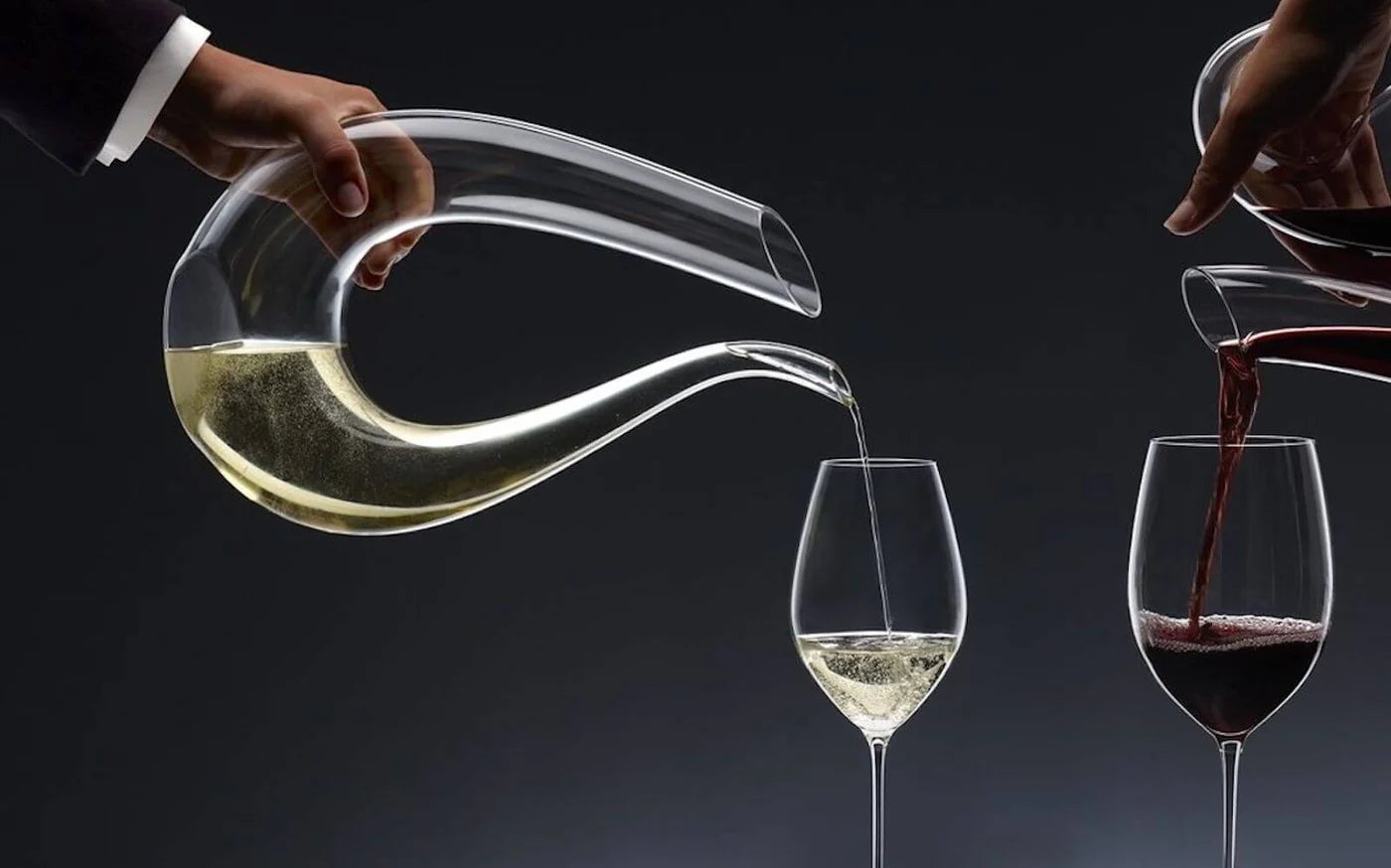
Does red wine need to breathe?
It depends.
Some wines benefit from contact with air, especially when they are young, structured or initially restrained.
Other wines, particularly very evolved ones, may be more delicate and need greater care.
Simply using a large wine glass increases the surface in contact with air and lets you observe how the wine changes after a few minutes.
Before automatically reaching for the decanter, taste it.
That is also a rather pleasant solution to the problem.
Red wine with mushrooms: what should you choose?
Mushrooms are one of autumn cooking's signature ingredients, but the pairing depends greatly on the preparation.
With a delicate mushroom risotto, an elegant, not overly tannic red such as Pinot Noir can work well.
When mushrooms accompany meat, braises or richer dishes, you can increase the wine's structure as well.
As with most pairings, look at the complete dish, not just the ingredient printed in the largest type on the menu.
Red wine with roasts and braises
Roasts and braises open the door to more structured red wines.
The intensity of the meat, sauce, cooking time and the presence of spices all affect the choice.
Ripasso, Primitivo and important reds can find a place in these pairings, as long as the wine's structure and the dish's intensity remain balanced.
Red wine and mature cheeses
With mature cheeses, saltiness, aromatic intensity and persistence increase.
This makes it possible to pair them with more concentrated, structured reds.
But “mature” is not enough: Parmesan, pecorino and blue cheese have very different characteristics.
Consider the individual cheese's intensity, fat, saltiness and aromatic profile.
Mistakes to avoid when serving red wine
- Serving it too warm: heat can accentuate the perception of alcohol.
- Filling the glass almost to the rim: it removes space for swirling and aromatic development.
- Always using the same glass: you do not need ten different shapes, but a suitable bowl improves tasting.
- Automatically decanting every bottle: wines do not all have the same needs.
- Choosing wine without considering the dish: intensity and structure should speak to each other.
- Drinking immediately and judging it on the first sip: some wines change greatly after a few minutes in the glass.
Frequently asked questions about autumn wines
Which red wines should you choose in autumn?
Pinot Noir, Ripasso della Valpolicella, Primitivo di Manduria and Brunello di Montalcino represent different styles for many autumn dishes. Start mainly with the preparation's intensity and the food pairing.
Which red wine should you choose with mushrooms?
For delicate mushroom dishes, an elegant, not overly structured red such as Pinot Noir can work. If mushrooms accompany meat or intense dishes, choose fuller wines.
Which wine should you drink with a braise?
A braise can be paired with structured, persistent red wines. Also assess the sauce, spices and overall intensity of the dish.
What is the right glass for red wine?
A good red-wine glass should allow enough space to swirl the wine and help aromas develop. Very wide bowls are often used for aromatic wines, while tall, capacious shapes are common for structured reds.
Which glass should you use for Pinot Noir?
Pinot Noir is traditionally associated with a Burgundy glass, whose wide, rounded bowl provides a large contact surface with air.
At what temperature should red wine be served?
It depends on the style: young, light reds can be served cooler, around 14–16 °C; medium-bodied wines around 16–18 °C; important reds generally around 18 °C. These are guidelines to adapt to the individual wine.
Does red wine always need to breathe?
No. Some wines benefit from oxygenation, while others, especially if very evolved, may be more delicate. Taste the wine and observe its evolution before deciding whether to use a decanter.
Why should you not fill a wine glass completely?
The empty space lets you swirl the wine and creates a volume in which aromas can develop before reaching the nose. A glass's large capacity does not therefore indicate the quantity to pour.
Choose the wine first. Then give it space
We can choose a great bottle and stop there.
Or we can do three more simple things: serve it at the right temperature, give it the time it needs and choose a glass that lets it express itself.
There is no need to turn dinner into a sommelier exam.
The point is exactly the opposite: make something we were about to do anyway more enjoyable.
Start with the selection of red wines, choose the style that best suits your menu and complete the service with a red-wine glass suited to the bottle.
Autumn may make the leaves fall, shorten the days and force us to look for jackets again.
But at least it gives us an excellent excuse to open an important red.
Choose the bottle. Take the right glass. Pour without filling it to the rim. The rest of autumn can wait.