

How to set an autumn table: colours, plates, glasses and decorations
To set an elegant autumn table, all you need is a palette of two or three colours, tactile or neutral plates, glasses that create a coloured accent and a low centrepiece.
The secret is not to fill every available centimetre. It is to choose a few elements and let them work together.
After all, autumn already has its own palette: rust, forest green, brown, amber, cream, ochre and terracotta.
They are perfect table colours, as long as they are not all invited to the same dinner.
A quick rule: choose two or three colours, one star element and leave some empty space. Even a table needs to breathe from time to time.

How to set an autumn table at a glance
| Element | Recommended choice | Effect on the table |
|---|---|---|
| Colours | Two neutral tones and one more intense colour | Visual coherence |
| Plates | Tactile stoneware or essential porcelain | Character or brightness |
| Glasses | Amber, green, smoky or textured glass | A coloured accent |
| Textiles | Linen, cotton, runners or natural placemats | Warmth and softness |
| Centrepiece | One focal element, kept low | Atmosphere without clutter |
Which colours should you choose for an autumn table?
To create a balanced autumn table setting, begin with two neutral tones and add one bolder colour.
You can build a cream, beige or taupe base and pair it with forest green, mustard, rust, brown or terracotta. Alternatively, choose intensely coloured plates and keep glasses, textiles and decorations more understated.
Some combinations that work well are:
- cream, forest green and wood, for a natural table;
- beige, terracotta and amber, for a warm mood;
- taupe, rust and clear glass, for a contemporary composition;
- white, brown and matte gold, for an elegant autumn table;
- grey, sage green and black, for a modern, minimalist style.
The most useful rule is simple: not everything should attract attention at the same time. A limited palette lets you combine different textures and materials without creating confusion.
How to choose plates for an autumn table
If you want to change the mood without completely transforming the table setting, start with the dinnerware set.
It has the largest visual surface and can define a large part of the table's style by itself.
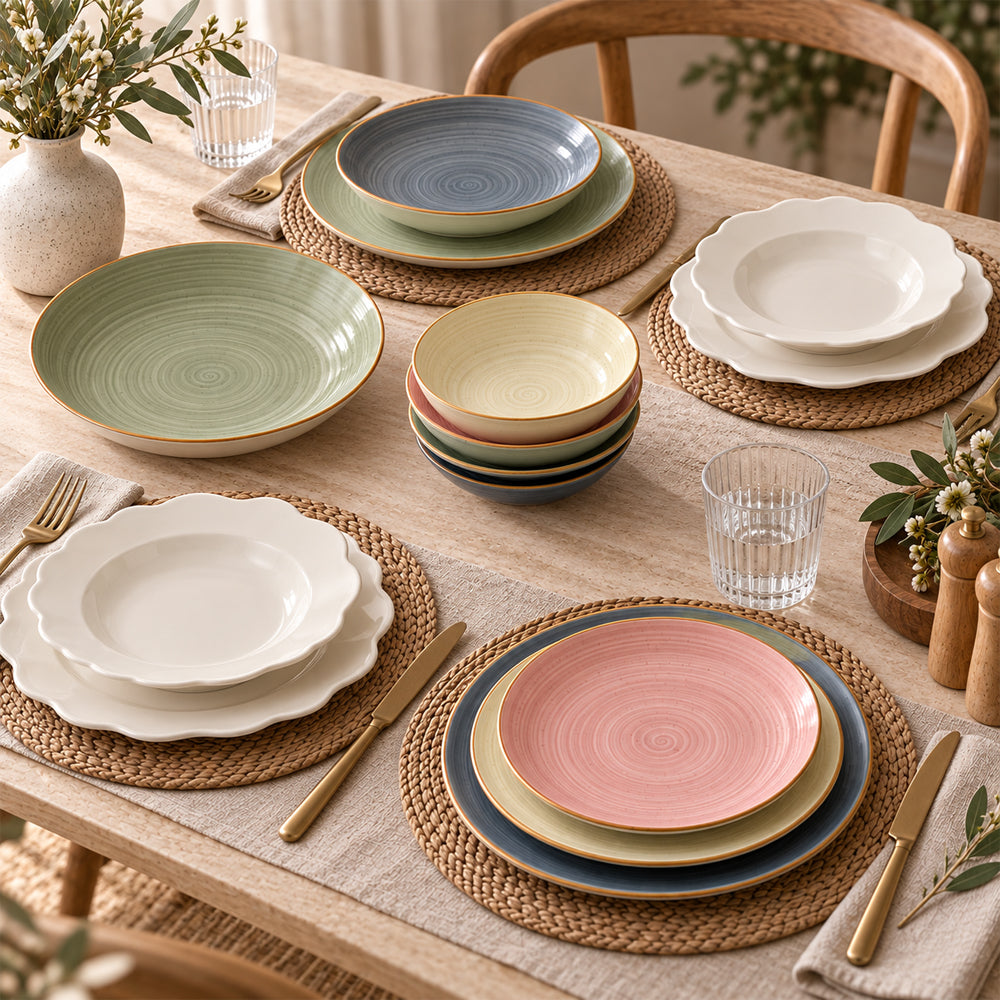
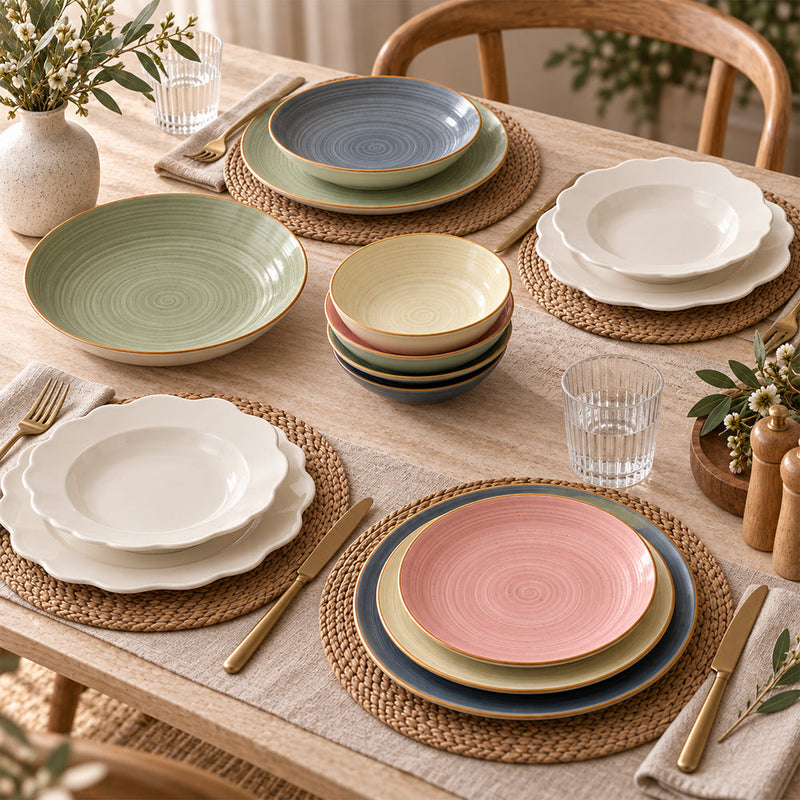
Stoneware plates for a warm, tactile table
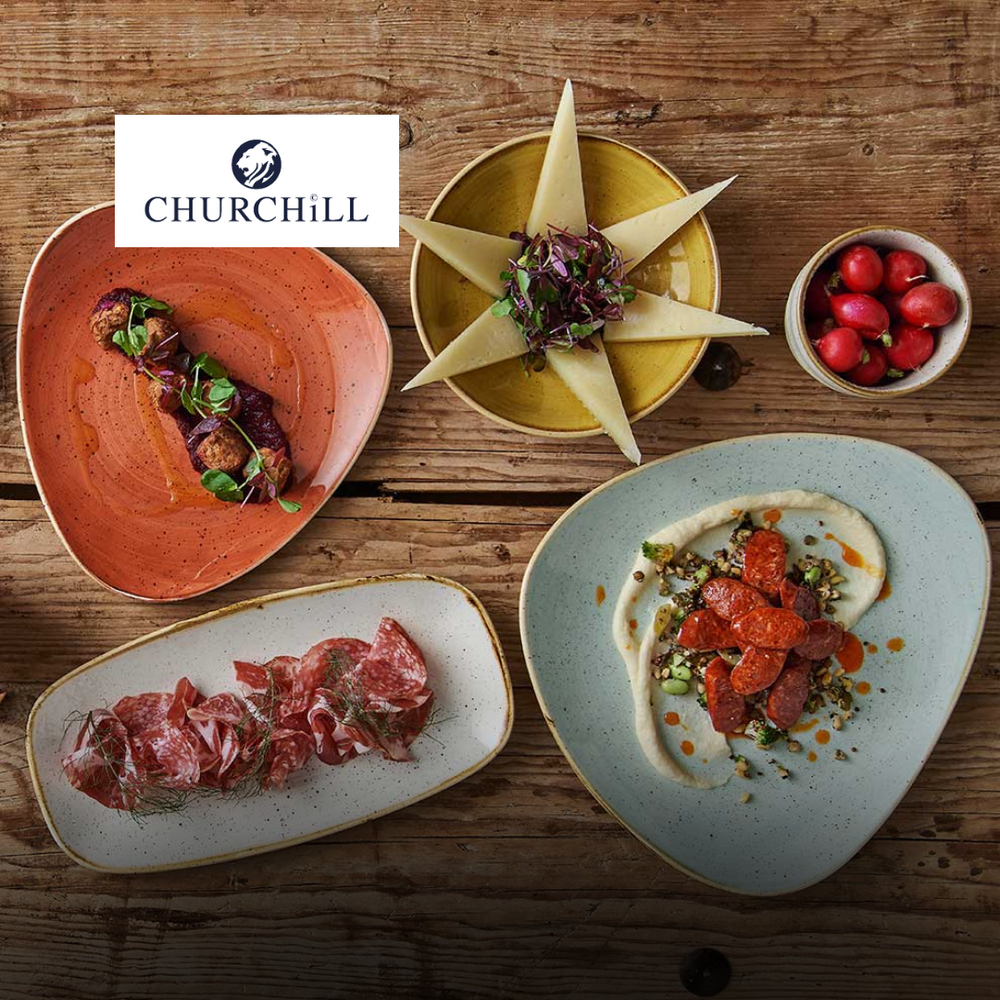
Stoneware is especially suited to autumn thanks to its tactile surfaces, glazes and deep tones.
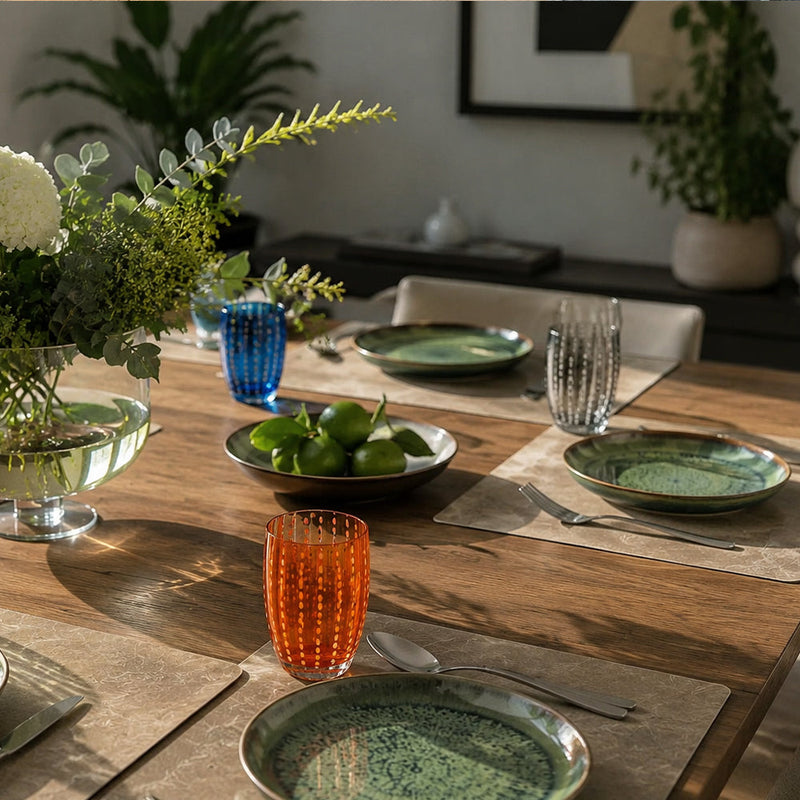
It works beautifully on a wooden table with natural textiles and coloured glasses. It also makes it possible to create a contemporary table without adding too many decorations.

Stoneware, natural shades and tactile surfaces: autumn has practically set the table already. All that remains is deciding what to serve.
Distinctive shapes for a more original table
If you prefer a brighter, more versatile composition, choose porcelain. If you want to give the table setting character, play with less conventional shapes.
A triangular or irregularly shaped plate creates movement and becomes part of the decoration. In that case, keep glasses, textiles and the centrepiece simpler.

When the plate already has a strong shape, you do not need decorative acrobatics. It has decided to take centre stage, so let it.
In practice:
- light, linear plates if you want glasses and decorations to take the lead;
- stoneware plates for a modern, tactile autumn table;
- distinctive shapes to create movement without adding too many objects.
Coloured glasses: the detail that changes the table
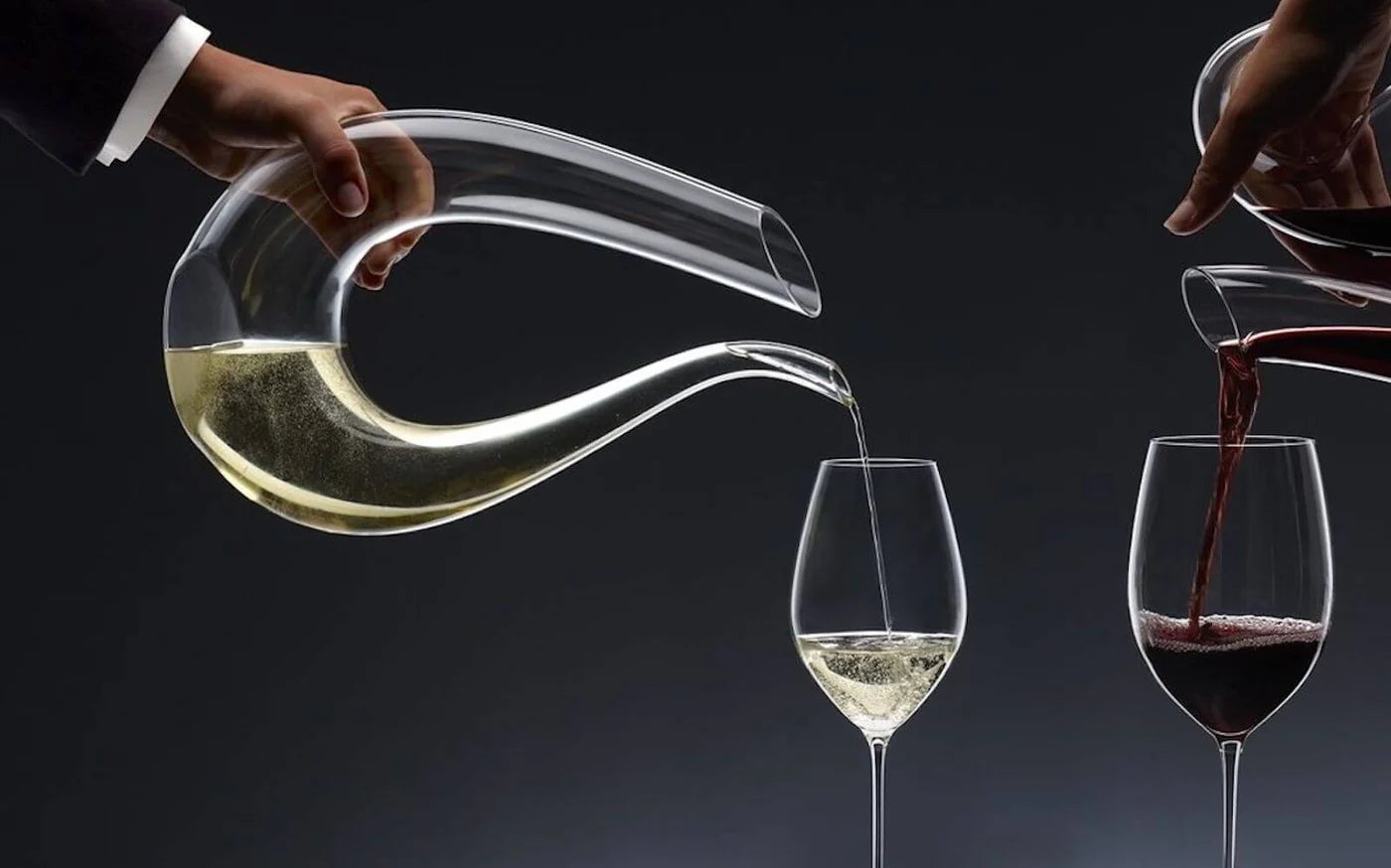
Colour does not necessarily have to come from the plates. On a neutral base, coloured water glasses can transform the whole composition without weighing it down.
Choose amber, green, deep red or smoky tones, or opt for textured glass that creates movement and reflections.
If the plates, tablecloth and decorations are neutral, let coloured glasses do the hard work. They catch the light and instantly look like the most charismatic guests at the table.

Zafferano Melting Pot: colour and mix & match
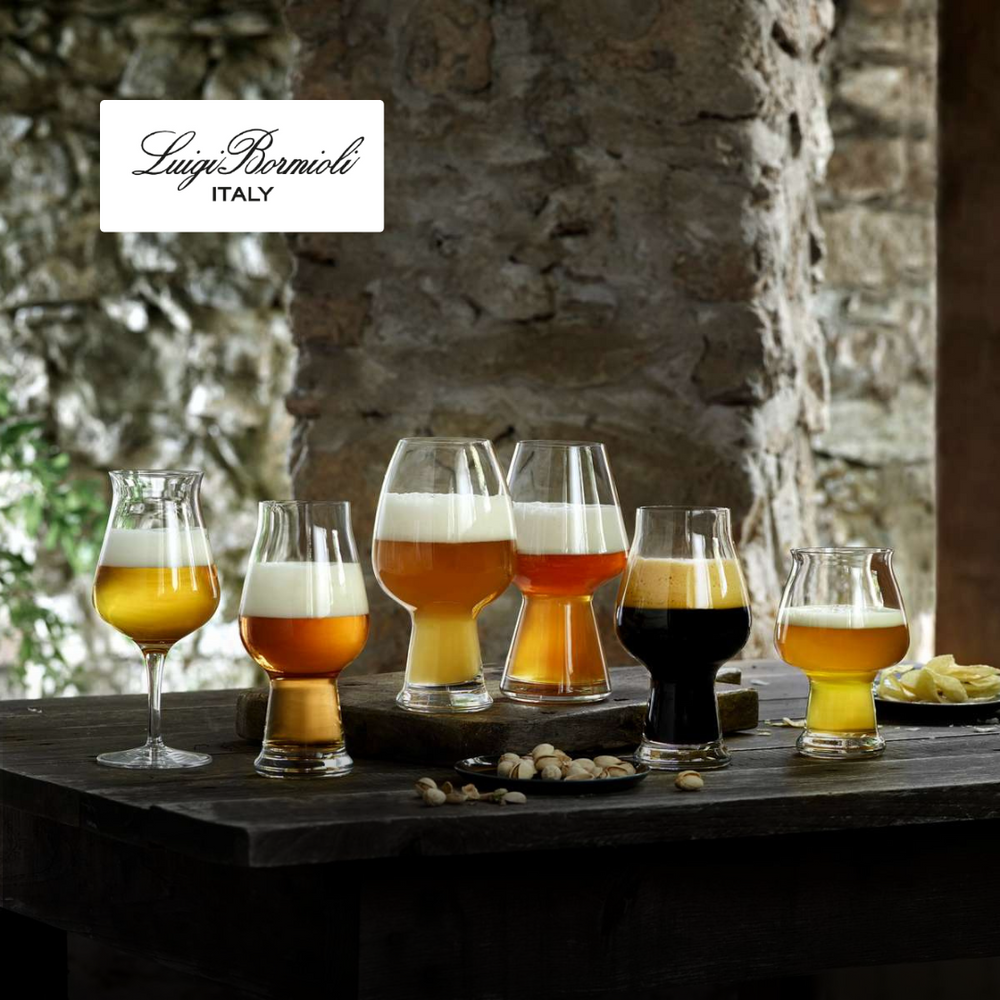
For a lively, deliberately non-uniform table, choose glasses with different shapes and finishes while retaining a common colour.

One colour, different personalities: Melting Pot shows that a coordinated table does not have to look as though it came out of a photocopier.
Bubbles: texture and colour
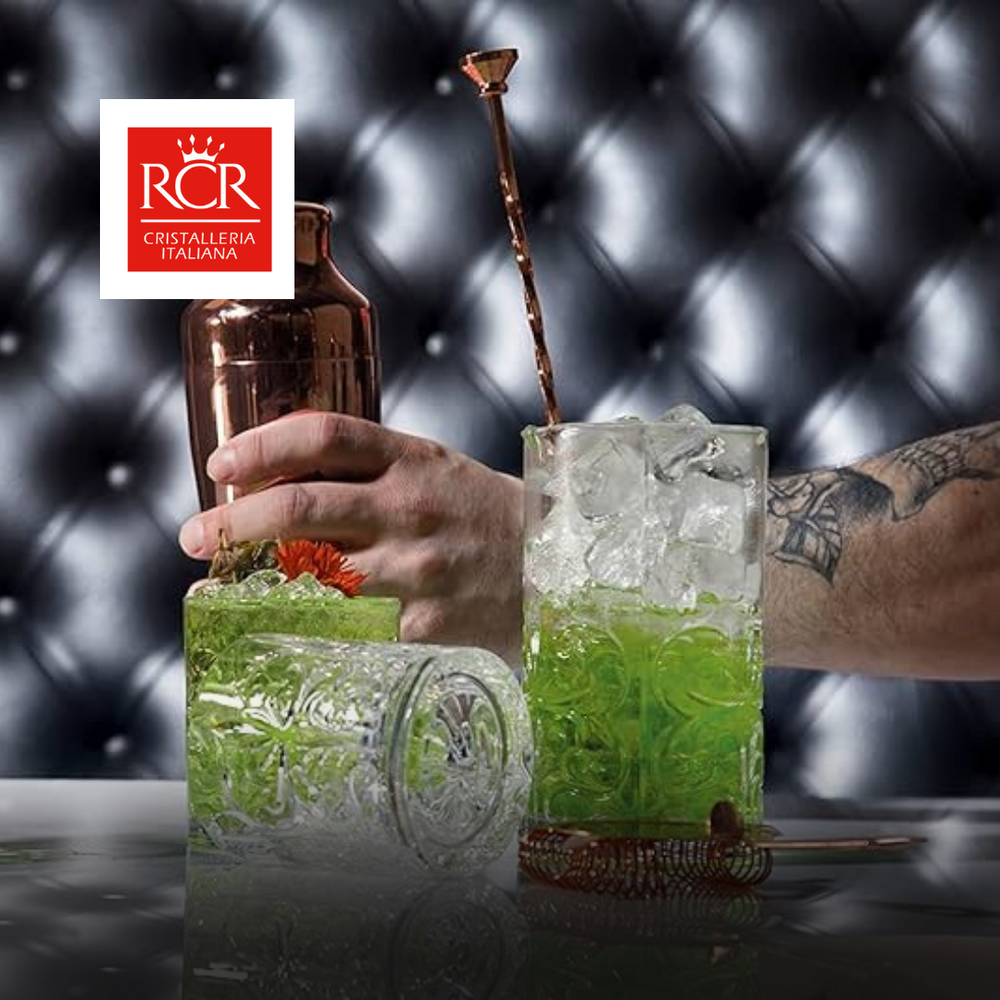
A textured glass adds surface interest to the table and enhances light, especially in warm or deep colours.

When glass has colour and texture, you really need little else. A few candles, a simple plate and the table already knows what it needs to do.
Perlage: texture and reflections
To introduce movement without choosing an intense colour, opt for a textured surface. Glass reflections add depth even to an essential table setting.

Textured glass catches the light and adds movement: a small detail with excellent ambitions of becoming the star.
It is not necessary to match plates and glasses in the same colour. The most interesting result often comes from contrast: dark stoneware and bright glass, neutral plates and amber glasses, a light tablecloth and small forest-green accents.
Textiles and cutlery: completing an autumn table setting
Tablecloths, runners, placemats and napkins visually connect plates, glasses and decorations. Linen, cotton and visibly woven fabrics work well for a welcoming autumn table.
Placemats and runners to enhance the table
If the table is wooden, you can skip the tablecloth and let its surface become part of the palette. A central runner or well-coordinated placemats add softness without hiding the table completely.

If the table is beautiful, there is no need to hide it down to its ankles. Runners and placemats add warmth while letting the wood take part.
Which cutlery should you pair?
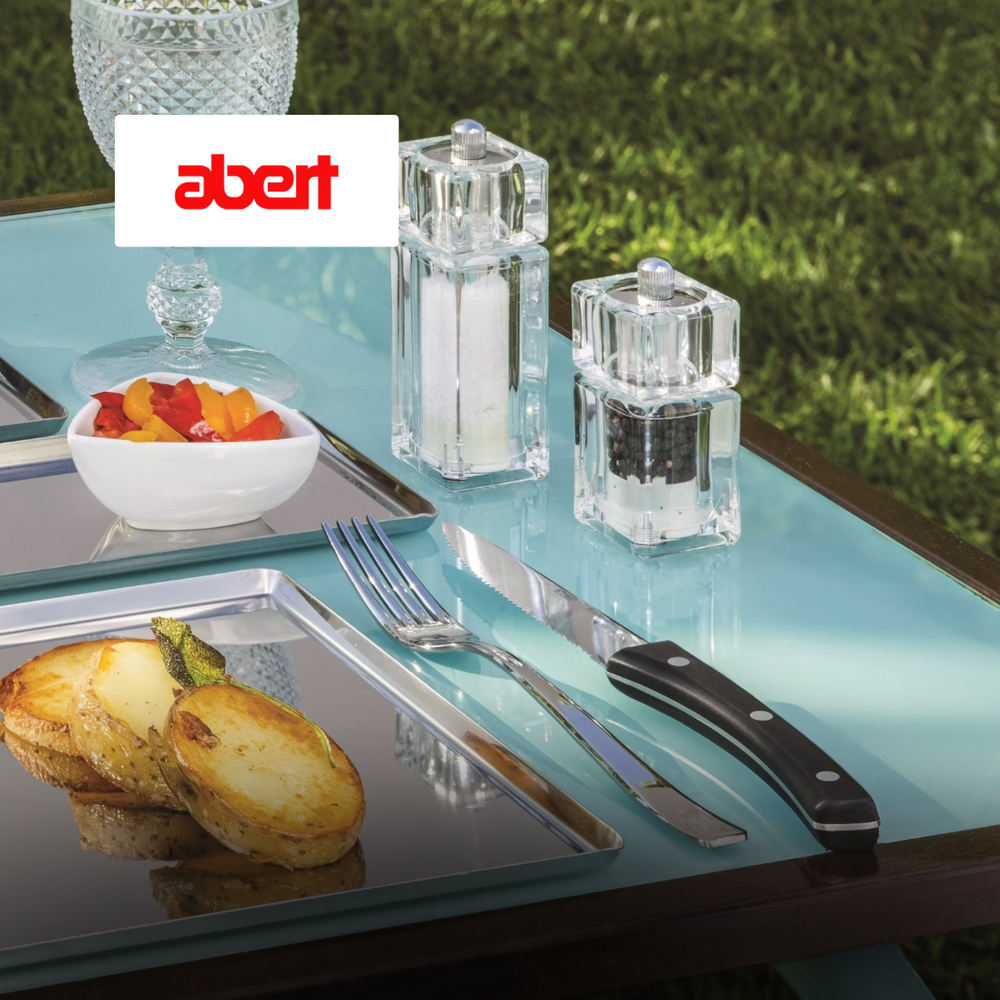
Polished steel, satin, black and gold finishes create very different effects. The right criterion is not choosing the most eye-catching design, but the one that completes the composition.
Simple cutlery works well with highly decorative plates. With a neutral set, you can choose a more distinctive finish instead.

Cutlery should not compete with the rest of the table. It should complete it discreetly—and preferably arrive in sufficient numbers for everyone.
How to create a simple autumn centrepiece
To create an elegant autumn centrepiece, choose a single star element and keep the composition low enough that it does not obstruct conversation.
You can use:
- three small pumpkins in different sizes;
- two or three candles in coordinated heights;
- a low vase with seasonal branches or leaves;
- pomegranates, pears, apples or bunches of grapes;
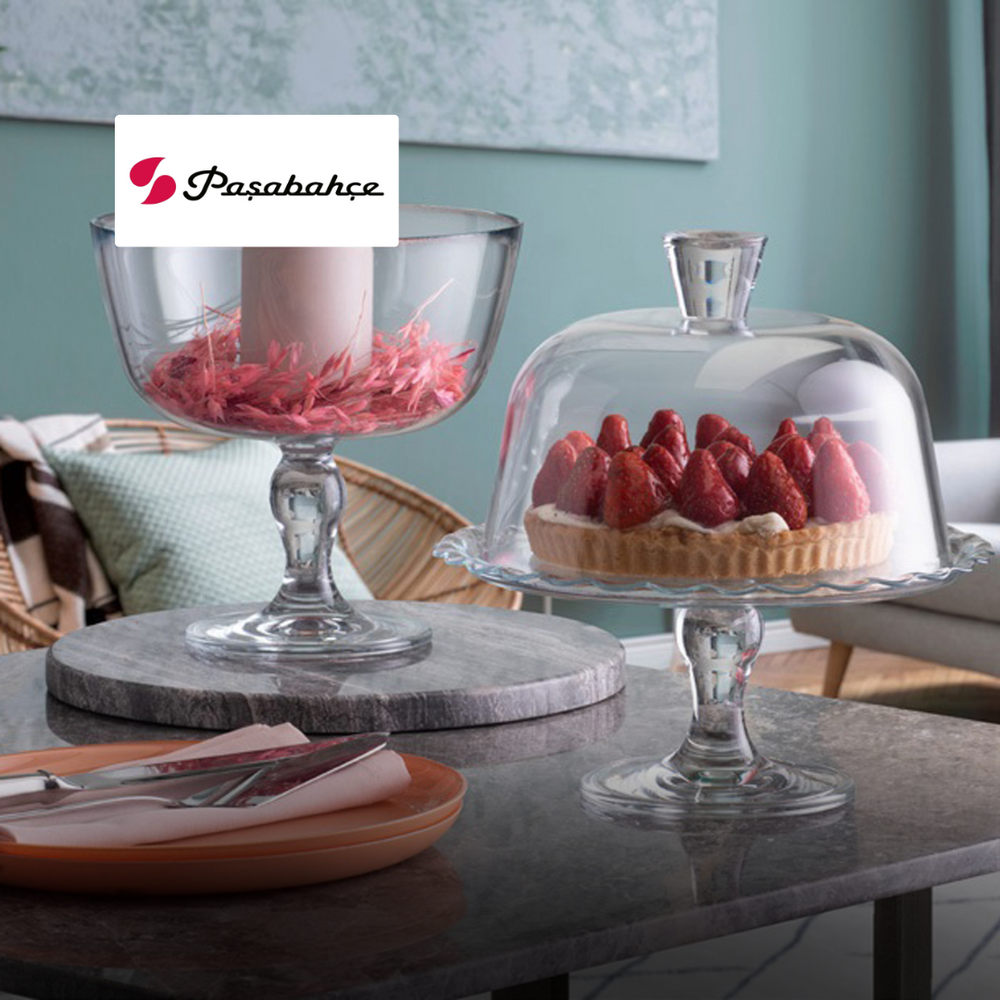
- a glass or crystal centrepiece with a few natural elements.
Pumpkins, candles, chestnuts, leaves, branches and fruit all work. The problem begins when they all decide to show up together.
A centrepiece should create atmosphere, not force guests to lean sideways to speak. Beautiful, yes; architectural barrier, no.

How to set a minimalist autumn table
A minimalist autumn table is not an empty table. It is one where every element has a reason to be there.
A tactile dinnerware set, a coloured glass, a fabric napkin and a few candles may already be enough.
To find the balance:
- if the plates are decorated or highly tactile, reduce the centrepiece;
- if the set is neutral, add colour with glasses and textiles;
- if you leave a wooden table visible, use only a few natural decorations;
- if you choose distinctive cutlery, keep the other details simple;
- always leave part of the table free.
Balance comes from the play between full and empty space—and from remembering that serving dishes will eventually have to arrive at the table too.
Checklist for setting an autumn table
- Choose a palette of two or three colours.
- Decide which element will be the focal point.
- Coordinate plates and glasses through contrast or continuity.
- Add natural textiles without unnecessarily covering the table.
- Finish with cutlery that matches the style.
- Create a low, unobtrusive centrepiece.
- Remove at least one element before considering the composition complete.
Do not set a “theme” table: set the season
A beautiful autumn table decoration does not have to announce autumn in every corner.
The colour of a glass, the tactile surface of a plate, a runner, a small pumpkin or a lit candle may be enough.
Setting a table well does not mean adding more things. Very often, it means choosing the things already there better.
Plates, glasses, textiles and decorations all have the same job: building an atmosphere. Once you find the right balance, you do not need to explain that autumn has arrived.
You can see it. You can feel it. It is already at the table.
Frequently asked questions about autumn tables
Which colours are best for an autumn table?
The most used colours are cream, beige, brown, terracotta, rust, mustard, amber and forest green. For a balanced result, combine two or three while keeping at least one neutral tone.
How do you set an elegant autumn table?
Choose a limited palette, use coordinated plates and glasses, add naturally textured textiles and finish with a low centrepiece. Avoid layering too many seasonal decorations.
How do you make a DIY autumn centrepiece?
Arrange a few pumpkins, candles or seasonal fruit on a tray. Alternatively, use a low vase with branches and leaves. Keep the composition compact so guests can see one another.
Is it better to use a tablecloth or leave the table uncovered?
It depends on the table's material and style. A wooden surface can remain visible and be completed with a runner or placemats. A light tablecloth is useful for creating a neutral, bright base.
Do plates and glasses need to be the same colour?
No. Controlled contrast is often more interesting: neutral plates with coloured glasses, or dark stoneware with clear or bright glass. It is enough for the elements to share at least one tone or a coherent style.
How do you create an autumn table without pumpkins?
You can evoke the season through tactile plates, amber or green glasses, rust-coloured textiles, wood, candles and autumn fruit. Pumpkins are optional, not a seasonal tax.