How to Choose Whisky Glasses: Tumbler, Glencairn, and Snifter
Choosing the right whisky glasses is not just about aesthetics. The shape, opening, capacity, and thickness of the glass influence how the spirit releases its aromas, reaches the nose, and is perceived during tasting.
A whisky served in a low, open tumbler offers a different experience compared to the same spirit poured into a Glencairn or a Snifter. The former favors practicality, ice, and mixing; more closed glasses concentrate the aromas more and accompany a slow tasting.
The choice depends on how you prefer to drink whisky. For a Bourbon with ice, a spacious Rocks Glass may be ideal, while a complex Scotch Single Malt may express itself better in a tasting glass with a wide body and narrow opening.
This guide analyzes the differences between tumbler, Glencairn, and Snifter, when to use them, and what features to consider before choosing a new set of glasses for whisky, cognac, and brandy.
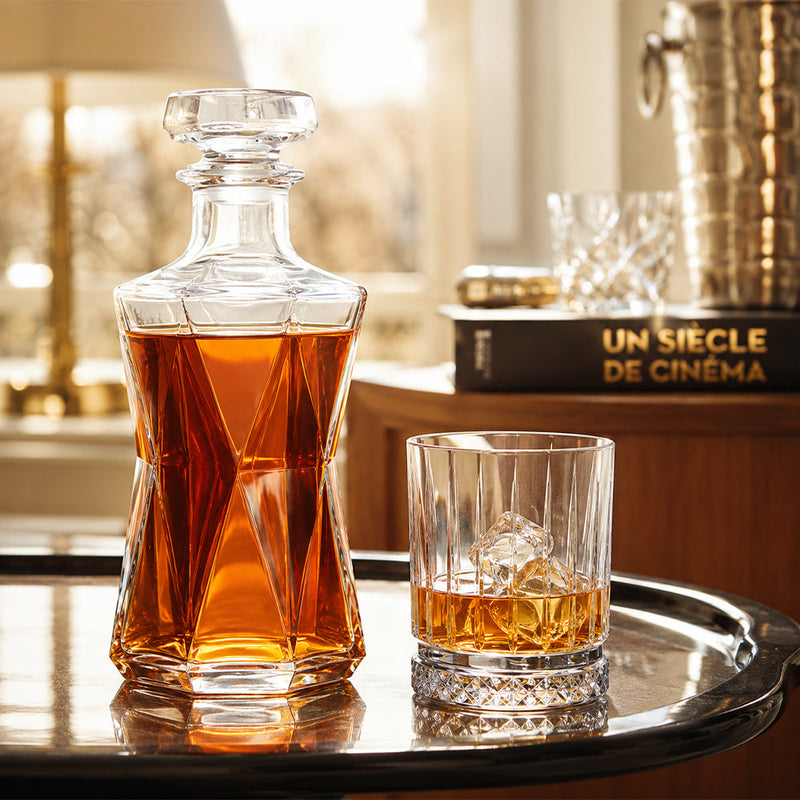
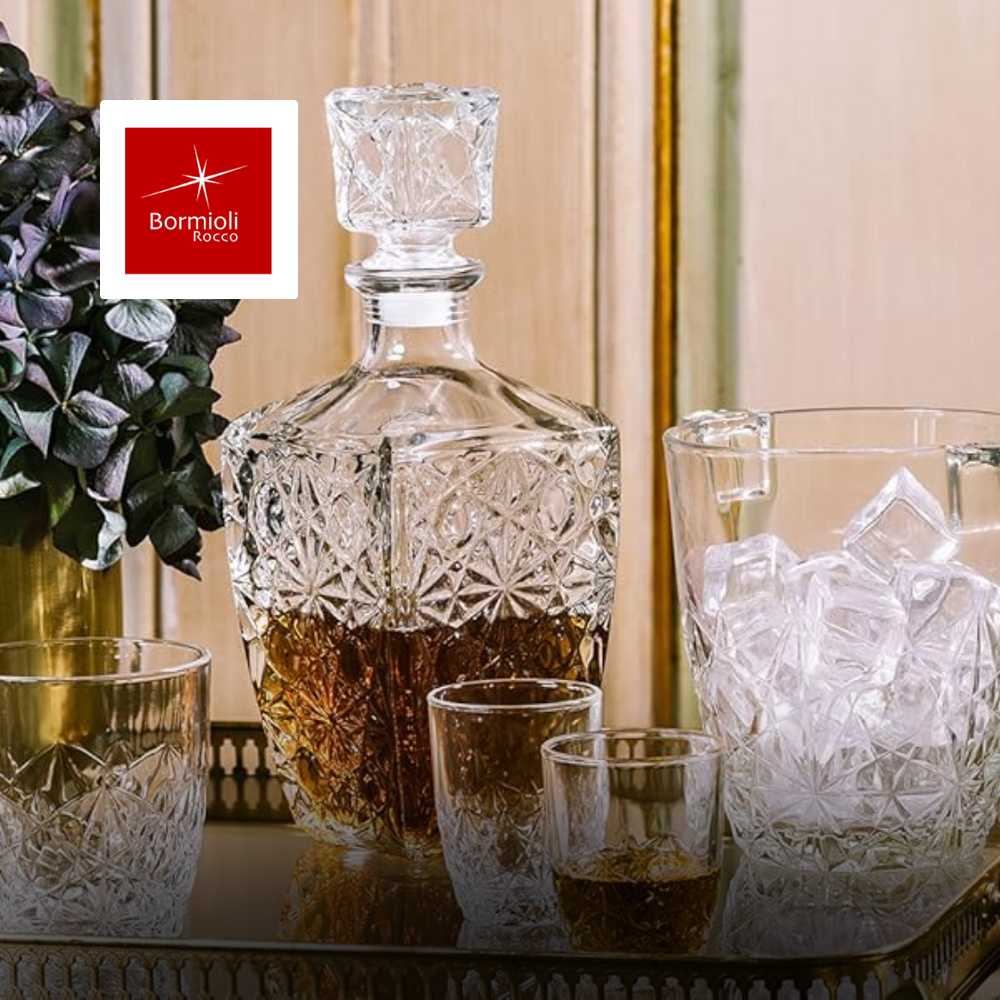
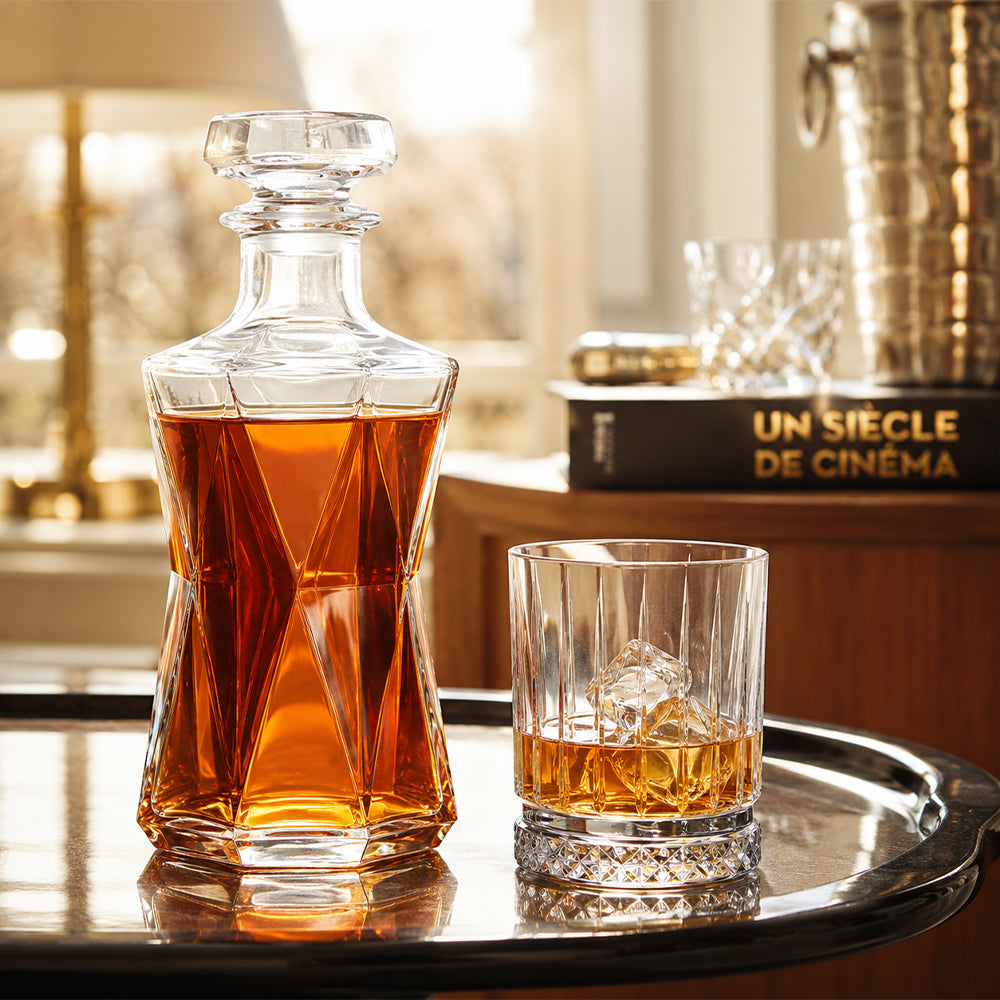
Glasses for whisky, cognac, and brandy. Tumblers, decorated glasses, and Snifter goblets for serving with ice, mixology, and spirit tasting.
Why the Shape of a Whisky Glass Matters
Whisky tasting involves both taste and smell. Before drinking, the nose perceives the aromatic components that develop above the surface of the spirit. The structure of the glass can concentrate, disperse, or direct them more precisely.
A wide opening allows aromas to evaporate quickly and makes serving more immediate. A narrow opening retains them in the upper part of the glass, facilitating the analysis of fruity, spicy, smoky, malty, or woody notes.
The base also serves a specific function. A thick bottom provides stability and space for large ice cubes. A stem, on the other hand, allows you to hold the glass without directly warming the bowl.
Features to Observe
- Opening: wide for informal service, narrower to concentrate aromas.
- Capacity: should leave room for the spirit, ice, and potential mixing.
- Rim thickness: a thin rim guides the sip with greater precision.
- Base: thick and stable for tumblers and cocktails; lighter in tasting glasses.
- Stem: useful to avoid continuous hand contact with the bowl.
- Transparency: allows observation of the whisky's color, brightness, and consistency.
Whisky Tumbler: Practical, Stable, and Versatile
The whisky tumbler is the low, cylindrical glass most commonly associated with serving the spirit. It is also known as an Old Fashioned Glass, Lowball, or Rocks Glass.
The shape generally features a stable base, straight or slightly flared sides, and a fairly wide opening. The capacity allows for serving whisky neat, with water, with ice, or in a cocktail.
The tumbler does not concentrate aromas as much as a Glencairn or a Snifter, but it is more versatile. It is the glass of choice for those who drink whisky informally, enjoy using ice cubes, or prepare drinks like Old Fashioned and Boulevardier.
When to Choose a Tumbler
- For serving whisky with one or more ice cubes.
- For adding a small amount of water.
- For preparing cocktails directly in the glass.
- For simple and informal daily service.
- To create a versatile set also suitable for other spirits.
Advantages and Limitations of the Tumbler
The main advantage of the tumbler is practicality. The base is stable, the opening facilitates ice insertion, and the capacity leaves room for mixing. Worked or decorated models also add a more recognizable presence to the bar corner.
The limitation emerges during technical tasting. The wide opening quickly disperses aromas and can make the alcoholic component more directly perceived. For analyzing a complex whisky, a more enclosed shape is generally preferable.
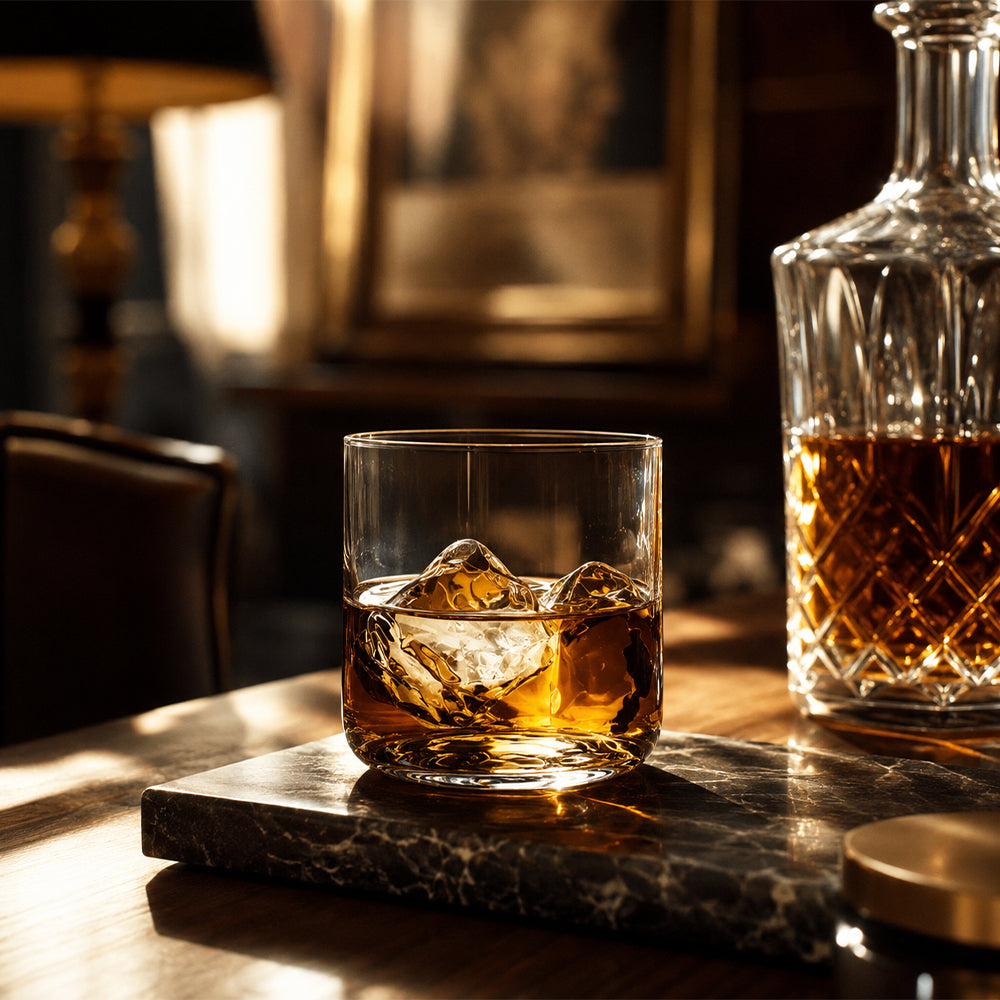
Nude Finesse 30 cl. An essential and versatile tumbler for neat whisky, serving with ice, and cocktails prepared directly in the glass.
Glencairn Glass: The Shape Dedicated to Tasting
The Glencairn glass is recognizable by its short, stable base, wider body at the bottom, and narrowing opening towards the top. Its shape is designed to observe the spirit, develop aromas in the bowl, and direct them towards the nose.
Compared to the tumbler, the Glencairn typically holds a smaller amount of whisky and is not designed to accommodate large ice cubes. Its primary use is for neat tasting or with a few drops of water.
It is a suitable choice for those who want to compare different bottles, analyze aromatic evolutions, or better understand the characteristics of Scotch, Bourbon, Irish Whiskey, and other spirits.
When to Use the Glencairn
- For tasting whisky neat.
- For comparing different labels, vintages, or types.
- To capture more delicate and layered aromas.
- To add a few drops of water and observe aromatic evolution.
- To organize a guided tasting at home.
Is the Glencairn Always the Best Glass?
The Glencairn is very effective for tasting, but it is not the best solution for every service. The narrow opening can also concentrate the alcoholic component, especially with high-proof spirits. In these cases, it is useful to gradually bring the glass closer to the nose without inhaling too intensely.
It is also not the most convenient model for ice and cocktails. Those who alternate between neat whisky, drinks, and on-the-rocks service can pair a tasting glass with a set of tumblers.
Snifter: How the Glass for Whisky, Cognac, and Brandy Works
The Snifter features a rounded bowl, a wide base, and a narrower opening. It is traditionally associated with cognac and brandy but can also be used for complex whiskies, aged spirits, and slow tastings.
The bowl offers a wide surface on which the spirit can develop its aromas. The narrower opening limits the dispersion of aromas and concentrates them in the upper part.
Compared to the Glencairn, the Snifter often has a larger capacity and a more generous shape. However, it should only be filled in the lower part: the nominal capacity does not correspond to the amount of whisky to pour.
When to Choose a Snifter
- For full-bodied, mature, or particularly aromatic whiskies.
- For cognac, brandy, and aged spirits.
- For a slow after-dinner tasting.
- To serve moderate quantities while leaving room for aromas.
- To create a more elegant and formal table setting.
Should You Warm the Snifter with Your Hand?
The bowl can be held in the palm, but excessively warming the spirit is not always advantageous. A rapid increase in temperature can make the alcoholic component more evident and mask more delicate aromas.
It is preferable to hold the glass naturally, without intentionally trying to warm it. In models with a stem, it is possible to hold the glass by the base or stem to limit heat transfer.
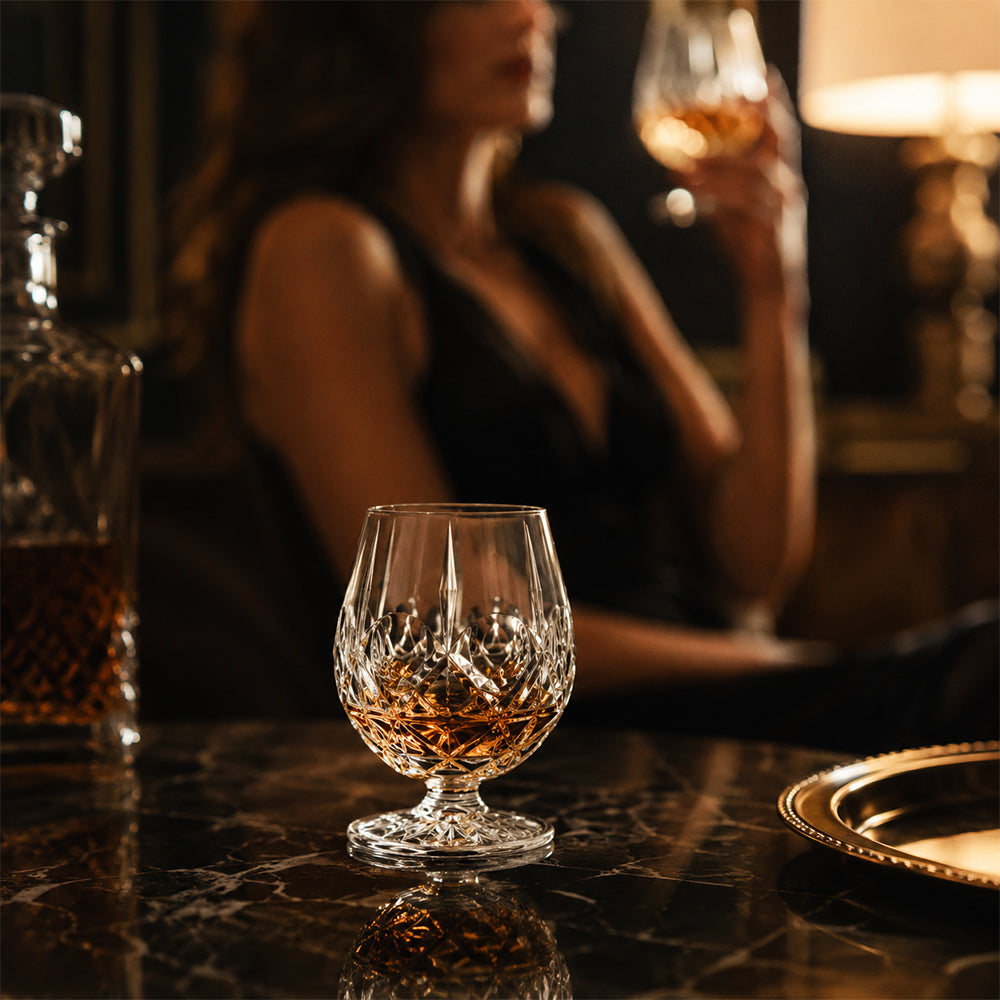
RCR Alkemist Snifter 53 cl. A wide and decorated bowl for structured whiskies, cognac, and brandy to be served slowly after dinner.
Tumbler, Glencairn, and Snifter: What Are the Differences?
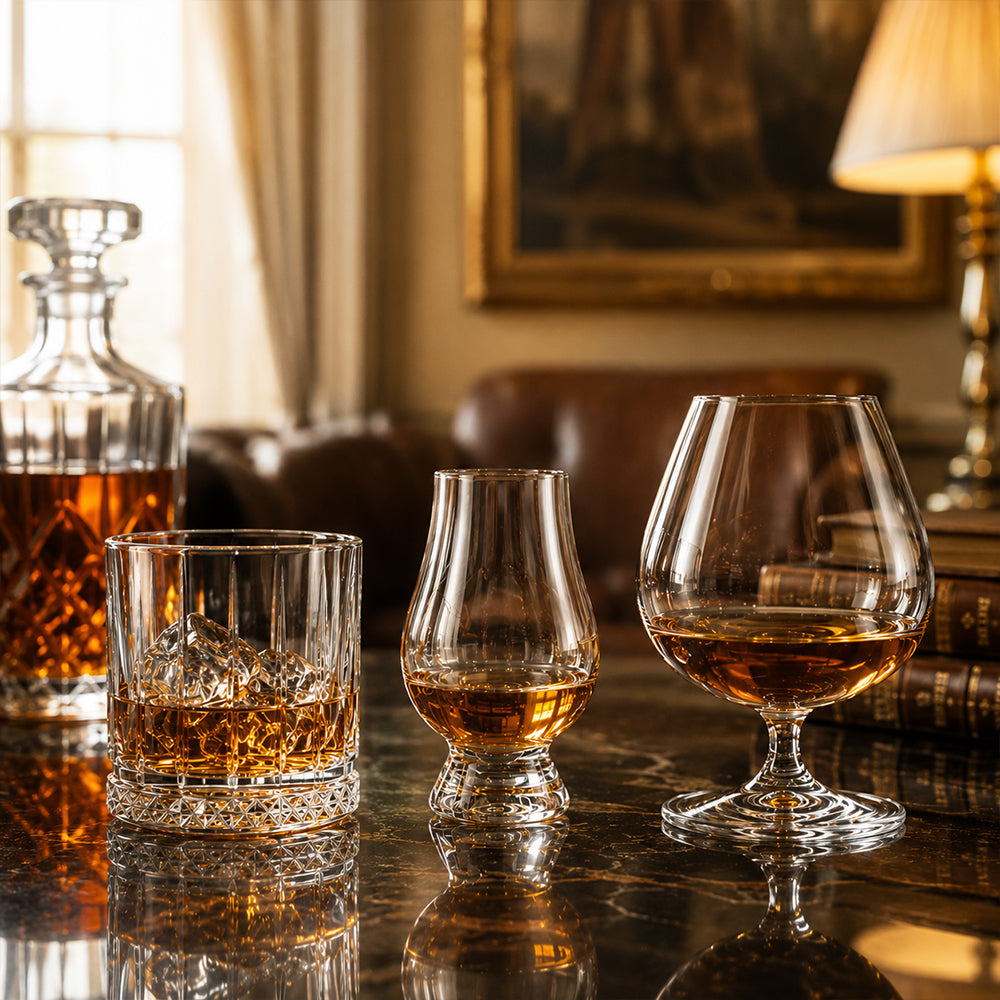
Tumbler, Glencairn, and Snifter cater to different needs. The tumbler favors ice, cocktails, and practicality. The Glencairn is more oriented towards olfactory analysis. The Snifter combines aromatic concentration, generous capacity, and a more classic service.
| Type | Shape | Main Use | Strength | Limitation |
|---|---|---|---|---|
| Tumbler | Low, open, and stable | Whisky with ice and cocktails | Practicality and versatility | Less aroma concentration |
| Glencairn | Short base and narrow opening | Technical tasting | Directs aromas to the nose | Not suitable for large ice cubes |
| Snifter | Wide bowl and narrow opening | Slow tasting of complex spirits | Aromatic development and concentration | Can warm quickly in the hand |
Which Glass to Choose for Scotch, Bourbon, and Irish Whiskey?
There are no mandatory rules, but the structure of the whisky and the type of service help identify the most suitable glass.
Glass for Scotch Whisky
A complex Scotch Single Malt can be tasted in a Glencairn or a small Snifter. The enclosed shape helps explore malty, fruity, spicy, peaty, or smoky notes.
For a Scotch served with ice, a tumbler with a stable base and wide opening is more practical.
Glass for Bourbon
Bourbon is often served in a tumbler, especially when adding ice or using it in cocktails like the Old Fashioned. For a neat tasting, a Glencairn can also be used, allowing for a more precise observation of sweet, spicy, and woody notes.
Glass for Irish Whiskey
A light and straightforward Irish Whiskey can be served in either a tumbler or a tasting glass. The choice depends on the occasion: tumbler for a relaxed service, Glencairn or Snifter to focus on aromas.
Glass for Peated Whisky
Peated whiskies can express smoky, maritime, medicinal, or spicy notes. A glass with a narrow opening helps perceive its nuances but can also concentrate the alcohol more. It is advisable to gradually bring the nose closer and let the whisky rest for a few minutes.
Whisky Glass for Neat, On the Rocks, or Cocktails
| Type of Service | Recommended Glass | Reason |
|---|---|---|
| Neat Whisky | Glencairn or Snifter | Concentrate aromas more effectively |
| Whisky with a Few Drops of Water | Glencairn | Allows observation of aromatic evolution |
| Whisky with Ice | Tumbler or Rocks Glass | Provides space for large ice cubes |
| Old Fashioned | Low Tumbler | Allows mixing and serving in the same glass |
| Whiskey Sour | Tumbler or Cocktail Glass | Depends on the technique and presentation chosen |
| Cognac and Brandy | Snifter | The bowl develops and gathers aromas |
How to Choose the Capacity of a Whisky Glass
Capacity should be evaluated in relation to use, not just the amount of spirit. A 30 or 35 cl glass is suitable for whisky with ice and short cocktails. A Snifter can exceed 50 cl but is filled with a much smaller dose.
The empty part of the glass is important because it creates the space where aromas gather. Overfilling a tasting glass reduces this space and makes it harder to gently swirl the spirit.
- 20-30 cl: neat service, essential tumbler, or small-sized cocktails.
- 30-45 cl: whisky with ice, Old Fashioned, and versatile use.
- 45-60 cl: Snifter and glasses for aromatic spirits.
- Over 60 cl: large Snifters to be filled only in the lower part.
Essential Tumbler or Decorated Glass?
Besides functional shape, style also plays a role in the choice. A smooth and transparent tumbler highlights the color of the spirit and easily fits into a contemporary home bar. A decorated glass refracts light and creates a more pronounced presence.
The Nude Finesse 30 cl is suitable for those who prefer essential lines. The Pasabahce Timeless 34.5 cl offers a decorative design suitable for a more classic bar corner.
For those who desire greater capacity, the RCR Optiq 43 cl provides space for ice cubes and cocktails while maintaining a worked and recognizable design.

Pasabahce Timeless 34.5 cl. A decorated tumbler for whisky with ice, cocktails, and a classic home bar.
Which Snifter to Choose for Whisky, Cognac, and Brandy?
Snifters can differ in capacity, bowl width, stem height, and glass style. The right model depends on the type of spirit, frequency of use, and desired effect at the table.
The RCR Alkemist 53 cl combines a wide bowl with decorative design, making it suitable for serving whisky, cognac, and brandy.
The Riedel Vinum Snifter 84 cl offers a particularly generous capacity. It should be used by pouring a moderate amount of spirit, leaving the bowl the necessary space to develop aromas.
The Bormioli Luigi Mixology Snifter 46.5 cl represents a more compact solution, suitable for home service, mixology, and shared tastings.
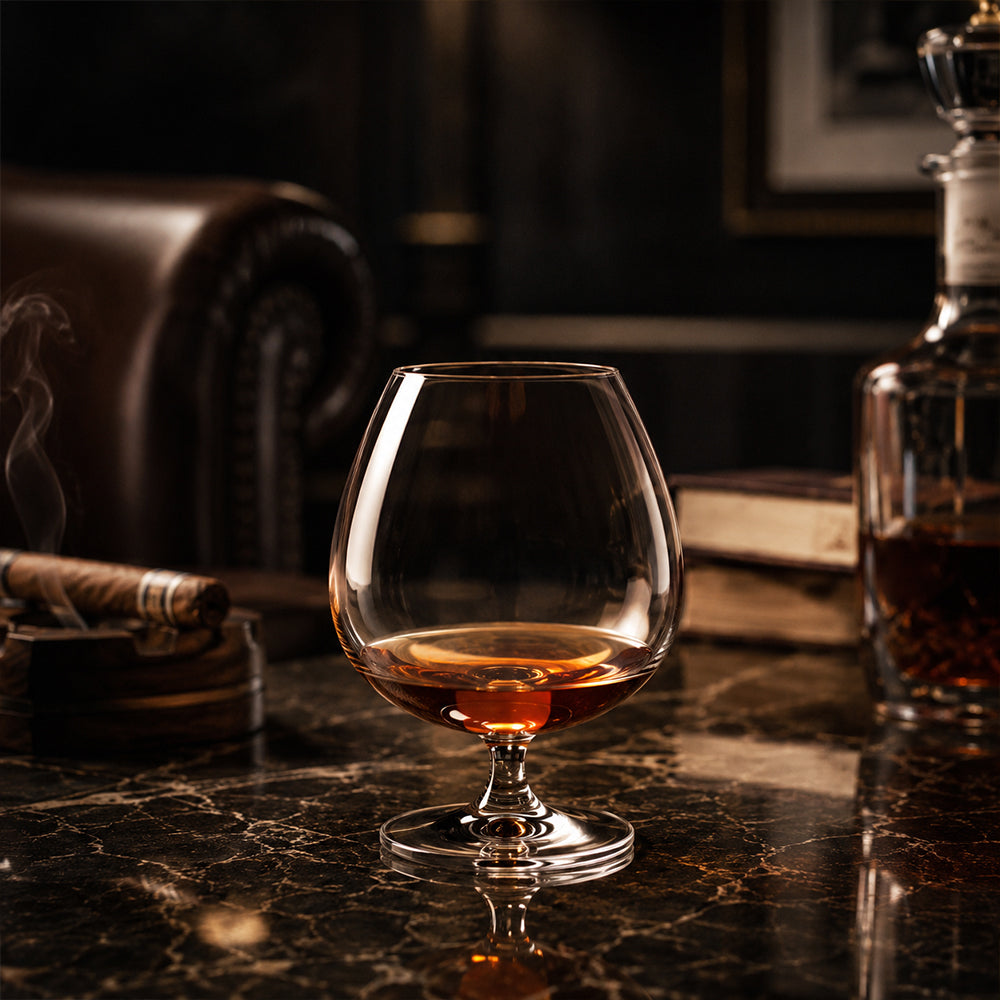
Riedel Vinum Snifter 84 cl. A wide bowl for slowly tasting complex whiskies, cognac, and brandy, leaving room for aromatic development.
How to Taste Whisky in the Correct Glass
To taste whisky, it is not necessary to fill the glass abundantly. A moderate dose leaves room for aromas and allows you to tilt or gently swirl the spirit without risking spills.
Practical Procedure
- Use a clean, dry, and odor-free glass.
- Pour a moderate amount of whisky.
- Observe color, clarity, and consistency.
- Let the spirit rest for a few minutes.
- Gradually bring your nose closer to the opening.
- Inhale gently without immediately seeking maximum intensity.
- Taste a small sip and let it spread across the palate.
- Consider adding a few drops of water if necessary.
Should You Swirl the Whisky in the Glass?
It is possible to gently swirl it to increase contact with the air, but it is not necessary to shake the spirit with the same energy used for some wines. Excessive movement can make the alcohol more evident and make the olfactory analysis less comfortable.
How Much Water to Add?
There is no universal amount. You can start with a few drops, taste, and decide if more is needed. The goal is not to automatically dilute the whisky but to see if a minimal amount of water makes some aromas more readable.
Ice in Whisky: Which Glass to Use?
For whisky with ice, a spacious and stable tumbler is recommended. The opening should be wide enough to accommodate large ice cubes or an ice sphere.
A large cube generally melts more slowly than many small cubes, limiting rapid dilution. The thick bottom does not keep the whisky cold by itself but offers stability during service and mixing.
Glencairn and Snifter are not usually the most practical choice for large amounts of ice. Their shape is mainly designed for neat tasting and aroma concentration.
How to Create a Whisky Corner at Home
To create a small whisky corner, you don't need to buy many different glasses. It is enough to start with the most frequent type of service and gradually add complementary shapes.
The Essential Selection
- A set of tumblers: for whisky with ice, cocktails, and daily service.
- Two or four tasting glasses: for sampling neat whisky and comparing labels.
- A Snifter: for cognac, brandy, and complex spirits.
Useful Accessories
- A jigger to control the amount poured.
- An ice bucket to store ice during service.
- Tongs to handle cubes neatly.
- A tray to organize bottles, glasses, and accessories.
- Coasters suitable for protecting the surface.
The collection of glasses for whisky, cognac, and brandy allows you to compare essential tumblers, decorated glasses, and tasting goblets with different capacities.
Common Mistakes with Whisky Glasses
- Overfilling the glass: reduces the space available for aromas.
- Using a huge Snifter like a tumbler: the high capacity is for the bowl, not a larger dose.
- Intentionally warming the spirit: excessive heat can accentuate the alcoholic component.
- Serving complex whiskies in glasses with residual odors: detergents and closed cabinets can interfere with tasting.
- Using the Glencairn for large ice cubes: the shape is not designed for this service.
- Choosing based only on aesthetics: opening and capacity must be consistent with use.
- Immediately bringing the nose to the glass: with intense whiskies, it is preferable to proceed gradually.
- Confusing capacity with dose: even a very large goblet should contain a moderate amount of spirit.
How to Wash and Store Whisky Glasses
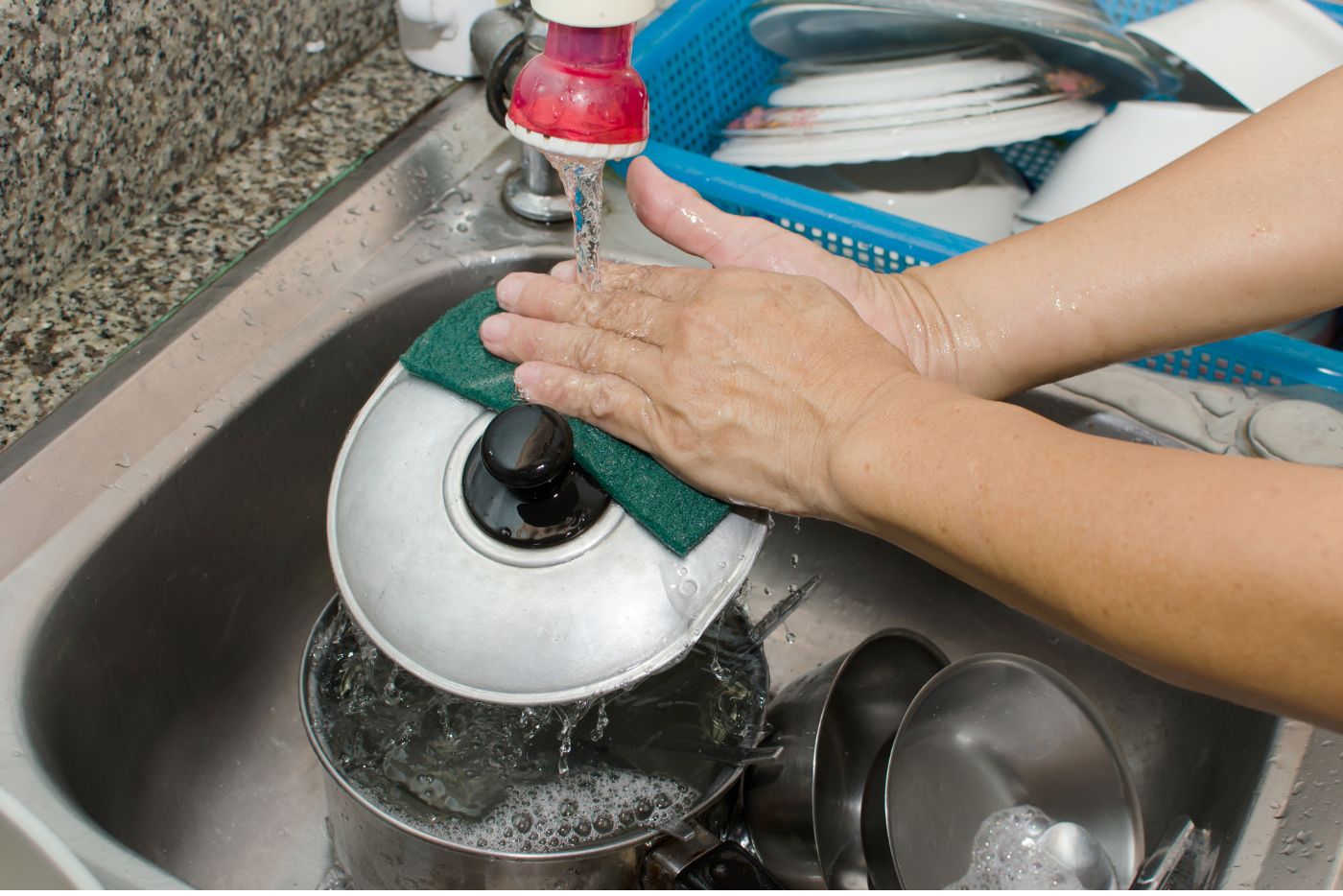
Glasses should be washed according to the manufacturer's instructions. For manual washing, it is advisable to use lukewarm water, a little neutral detergent, and a soft sponge free of greasy residues.
Rinsing must completely remove the detergent, as any scents can interfere with the whisky's aromas. Glasses should then be left to dry in a ventilated environment or polished with a clean, lint-free cloth.
Snifters with stems require particular attention: do not twist the base and bowl in opposite directions during washing. Tumblers and Rocks Glasses are generally more robust but should still be protected from impacts.
It is preferable to store them upright and in an odor-free cabinet. Before tasting, a quick check ensures the absence of dust or residues.
Which Whisky Glass to Choose?
The tumbler is the most versatile choice for whisky with ice, cocktails, and daily service. The Glencairn is suitable for those who want to focus on aromas and compare different spirits. The Snifter accompanies slow tastings of structured whiskies, cognac, and brandy.
For a complete bar corner, it is useful to pair at least two shapes: a 30-40 cl tumbler and a tasting glass. This way, you can choose the tool based on the bottle and occasion, without asking a single model to perform very different functions.
The final choice should also consider capacity, style, and number of pieces. A set of six is practical for hosting guests, while a pair of large Snifters can be reserved for more tranquil tastings.
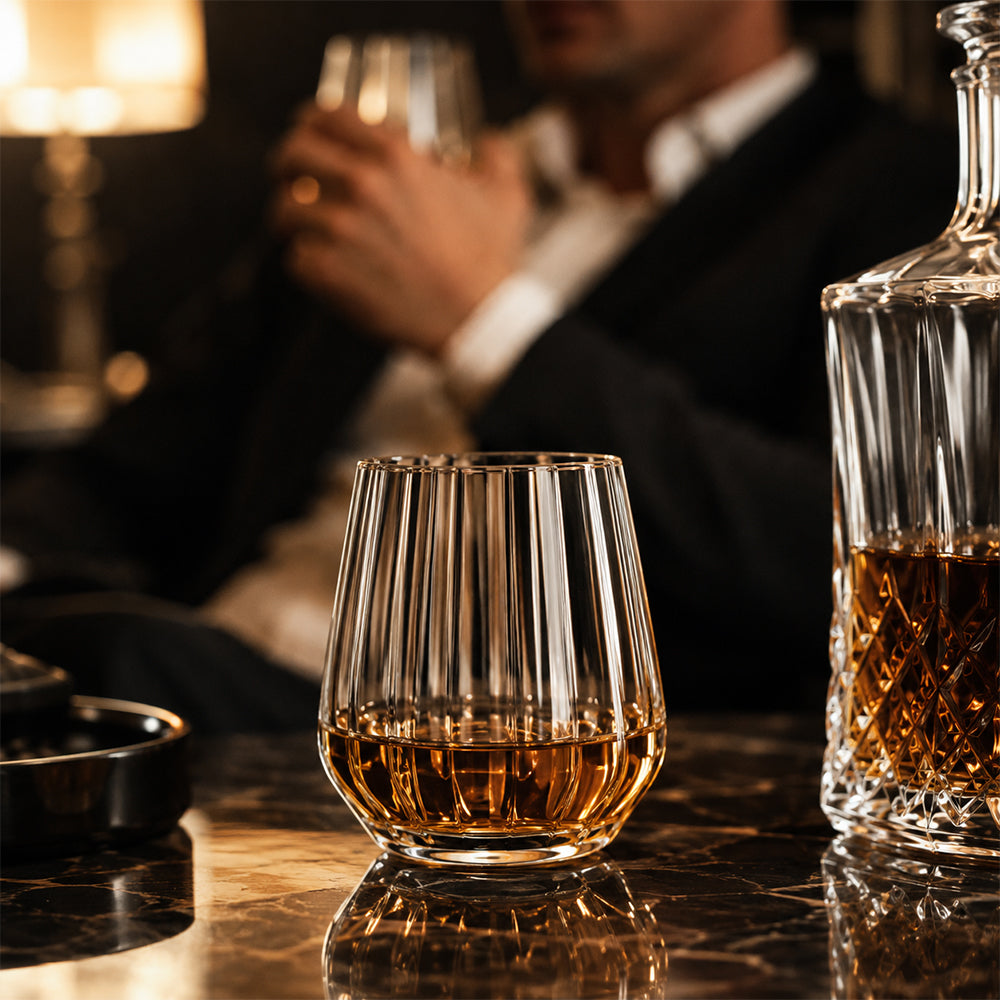
Choose the glass based on the service. Tumbler for ice and cocktails, enclosed shapes for tasting, and Snifter for complex whisky, cognac, and brandy.
Frequently Asked Questions About Whisky Glasses
What is the best whisky glass?
There is no absolute best glass. The tumbler is suitable for ice and cocktails, the Glencairn for aromatic tasting, and the Snifter for complex whiskies, cognac, and brandy.
Which glass to use for drinking whisky neat?
For neat whisky, a Glencairn or a glass with a wide bowl and narrow opening is recommended. This shape concentrates aromas more effectively than an open tumbler.
Which glass to use for whisky with ice?
For whisky with ice, a tumbler or Rocks Glass of at least 30 cl is preferable, with a stable base and a wide enough opening for large ice cubes.
What is the difference between a tumbler and a Glencairn?
The tumbler is low, wide, and suitable for ice and cocktails. The Glencairn has a more enclosed shape that directs aromas to the nose and is primarily designed for tasting.
What is the difference between Glencairn and Snifter?
Both concentrate aromas, but the Glencairn has a more compact structure oriented towards whisky analysis. The Snifter generally has a wider bowl and is also used for cognac and brandy.
Is the Snifter suitable for whisky?
Yes. The Snifter is especially suitable for complex, structured, or aged whiskies. The wide bowl promotes aroma development, while the narrow opening limits dispersion.
How much whisky should be poured into the glass?
It is sufficient to pour a moderate amount, leaving most of the glass empty. The empty space allows aromas to develop and facilitates olfactory analysis.
Is an 80 cl glass too large for whisky?
A high capacity does not mean the glass should be filled. In large Snifters, the wide bowl serves to develop aromas, while the spirit remains concentrated in the lower part.
Can whisky be drunk in a cognac glass?
Yes. A cognac glass of the Snifter type can be used for complex whiskies and slow tastings. However, it is advisable to avoid excessively warming the bowl with your hand.
Is it better to have a plain or decorated whisky glass?
Decoration alone does not determine the quality of the tasting. A plain glass highlights transparency and color, while a decorated model adds presence to the service. Shape and opening remain the most important elements.
Which glass to use for an Old Fashioned?
The Old Fashioned is traditionally served in a low tumbler or Rocks Glass, large enough to hold whisky, sugar, bitters, and a large ice cube.
Should a whisky glass have a thick bottom?
A thick bottom is useful in tumblers because it increases stability and resistance during service with ice and cocktail preparation. In tasting glasses, it is not an essential feature.
Can whisky glasses be washed in the dishwasher?
It depends on the model and the manufacturer's instructions. Robust tumblers and some goblets may be compatible, while thin, decorated, or stemmed glasses require more attention.
How many whisky glasses are needed for a home bar?
An essential set includes at least four or six tumblers for daily service and two tasting glasses. Those who also serve cognac and brandy can add a pair of Snifters.
Where to buy glasses for whisky, cognac, and brandy?
You can compare tumblers, Rocks Glasses, and Snifter goblets in the collection of glasses for whisky, cognac, and brandy on Alberoshop.it, choosing the capacity, style, and packaging that best suit your home bar.