




Lunch Away from Home: How to Store, Transport and Reheat Food
Preparing a packed lunch has become part of many people's daily routine. Some take lunch to the office, others eat at university, spend much of the day travelling or simply prefer to prepare their meal at home before taking it with them.
The question, however, is always the same: how can you transport your lunch while keeping it practical, fresh and well organised?
The answer does not depend solely on the recipe. The food container plays a fundamental role: it must be suitable for the type of dish, the required storage temperature, transportation and, when necessary, reheating.
A cold salad, a portion of pasta to reheat and a soup that needs to stay warm for several hours have very different requirements. There is therefore no single lunch box that is ideal for everyone: your choice should depend on what you eat, where you have lunch and which facilities are available.
The right container depends on your lunch break: choose glass if you need to store and reheat your meal, an insulated solution if you eat away from a refrigerator and microwave, or different sizes if you prepare several meals in advance.
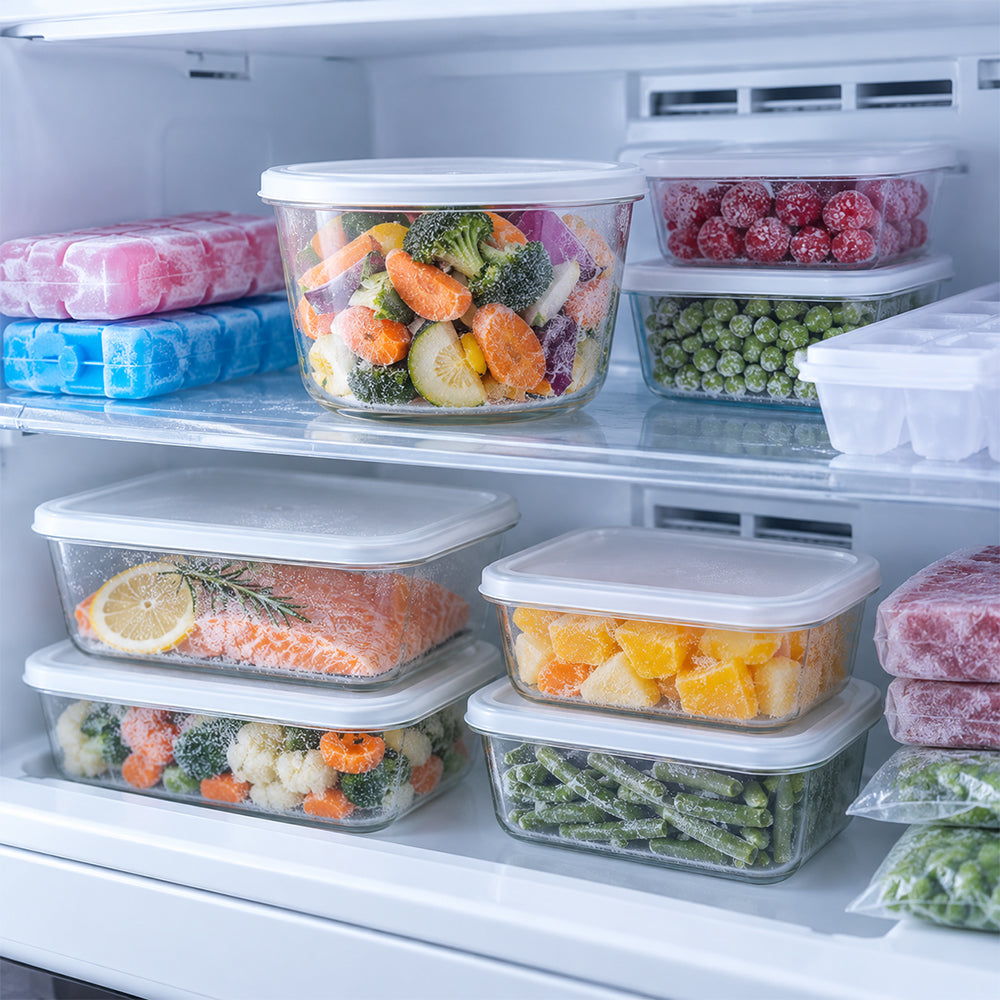
How to Choose a Container for Lunch Away from Home
Before choosing a lunch box, it is useful to answer four simple questions.
- Do you have access to a refrigerator?
- Can you reheat your lunch in a microwave?
- Do you need to carry liquids or food with dressings and sauces?
- Do you want to keep your food hot or cold while travelling?
Your answers will largely determine the most suitable option.
If you have access to both a refrigerator and a microwave, you can choose glass containers designed for storing food and reheating it later. If you spend many hours away from a kitchen, an insulated food container may be more useful.
For salads, snacks, fruit, grains and cold dishes, capacity, closure and ease of transportation become particularly important.
Do You Have a Microwave? Glass Is a Practical Solution
If a microwave is available at the office, university or workplace, you can organise your lunch using a single container: prepare your meal at home, store it in the refrigerator and reheat it when it is time to eat.
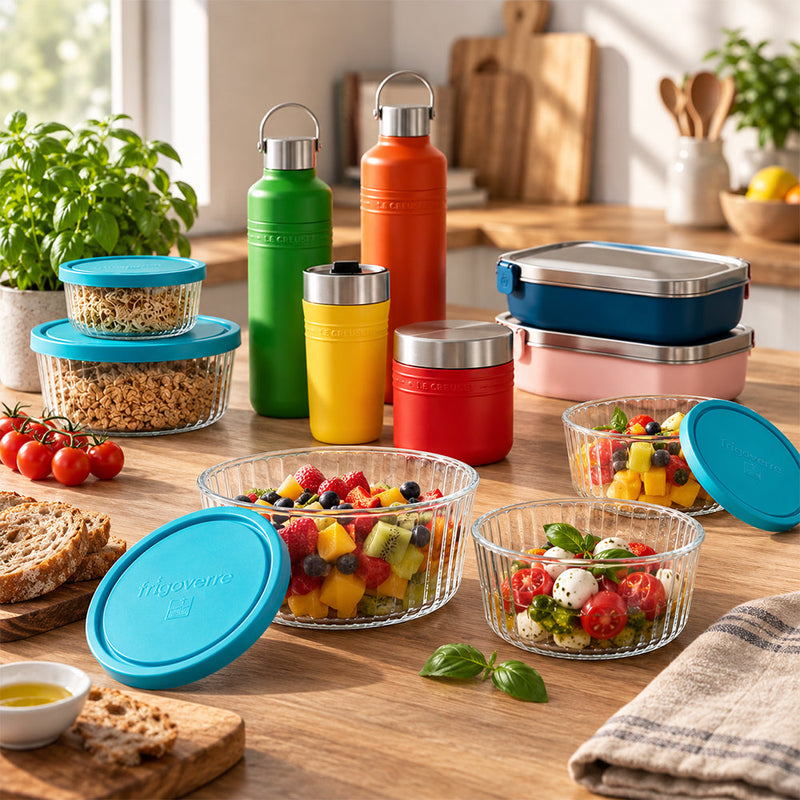
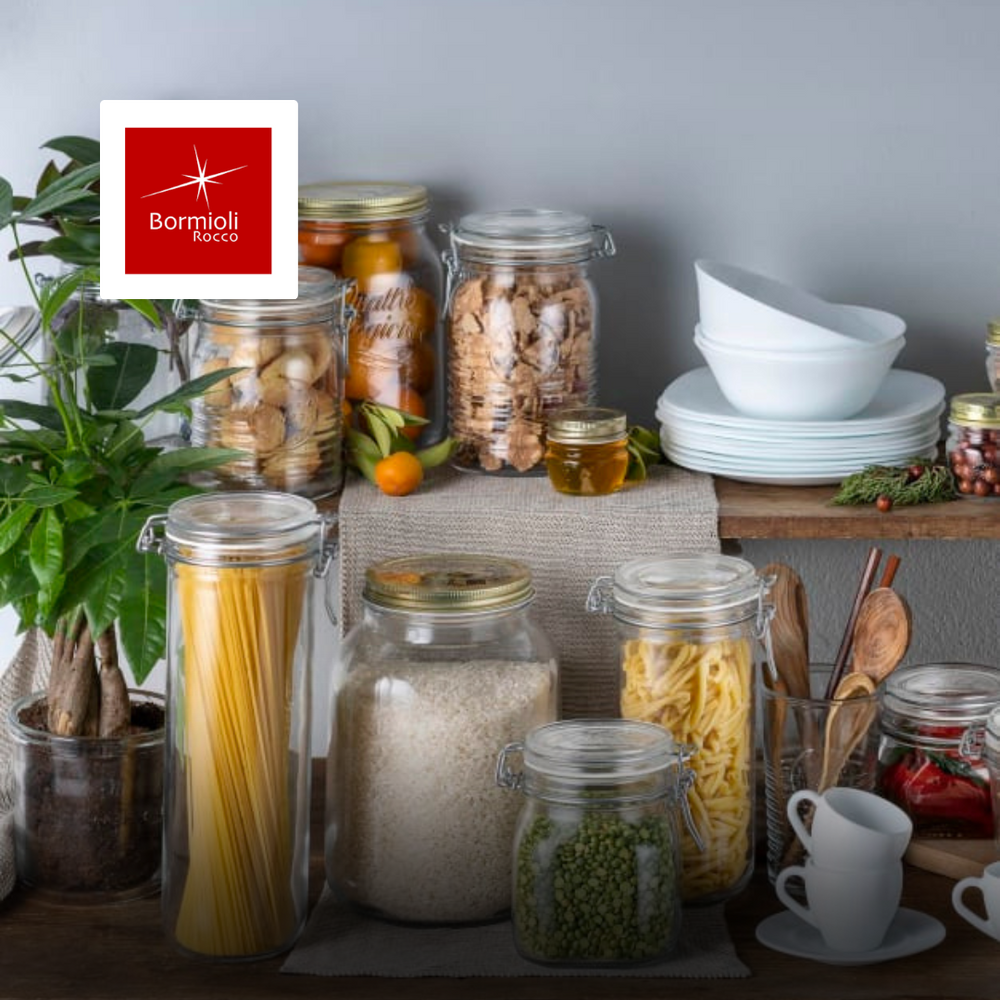
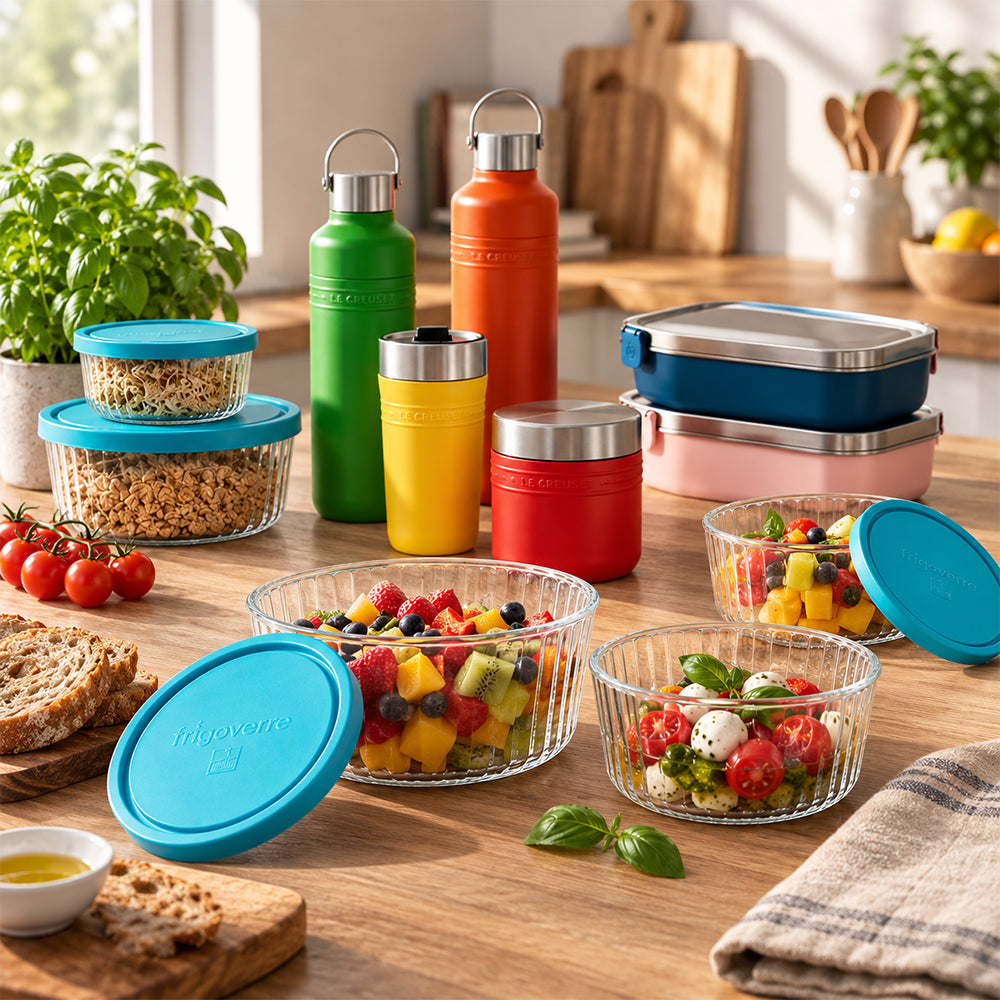
Bormioli Rocco Frigoverre containers are a particularly versatile solution for this type of use.
The glass body allows you to see the contents immediately and makes it easier to organise portions and prepared dishes inside the refrigerator. Glass also does not readily absorb food odours or colours and is suitable for many everyday preparations.
Before reheating, however, always check the instructions for the specific model, particularly those concerning lids, valves, accessories and microwave use.
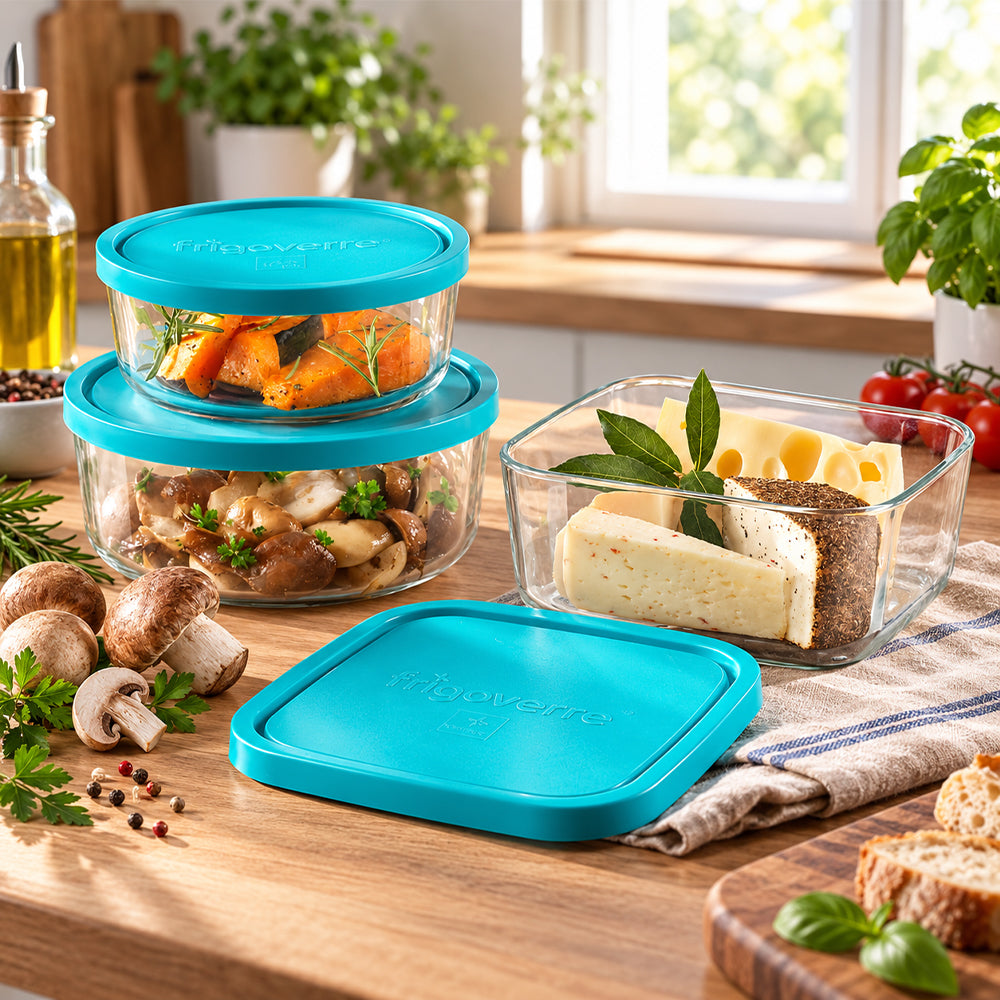
Prepare your meal the night before, store it in the refrigerator and take it with you: glass containers are particularly practical when a microwave is also available at your destination.
What If There Is No Microwave?
Not everyone has the option of reheating lunch. People who work out in the field, travel frequently or spend many hours away from a kitchen need to take a different approach.
In these cases, an insulated food container can be useful. It is designed to limit heat transfer with the surrounding environment and keep its contents hot or cold for longer than a standard lunch box.
The Le Creuset On The Go collection was created specifically for carrying food and drinks away from home, with solutions designed for everyday transport.
An insulated container can be particularly useful for soups, creamy soups, rice, pasta, grains and other meals you want to enjoy without relying on a microwave.
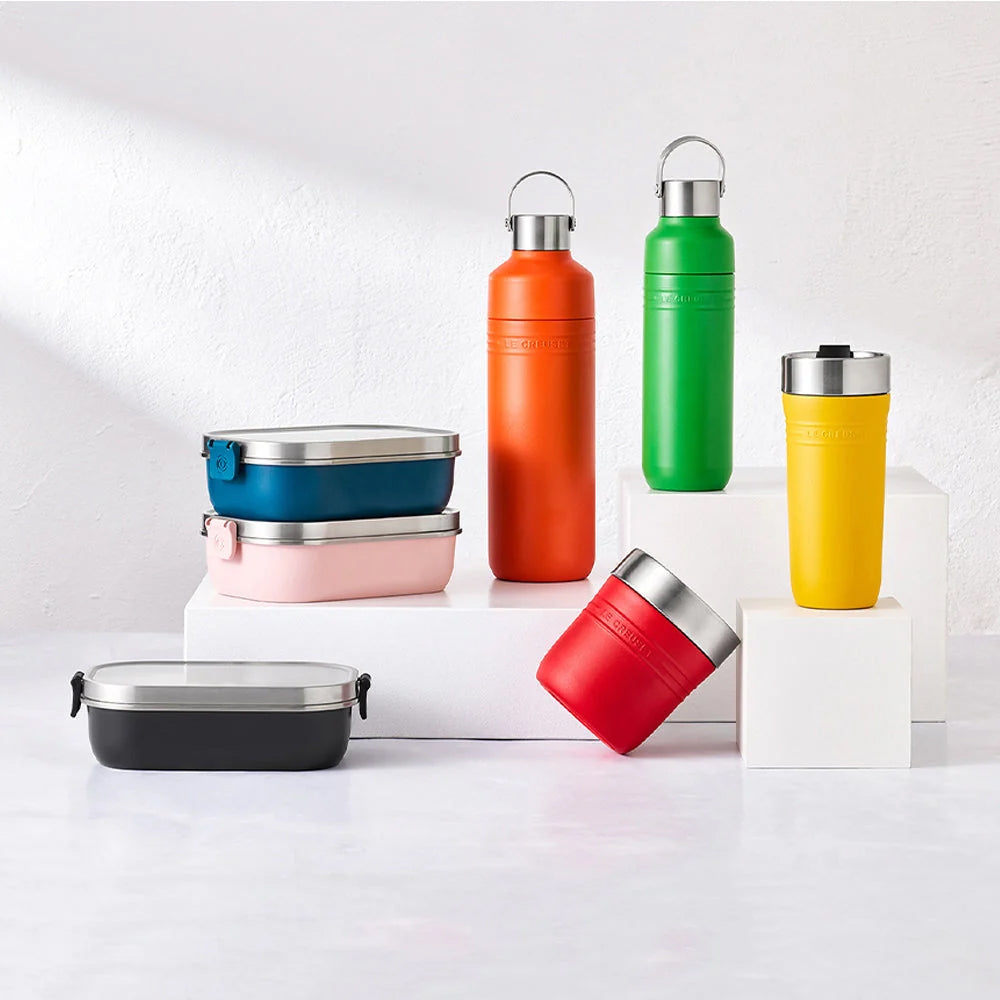
No microwave? An insulated container allows you to organise your lunch without relying on the office kitchen and can accompany you on journeys and days away from home.
Glass Container or Insulated Lunch Box: Which Should You Choose?
The two solutions meet different needs. The most useful comparison is not about which is best overall, but how and where you will eat your meal.
| Requirement | Glass container | Insulated container |
|---|---|---|
| Refrigerator storage | Very practical | Depends on the model |
| Microwave reheating | Possible with compatible models, following the manufacturer's instructions | Generally not its intended purpose |
| Temperature retention | Limited during transportation | A key strength of insulated solutions |
| Visibility of the contents | Immediate | Generally not possible |
| Ideal for | Offices with a refrigerator and microwave, meal prep and meals to reheat | Field work, travel and meals without access to reheating facilities |
Why Is the Lunch Box Closure Important?
A good lunch container should do more than simply hold food. It must also be easy to carry inside a bag, backpack or insulated lunch bag.
The closure is therefore one of the most important aspects to consider, particularly when the meal includes dressings, sauces or moist foods.
A well-designed closure helps keep the contents separate from the outside environment and makes transportation more practical. For particularly liquid dishes, always check that the manufacturer explicitly states that the product is suitable for this type of use.
Which Lunch Box Capacity Should You Choose?
A container that is too small forces you to compress the meal. One that is too large takes up unnecessary space in your backpack and may be inconvenient to carry.
The ideal capacity largely depends on the type of food.
- Snacks, yoghurt, fruit or small side dishes: compact containers are sufficient.
- Pasta, rice, grains and one-dish meals: a medium-sized container is more suitable.
- Complete salads: a larger container may be useful to avoid compressing the ingredients.
- Soups and creamy soups: choose a size appropriate for the portion and specifically designed for liquids.
If you take several courses with you, using two smaller containers may be more practical than carrying one very large one. Your lunch remains better organised, and foods with different textures and temperatures can be kept separate.
Meal Prep: Preparing Meals in Advance
Food containers are particularly useful for meal prep: the advance planning and preparation of one or more meals.
Preparing some basic ingredients in advance reduces the time required during the week. Rice, grains, cooked vegetables, pulses and other dishes can be divided into portions and stored in separate containers, always respecting the appropriate storage times and temperatures for the ingredients used.
Being able to see the contents immediately, especially when using transparent containers, also helps you remember what has already been prepared and use food before it is forgotten in the refrigerator.
In our collection of food containers, you can compare different sizes and materials for organising both your lunch break and everyday food storage in the kitchen.
How to Store a Home-Prepared Lunch Correctly
The container is important, but it is not enough on its own. Temperature management is also essential when preparing a meal several hours in advance.
After preparation, foods that require refrigeration must be cooled and stored correctly. If lunch needs to remain outside the refrigerator for several hours, an insulated bag with suitable cooling elements may be necessary.
The same principle applies to hot food: an insulated container can slow down heat loss, but it is important to use it according to the manufacturer's instructions and follow appropriate food-storage practices.
How to Reheat Lunch in the Microwave
If you use a microwave-safe container, a few simple habits can help food heat more evenly.
Distribute the food inside the container and, where possible, avoid dense, compact portions. Stirring the food during reheating can also help distribute the heat more evenly.
Most importantly, always check the container's instructions. A glass body does not automatically mean that every component, including the lid, should be used in the same way during reheating.
What Can You Take to the Office for Lunch?
Choosing the right container becomes easier when you consider it together with the menu.
Pasta and Rice
These are among the easiest dishes to prepare in advance. If they need to be reheated, a container suitable for both the refrigerator and microwave makes them particularly easy to manage.
Salads
Choose a container large enough to avoid compressing the ingredients too much. Liquid dressings can be carried separately and added shortly before eating.
Soups and Creamy Soups
These require particular attention to the closure. If you cannot reheat them, an insulated container specifically designed for food may be a more suitable solution.
Main Courses and Vegetables
They can be arranged in the same container or kept separate, especially when they have different textures or when one part of the meal needs to be reheated and another eaten cold.
Snacks and Fruit
Small separate containers make it easier to organise your day and avoid using an oversized lunch box for small portions.
Mistakes to Avoid When Taking Lunch Away from Home
- Choosing a container solely for its appearance: capacity, closure, material and intended use come first.
- Assuming it is microwave-safe: always check the manufacturer's specific instructions.
- Ignoring the correct storage temperature: a container cannot replace a refrigerator or insulated bag when one is required.
- Using a very large container for a small portion: this increases bulk and makes transportation less practical.
- Carrying liquids in unsuitable containers: check that both the closure and the product are designed for this purpose.
- Mixing everything in advance: some ingredients retain their texture and flavour better when stored separately.
Frequently Asked Questions About Packed Lunches
What Is the Best Container for Taking Lunch to the Office?
It depends on the facilities available. If you have access to a refrigerator and microwave, a compatible glass container can be very practical. If you cannot reheat your meal, an insulated container may be more useful.
Is a Glass or Stainless-Steel Lunch Box Better?
Glass is particularly practical for storing meals and, with compatible models, reheating them. Stainless steel is widely used for insulated food containers and lunch boxes designed for transportation. The right choice depends mainly on how you will eat the meal.
Can I Reheat Lunch Directly in the Container?
Yes, but only when the container is specified as microwave-safe. It is also important to check the instructions for the lid and any accessories separately.
How Can I Keep Lunch Hot Without a Microwave?
You can use an insulated food container designed to limit heat loss. Performance and usage instructions vary between models, so always follow the manufacturer's directions.
How Can I Carry Soup Without It Leaking?
Choose a container that is explicitly suitable for liquids and carefully check its closure system. It is still preferable to keep it upright during transportation.
Which Containers Are Most Practical for Meal Prep?
Stackable containers available in several sizes allow you to divide dishes into portions and organise both the refrigerator and the week's meals more efficiently. Choose the material according to the type of food and whether it will need reheating.
How Can I Take Lunch to Work Without a Refrigerator?
Foods that must remain refrigerated should be carried in an appropriate insulated solution, potentially with cooling elements. For meals intended to be eaten hot, a dedicated insulated food container may be useful.
The Right Lunch Box Makes the Entire Day Easier
Organising a packed lunch becomes much easier when the container and meal are planned together.
If you have access to a microwave, a glass solution such as Bormioli Rocco Frigoverre can accompany your meal from storage through to serving. If you spend the day away from a kitchen, Le Creuset On The Go solutions meet different transportation needs.
You do not necessarily need to buy dozens of lunch boxes. It is much more useful to create a small system made up of different sizes: one container for the main dish, a smaller one for snacks or side dishes and, when needed, an insulated solution.
Our selection of food containers includes solutions designed to organise, store and transport food in everyday life, from the home kitchen to your lunch break.
Before buying a lunch box, ask yourself where you will eat: will you have access to a refrigerator or microwave, or will you be travelling or spending the day away from home? Once this is clear, choosing the material, capacity and size becomes much easier.