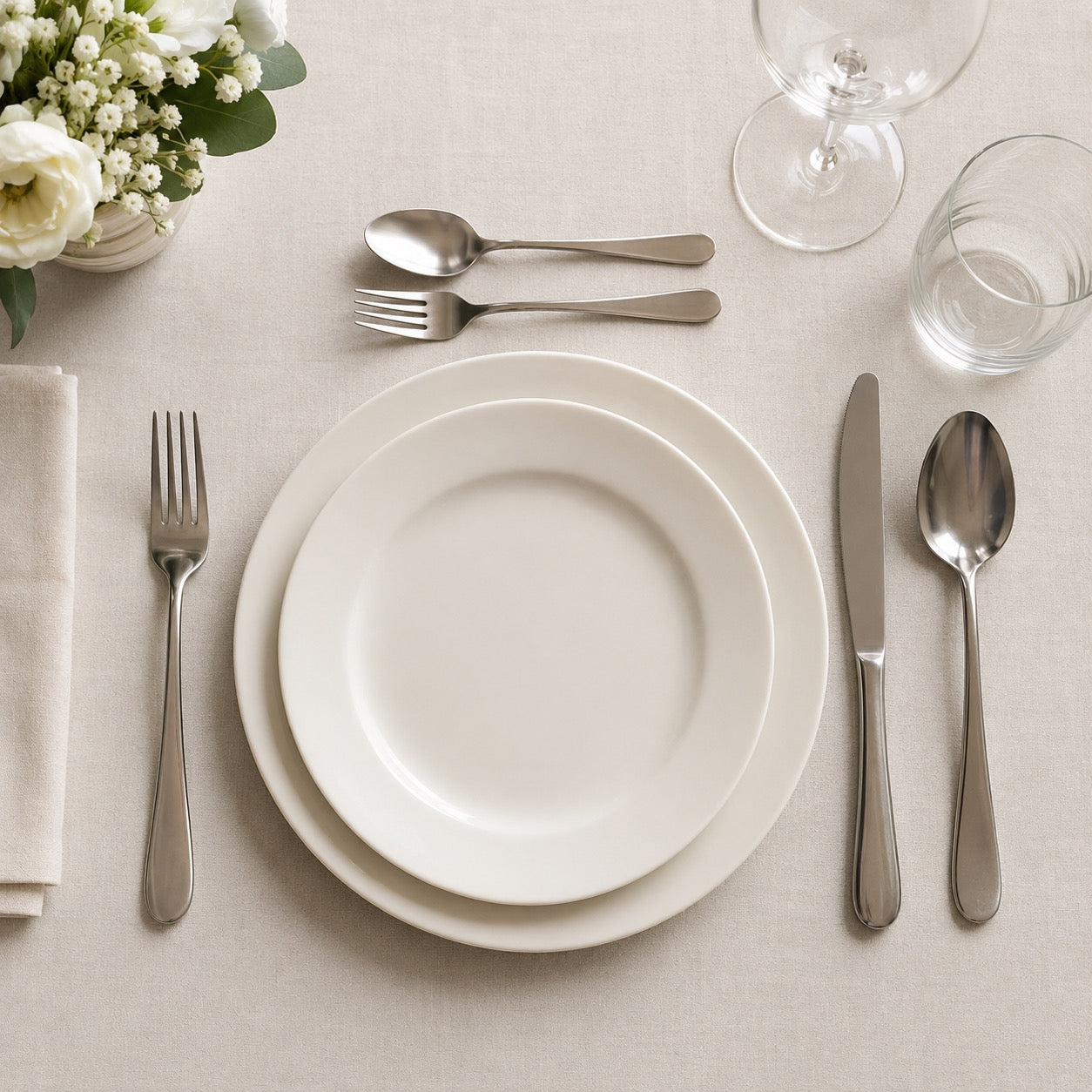
Mise en place: how to set the table correctly
Mise en place is the art of setting the table in an orderly, functional way that is consistent with the type of meal. It is not just about aesthetics: a well-organised table helps guests move naturally between plates, cutlery and glasses, making service smoother and more pleasant.
Whether it is a formal dinner, a family lunch or a carefully set table for a special occasion, knowing the basic rules for arranging plates, cutlery and glasses helps avoid confusion and create an elegant mise en place without rigidity.
In this Alberoshop.it guide, we look at how to set the table correctly, where to place plates, cutlery and glasses, which accessories to use and which mistakes to avoid.
Mise en place works when it is beautiful, but above all readable: every element must have a clear position and help the service, not complicate it.
What mise en place means
The expression mise en place comes from French and literally means “putting in place”. In the kitchen and dining service, it refers to the orderly preparation of everything needed before guests arrive: plates, cutlery, glasses, napkins, serving accessories and decorations.
In the context of the table, creating a good mise en place means placing each element in the right position, following a practical logic. The plate remains the centre of the place setting, cutlery follows the order of use and glasses are positioned at the top right, according to the type of drink planned.
Where to start to set the table well
The first element to consider is the type of meal. Breakfast, an everyday lunch, an elegant dinner or a complete menu require different levels of table setting. You do not always need to use every element: the best mise en place is the one that is proportionate to the occasion.
The basic elements of mise en place
- Plates: dinner plate, soup plate, starter plate or charger plate depending on the menu.
- Cutlery: forks, knives, spoons and dessert cutlery, arranged according to the order of use.
- Glasses: water, red wine, white wine and, if needed, a glass for sparkling wine.
- Napkin: to the left of the plate, on top of the plate or in a position consistent with the style of the table.
- Accessories: bread, place cards, charger plate, centrepiece and small decorative elements.
Where to place the plates
The main plate should be placed at the centre of the place setting. It is the reference point from which the whole table is built. Other elements can be added above or below it, depending on the menu and the level of formality.
In a complete mise en place, a charger plate can be used as a decorative and functional base. The dinner plate is placed on top of the charger, while the soup plate or starter plate is added only if required by the service.
Correct order of the plates
- Charger plate: optional, used for elegant or formal tables.
- Dinner plate: at the centre of the place setting, the main base of the service.
- Soup plate: above the dinner plate, if the menu includes pasta, soups or broths.
- Starter plate: above the dinner plate, if planned as the first course.
- Bread plate: at the top left, in more complete table settings.
The main plate goes at the centre of the place setting. From here the whole mise en place is built: charger plate, dinner plate, soup plate or starter plate depending on the menu.
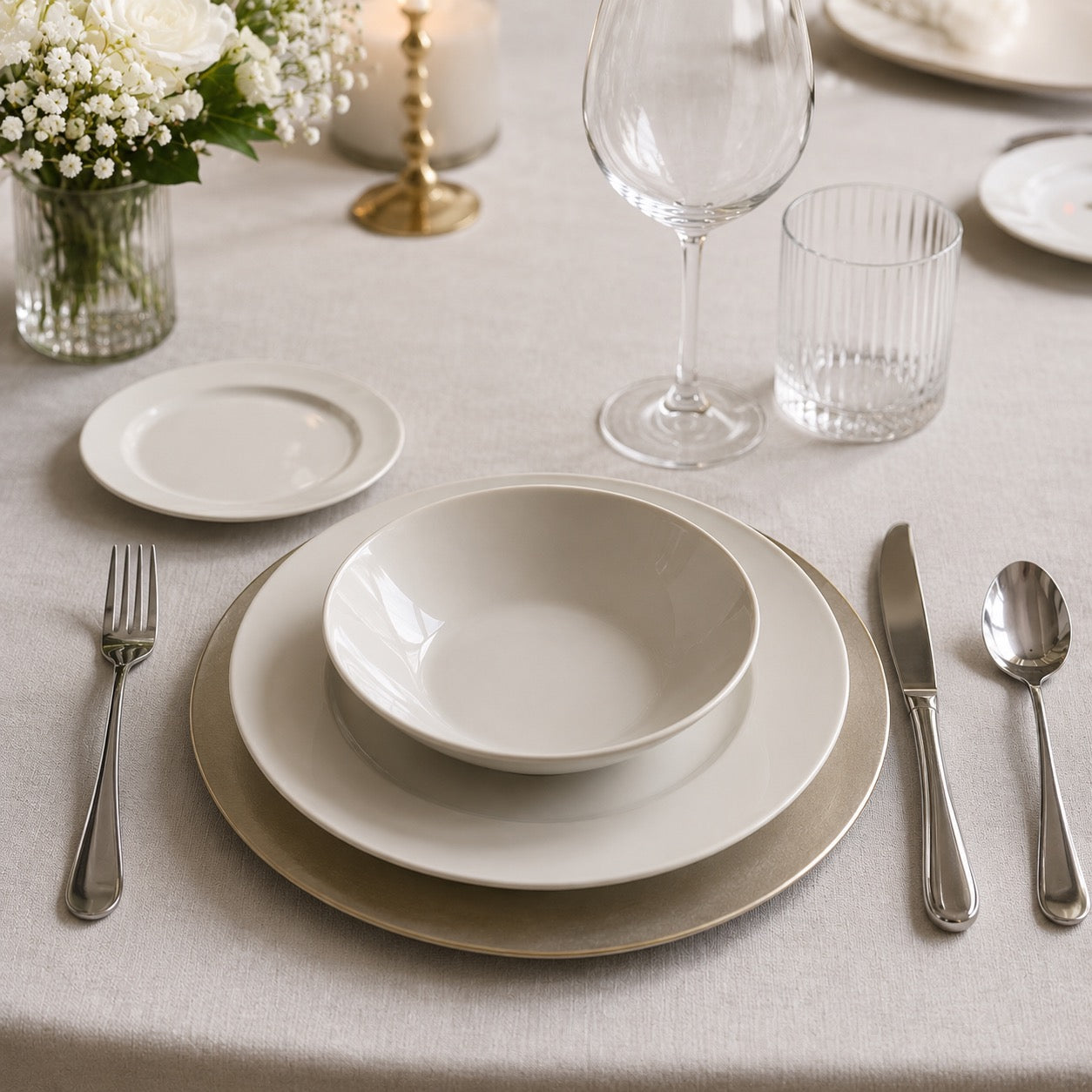
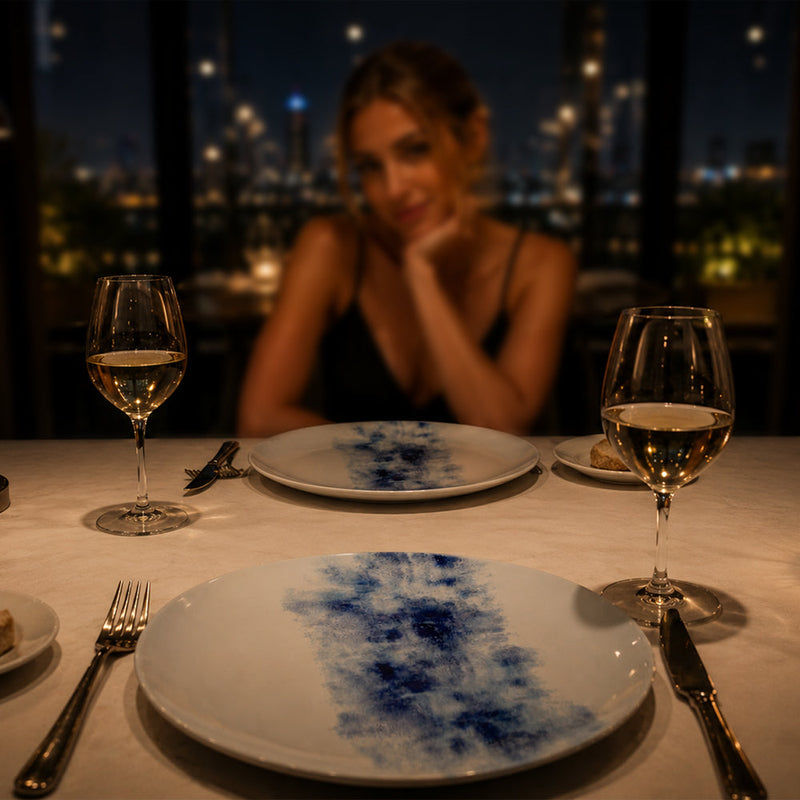
For a coordinated table, you can start from the selection of dinner sets, choosing materials and colours consistent with the style of your home.
Where to place the cutlery
The arrangement of cutlery on the table follows a simple rule: it is placed from the outside in, according to the order of the courses. The first cutlery to be used is therefore the outermost, while the pieces closest to the plate are used for the following courses.
Forks go to the left of the plate. Knives and spoons are placed on the right. Knife blades must face the plate, both for aesthetic reasons and according to table etiquette.
Correct order of cutlery
- Forks: to the left of the plate, in order of use from outside to inside.
- Knives: to the right of the plate, with the blade facing inward.
- Spoon: on the right, outside the knife, if required by the menu.
- Dessert cutlery: above the plate, in a horizontal position.
- Fish cutlery: added only if the menu requires it.
Cutlery is arranged according to the order of use: forks on the left, knives and spoons on the right, with blades facing the plate. Dessert cutlery goes above the plate.
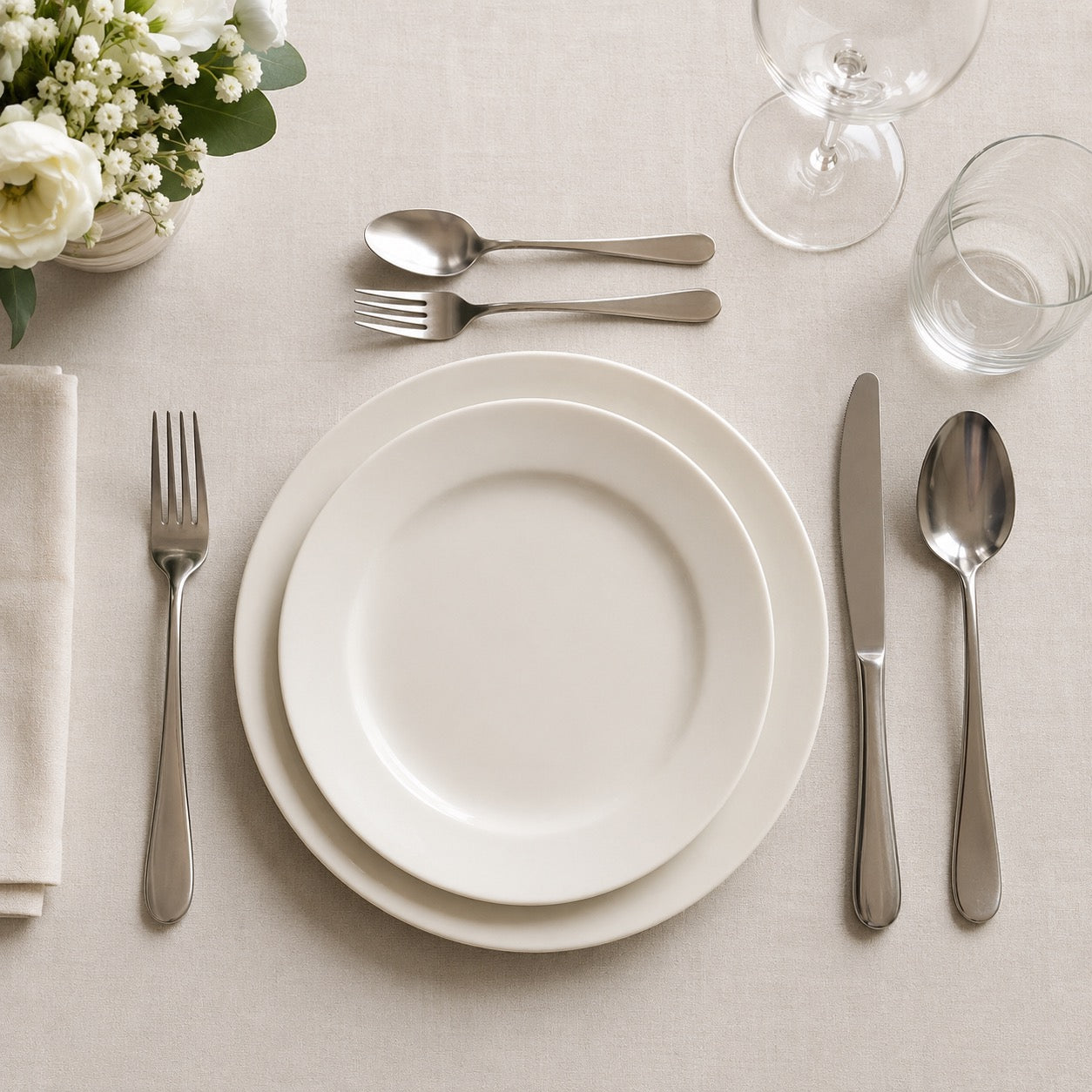
To complete the table, you can choose a set from the cutlery collection, evaluating style, finish and number of pieces according to everyday use or special occasions.
Where to place the glasses
The arrangement of glasses on the table also follows a precise logic. Glasses are placed above the plate, slightly shifted to the right, in line with the tip of the knife.
The water glass is usually the first reference point. Wine glasses are placed next to it, following the order of service. If a toast with sparkling wine or champagne is planned, a flute or a specific glass for bubbles can also be added.
Order of glasses on the table
- Water glass: at the top right of the plate.
- Red wine glass: near the water glass.
- White wine glass: slightly further to the right or in a forward position, depending on the space.
- Flute or sparkling wine glass: added if an aperitif, toast or dessert is planned.
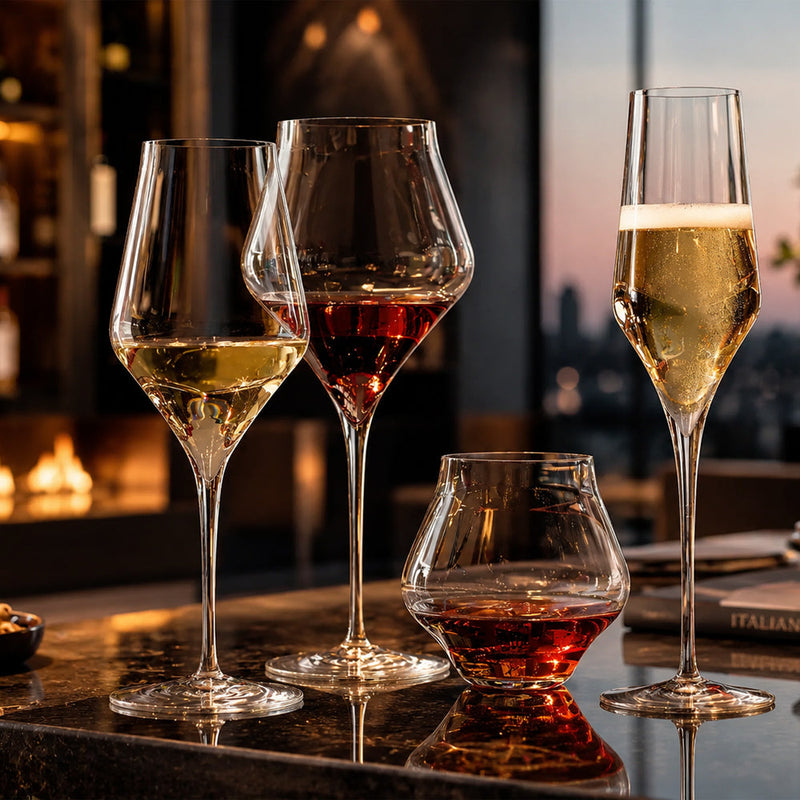
Glasses should be placed above the plate, slightly to the right, following the logic of service: water, red wine, white wine and, if planned, a glass for sparkling wine.
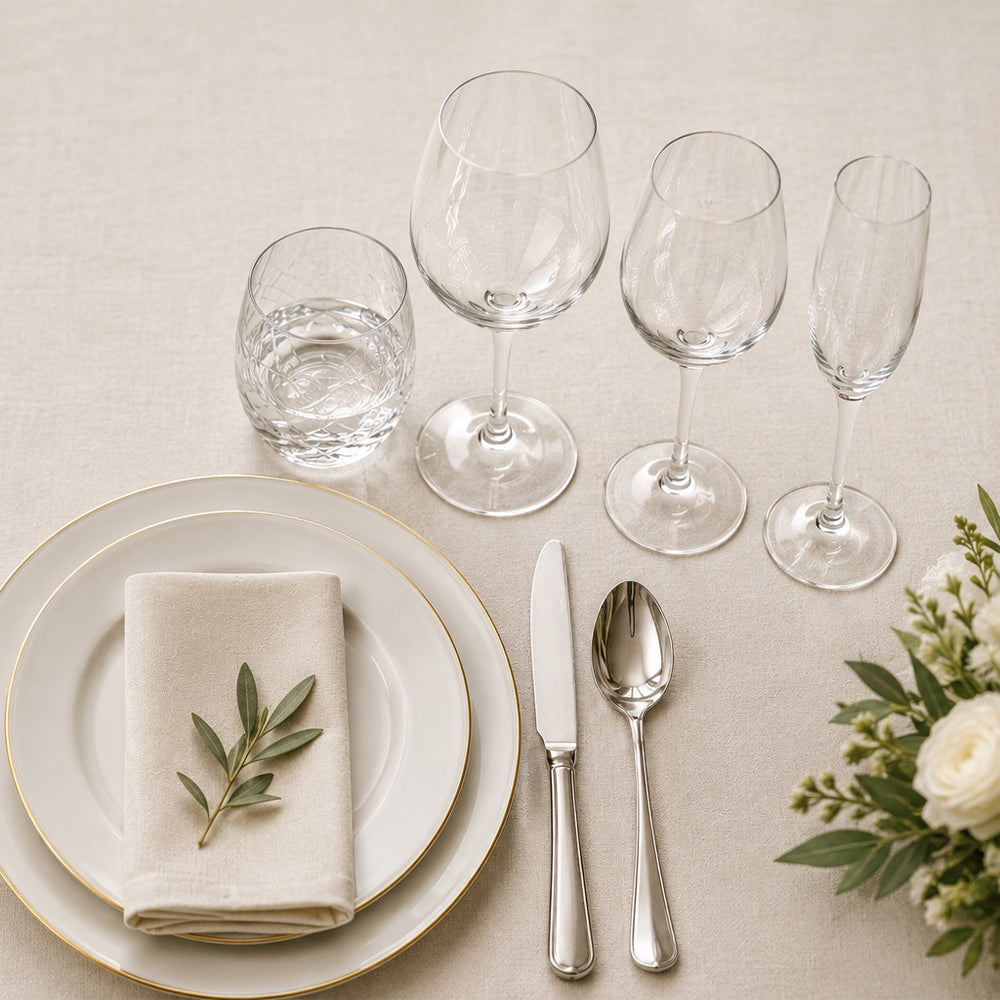
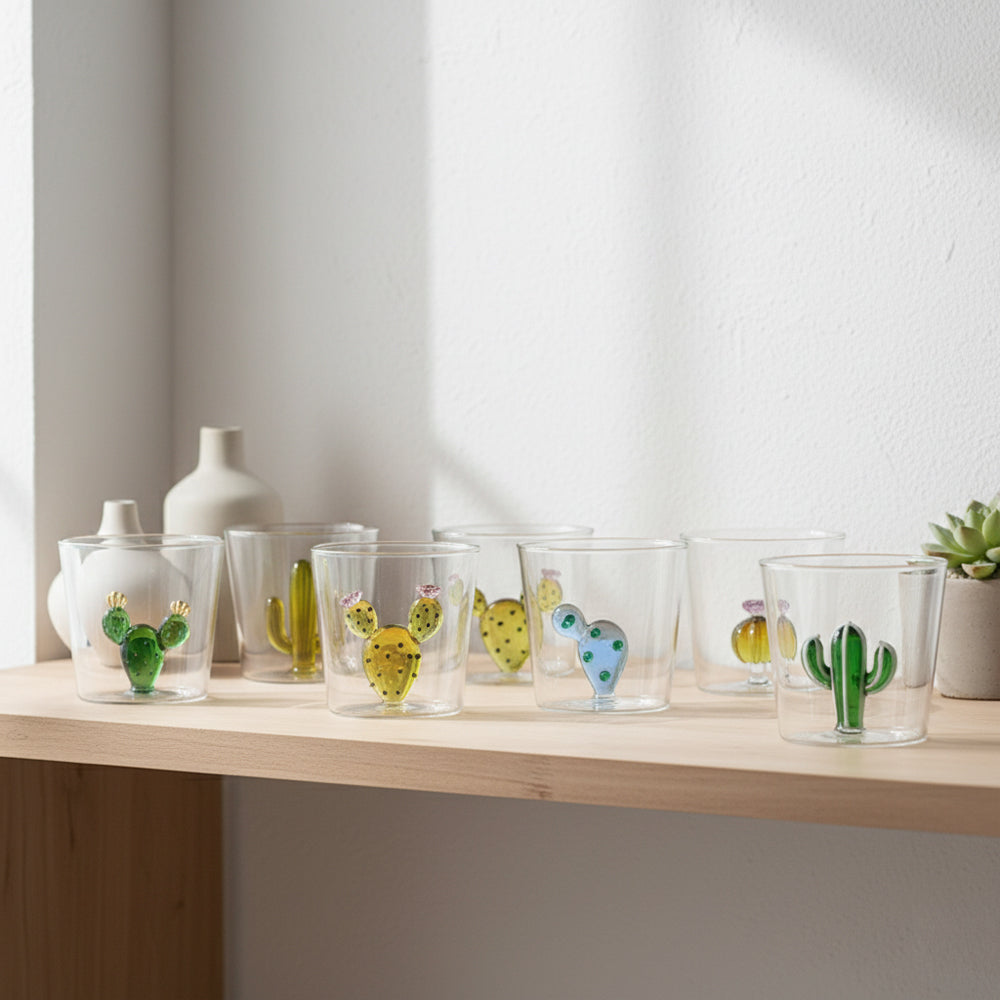
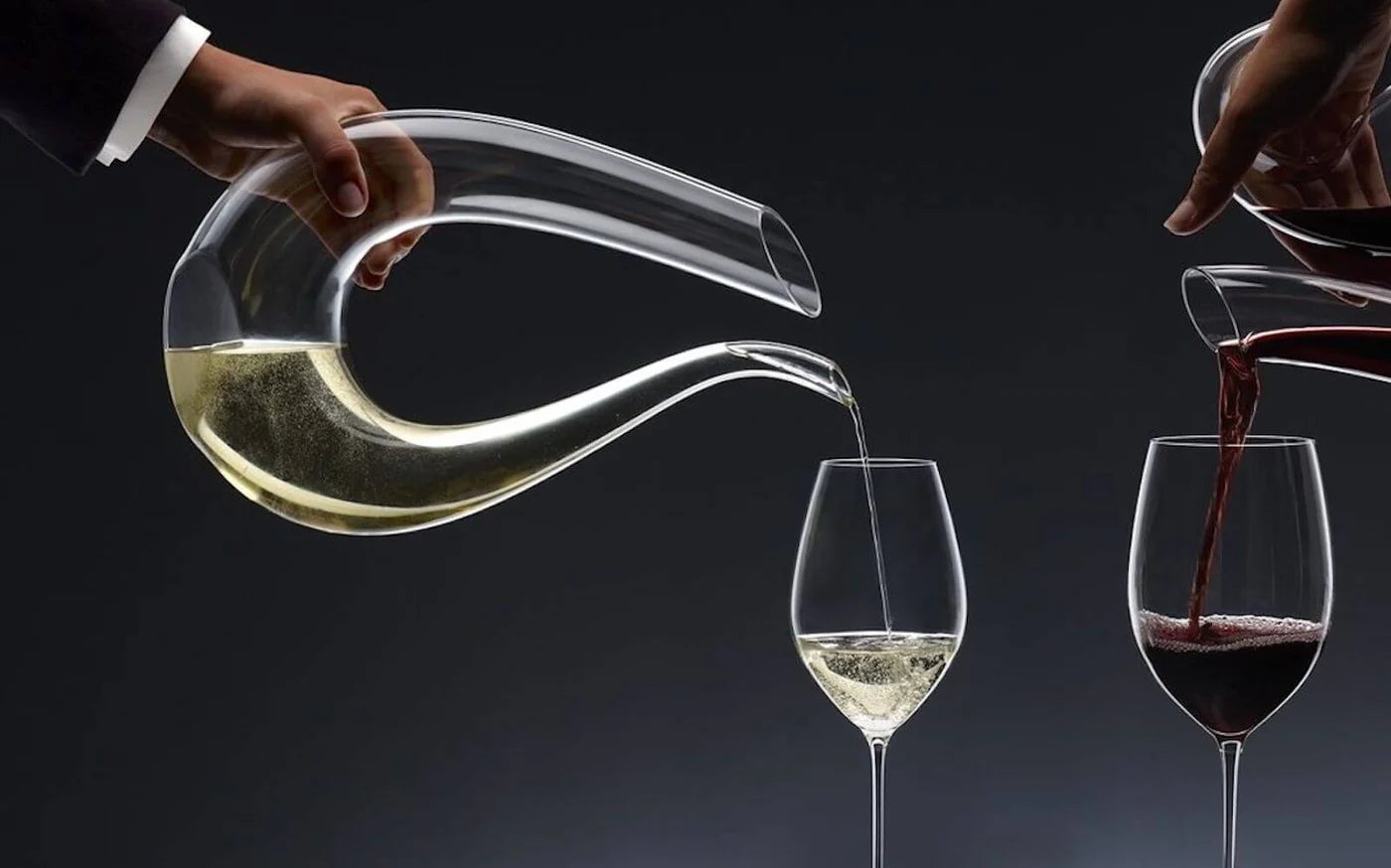
For a complete table, you can combine water glasses, wine glasses and flutes and champagne glasses, choosing shapes consistent with the type of service.
Where to place the napkin
The napkin can be placed in different ways, depending on the style of the table. In a classic mise en place it is found to the left of the plate, next to the forks. On a more contemporary table, it can be placed on top of the plate or inside a decorative napkin holder.
The important thing is that it is easy to take and consistent with the rest of the table setting. For an elegant table, it is better to avoid folds that are too complex or bulky: a simple fold often looks more modern and refined.
Formal and informal mise en place: what changes
The difference between formal and informal mise en place is not only in the number of elements, but in the precision with which they are arranged. An informal table can be simple, but still orderly. A formal table, on the other hand, requires more attention to symmetry, distances and order of courses.
Informal mise en place
- Dinner plate at the centre.
- Fork on the left.
- Knife on the right.
- Water glass at the top right.
- Simple napkin, on the left or on top of the plate.
Formal mise en place
- Charger plate or base plate.
- Layered plates according to the courses.
- Several pieces of cutlery arranged according to the order of use.
- Glasses for water, red wine, white wine and sparkling wine.
- Dessert cutlery above the plate.
- Possible bread plate at the top left.
Mistakes to avoid in mise en place
A carefully set table does not necessarily have to be complex. Often the most common mistakes come precisely from wanting to add too many elements without a clear logic.
- Using too much unnecessary cutlery: include only what is consistent with the menu.
- Placing glasses randomly: they should be at the top right, following the order of service.
- Placing knives with the blade facing outward: the blade must always face the plate.
- Overloading the centrepiece: it should decorate, not prevent conversation.
- Not leaving space between place settings: each guest must be able to move comfortably.
- Mixing too many styles: it is better to choose a clear common thread.
How to make the table more elegant without complicating it
To achieve an elegant table, you do not need to use too many elements. Consistency is more important than quantity. Choose a proportionate dinner set, clean and bright glasses, orderly cutlery and a well-placed napkin.
Neutral colours, transparent glass, coordinated materials and small decorative details help create a modern, refined and natural result. Even a simple table can look elegant if every element has its place.
An elegant table does not need to be full: it needs to be coherent. Well-centred plates, aligned cutlery and correctly positioned glasses already do most of the work.
Frequently asked questions about mise en place
What is mise en place?
Mise en place is the orderly arrangement of the table elements before service: plates, cutlery, glasses, napkins and accessories. It helps make the meal more organised, elegant and functional.
Where should cutlery be placed on the table?
Forks are placed to the left of the plate, while knives and spoons are placed to the right. Knife blades must face the plate. Dessert cutlery goes above the plate.
Where should glasses be placed in mise en place?
Glasses are positioned at the top right of the plate, above the tip of the knife. The water glass is the first reference point, followed by wine glasses and any flute for sparkling wine.
Where does the napkin go?
The napkin can be placed to the left of the plate, on top of the plate or in a decorative position consistent with the table. It must be easy to take and should not obstruct service.
How many glasses are needed at the table?
It depends on the menu. For a simple table, the water glass is enough. For a complete dinner, you may need a red wine glass, a white wine glass and a flute or glass for sparkling wine.
Is the charger plate always necessary?
No. The charger plate is optional. It is useful on elegant or formal tables because it creates a decorative base and keeps the place setting tidier between courses.
Conclusion: setting the table well means making it easier to enjoy
Mise en place is not a rigid rule to follow mechanically. It is a tool to make the table more beautiful, orderly and functional. Knowing where to place plates, cutlery and glasses helps create a more pleasant experience for both host and guests.
Start from the essential elements: plate at the centre, cutlery in order of use, glasses at the top right and a well-placed napkin. From there, you can add details, colours and accessories according to your style.
To build a complete and coherent table, visit the Tableware section on Alberoshop.it, with dinner sets, cutlery, glasses, stemware and accessories for every occasion.
A good mise en place starts from a few well-chosen elements: coordinated plates, orderly cutlery, the right glasses and details that make the table feel more yours.