









Initial treatment of the high soapstone casserole
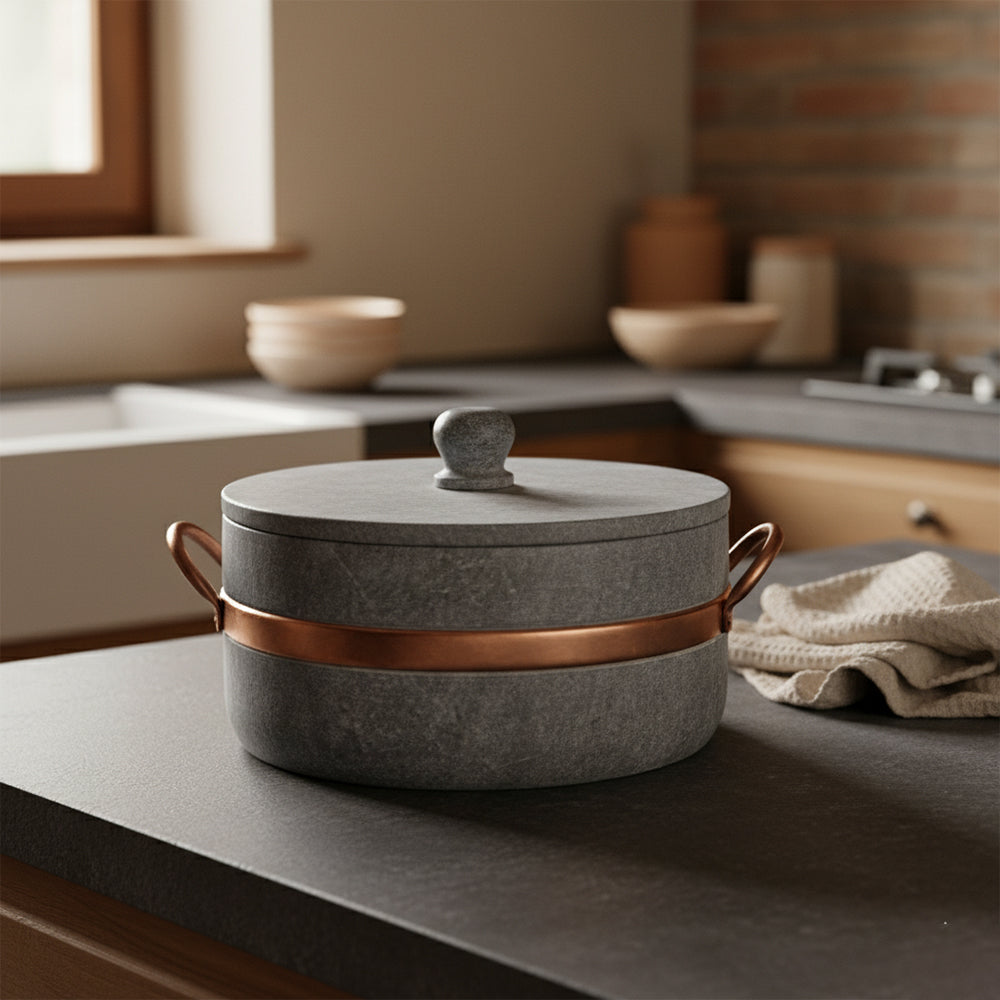
Before using a high soapstone casserole in the kitchen, it is essential to carry out a preventive treatment. This step is neither optional nor a folkloric tradition: it is necessary to temper the stone, increase its resistance to heat and create a protective patina on the surface.
The treatment must be carried out only once, at the beginning. It does not need to be repeated periodically, as regular use of the cookware will naturally preserve its properties over time.

An ancient method, made faster
In the past, when homes had neither ovens nor stovetops, soapstone cookware was oiled on the outside and left near the fire for several days. Heat allowed the oil to be slowly absorbed by the stone, until it also appeared inside the pot. Only then was the treatment considered complete.
Today, the same principle is applied in a faster and more effective way, while keeping the underlying logic unchanged: gradual heat and controlled fat absorption.
Choice of oil and smoke point
Soapstone can be treated with any oil, fat or lard, provided the smoke point is respected, meaning the temperature at which a fat begins to break down.
In general, the more refined an oil is, the higher its smoke point and the more suitable it is for treatment. Recommended oils include refined seed oils such as sunflower, soybean, peanut and corn oil, as well as non-extra-virgin olive oil, all with smoke points above 200°C.
Oven treatment procedure (step-by-step)
Step 1 – Initial heating of the stone
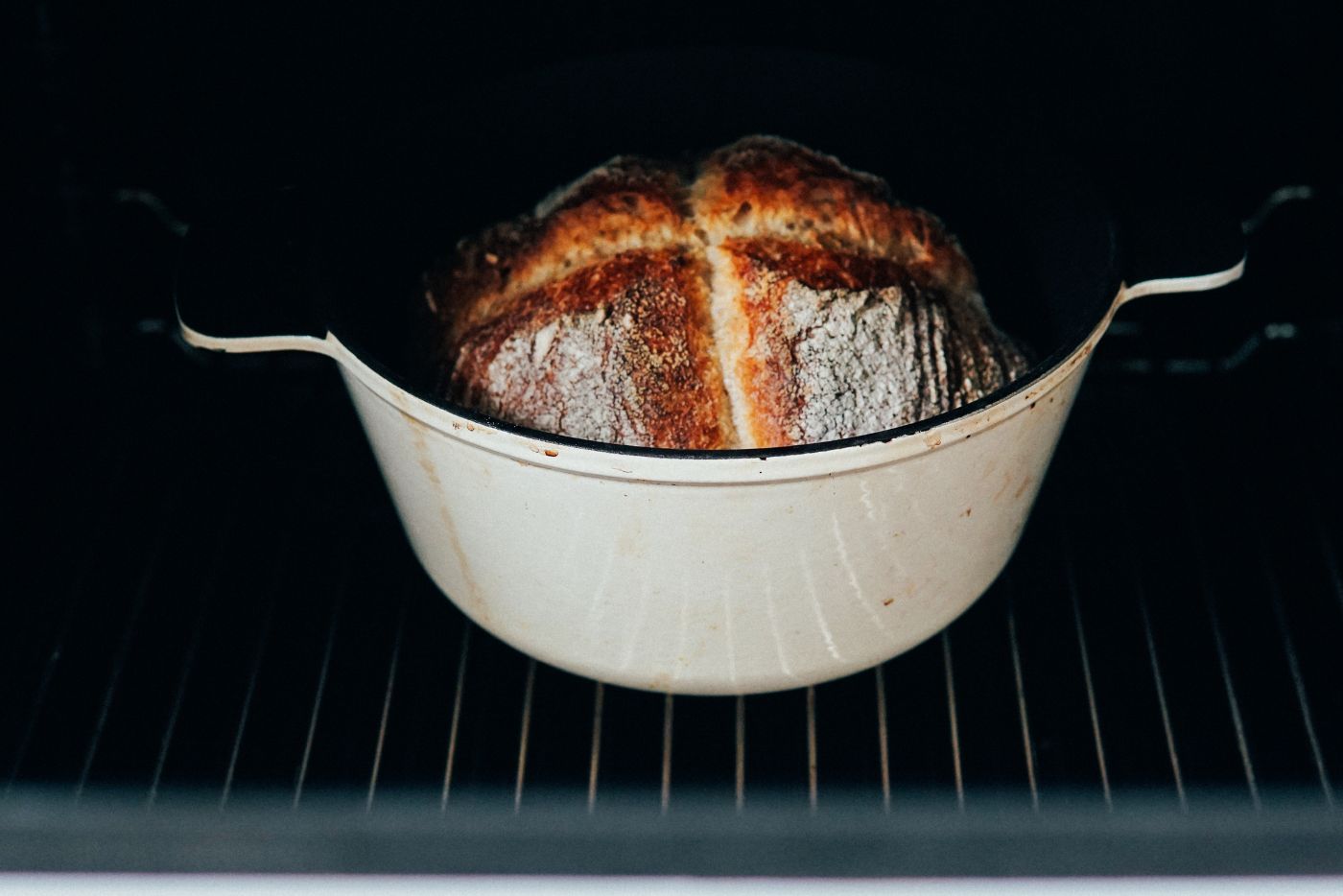
Preheat the oven to 150°C. Once the temperature is stable, place the high soapstone casserole inside and heat it for about 20 minutes. This initial phase dehydrates the stone and expands its pores, promoting fat absorption.

Step 2 – Removal without thermal shock
Using suitable thermal protection, remove the casserole from the oven and place it on a dry, washable surface. It is essential to avoid any thermal shock, which could cause cracks or breakage.
Step 3 – Complete oiling of the casserole
Using a brush, generously oil the casserole and lid, both inside and outside. Pans, griddles and pizza plates must be oiled on both sides.

Step 4 – Second oven cycle
Place the casserole and lid back in the oven at 150°C and heat for about one hour, or until the oil is fully absorbed. It is recommended to turn the casserole upside down to prevent oil accumulation. To protect the oven, the bottom can be lined with aluminum foil.
Step 5 – Cooling and final washing
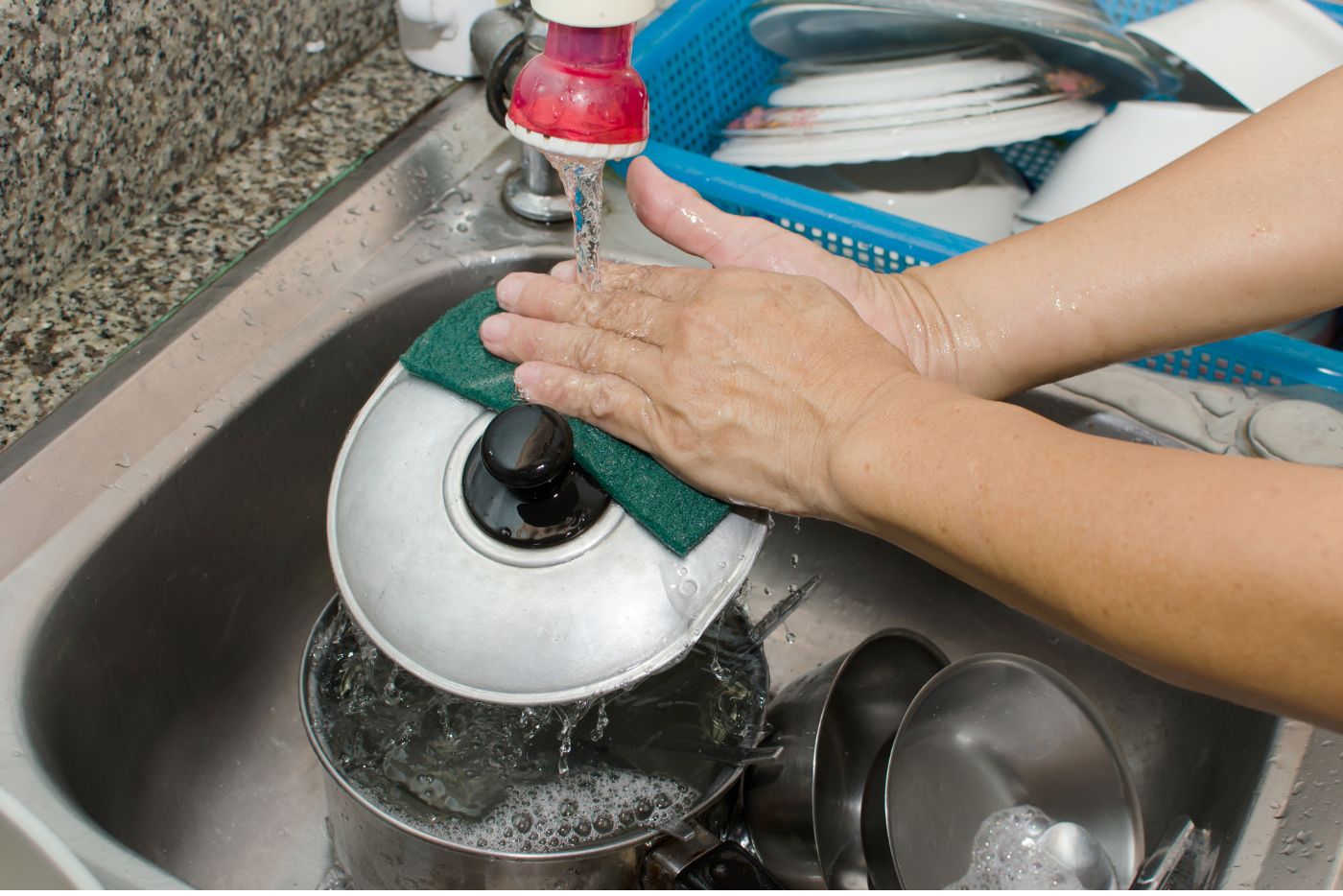
Turn off the oven and allow the casserole to cool completely to room temperature. Once cool, wash it like a regular pot. For greater safety and durability, it is recommended to repeat the entire treatment a second time.
Aesthetic change of the stone
After treatment, the soapstone changes color from light gray to black. This natural process creates a pleasant visual contrast with the copper finishes, while keeping the natural veins and mineral appearance visible.

Essential usage warnings
During treatment and daily use, any thermal shock must be avoided, such as heating the casserole empty and pouring cold liquids into it, or placing it while still hot on wet surfaces. These situations may cause cracks or stone flaking.
During the first month of use, frying is not recommended. If a recipe requires sautéing, it is preferable to prepare it in a separate pan and add it later. After the first month of regular use, the casserole can also be used normally for sautéing.
It is also important to avoid direct exposure to flame by using a heat diffuser and to always start heating gradually, maintaining a moderate flame. Very wide bases increase thermal expansion differences and raise the risk of breakage.