



Induction cookware: what to buy and how to choose the right set
The best induction cookware is not necessarily the most expensive or sold in the largest set. It has a compatible, stable base that suits the dishes you cook most often.
In short: stainless steel is versatile and durable, non-stick cookware makes delicate cooking easier, while aluminium works on induction only when it has a specific ferromagnetic base.
So, does switching to induction mean replacing all your cookware?
Not necessarily.
The point is not to have new cookware. It is to have cookware that can interact with the magnetic field generated by the induction hob.
Once compatibility has been checked, the more interesting question arises: which induction cookware should you buy?
Steel, aluminium with a suitable base and non-stick pans can all work perfectly on induction. They do not, however, cook in exactly the same way.
Before retiring your entire cookware collection, check the base, symbols and manufacturer's instructions. You may find that part of your team is already induction-ready.

How to identify cookware suitable for induction
To find out whether a pot or pan is suitable for induction, look for the induction symbol, usually shown as a coil, on the base or packaging. Also check that the manufacturer explicitly states compatibility with this type of hob.
You can also carry out the so-called magnet test: if a magnet adheres firmly to the base, it is a good sign that ferromagnetic material is present.
The test does not, however, replace the manufacturer's instructions. An enthusiastic magnet is not a technical certificate.
Always check these details:
- the presence of the induction symbol;
- compatibility stated on the product page;
- a flat, undeformed base;
- a diameter compatible with the cooking zone;
- no structural damage to the base.
Pay particular attention to aluminium, copper, glass or ceramic cookware. On their own, these materials are not ferromagnetic, but they can work on induction when the item is designed with a compatible magnetic base.

Induction does not heat cookware out of sympathy: it needs a base that can interact with the magnetic field. The symbol, technical specifications and a compatible base are the three things to check.
Which materials work on an induction hob?
The name of the material alone does not guarantee compatibility. What matters is the overall construction of the cookware and, above all, its base.
| Material | Induction compatibility | Ideal for | Main point to consider |
|---|---|---|---|
| Stainless steel | Check each individual product | Pasta, sauces, boiling and searing | Not all steel is automatically magnetic |
| Aluminium | Only with a specific base | Quick cooking and responsive heat control | Pure aluminium does not work on induction |
| Non-stick | Depends on the base and body of the cookware | Eggs, omelettes, fish and delicate cooking | The coating must be protected from scratches and overheating |
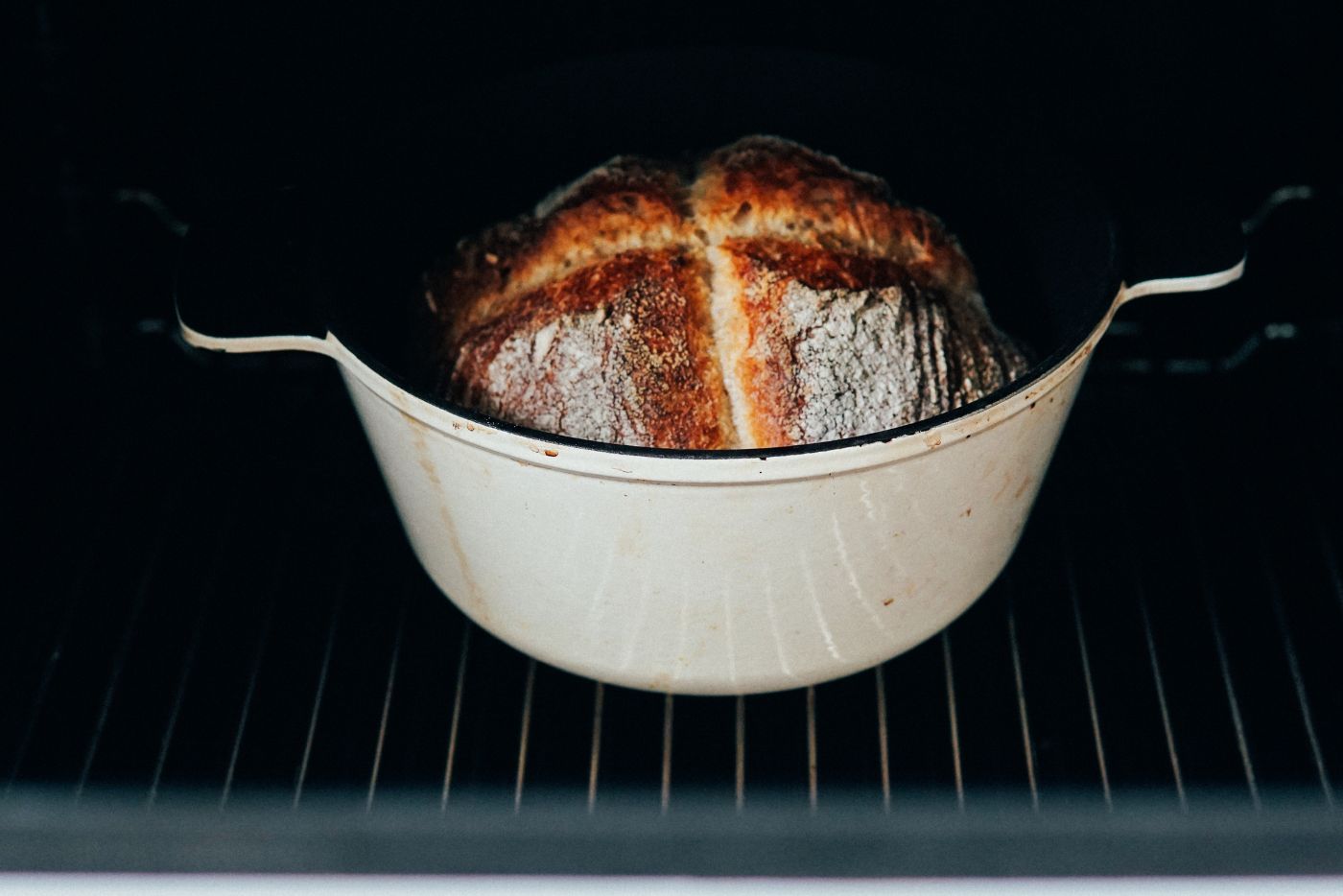
| Cast iron | Generally compatible | Slow cooking, braises and searing | Heavy weight and care needed with the glass-ceramic surface |
| Copper, glass or ceramic | Only with a ferromagnetic base | Depends on the construction of the cookware | Always check the manufacturer's statement |
Stainless-steel or non-stick induction cookware?
There is no single best material. The choice between stainless steel and non-stick cookware for induction depends on the type of dish you are preparing.
When to choose stainless steel
Stainless-steel induction cookware is versatile and suitable for boiling, cooking pasta, preparing soups, sauces and many everyday recipes.
A steel pan requires greater control of temperature and fats, but can be particularly effective for:
- searing meat and vegetables;
- achieving a golden surface;
- making pan sauces;
- cooking at medium-high temperatures;
- using acidic ingredients such as tomato, wine or lemon.

Pasta, soups, sauces and everyday cooking: a good steel saucepan is often the piece that works the hardest. It is worth choosing it carefully.
When to choose a non-stick pan
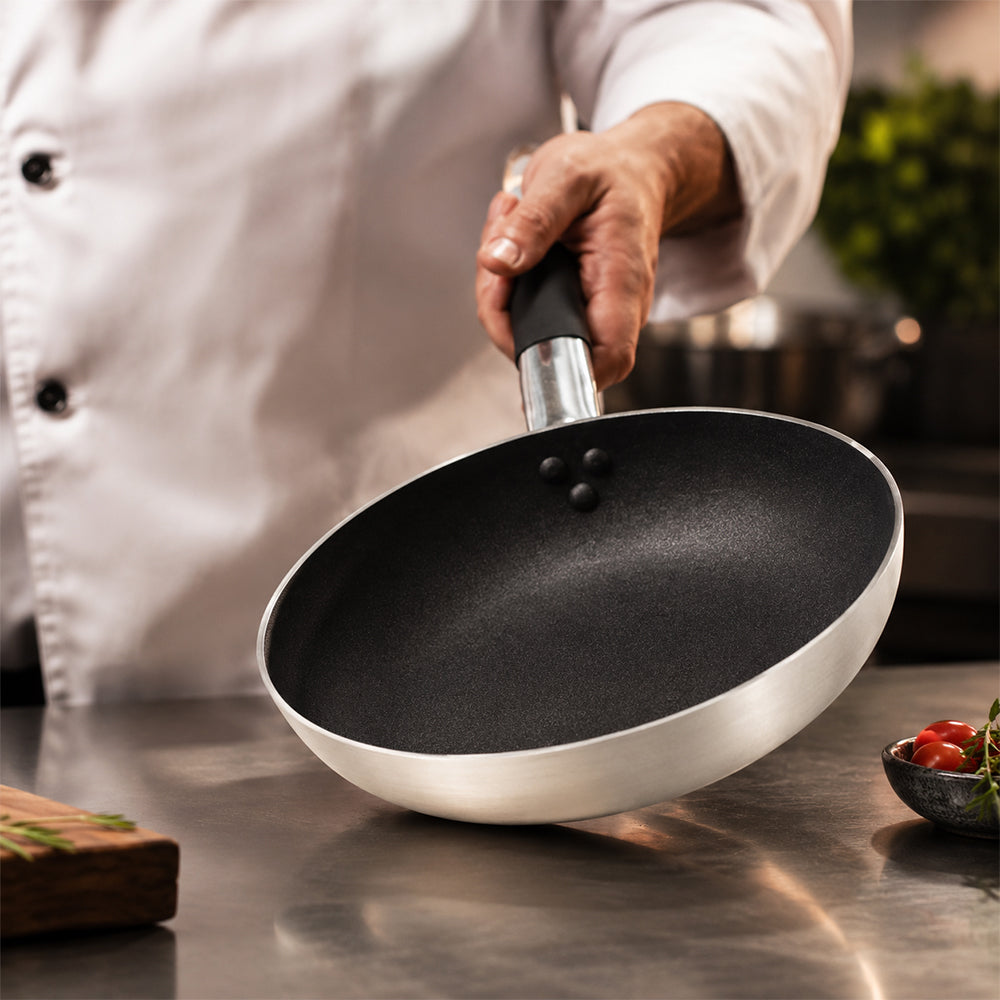
A non-stick induction pan is practical for eggs, omelettes, crêpes, pancakes, fish and dishes that need to release easily from the surface.
It is generally easier to use, but requires a few precautions:
- avoid prolonged preheating when empty;
- use temperatures compatible with the coating;
- do not use knives or metal utensils unless otherwise stated;
- wash the surface with non-abrasive tools;
- replace the pan when the coating is deeply damaged.

Eggs, omelettes and delicate fish prefer not to argue with the pan's base. A good non-stick pan compatible with induction makes everything easier.
Can steel and non-stick cookware coexist?
Yes. In a well-equipped kitchen, steel and non-stick cookware are not rivals: they perform different roles.
A steel pan for searing and high temperatures, alongside a non-stick pan for delicate preparations, covers a large part of everyday needs.
To explore the differences, benefits and uses in more detail, read the guide dedicated to steel, aluminium and non-stick pans.
The base of induction cookware matters more than you think
When choosing induction pots and pans, do not stop at the stated material. The base determines compatibility, stability and much of how the cookware performs on the hob.
A suitable base should be:
- ferromagnetic, to interact with the field generated by the hob;
- flat, to maintain stable contact with the surface;
- proportioned, to the cooking zone being used;
- well made, to distribute heat evenly;
- free from warping, which could compromise stability.
Many pots and pans use multi-layer bases that combine different materials. A magnetic layer enables induction cooking, while more conductive materials help distribute heat.
What diameter should you choose for induction pots and pans?
The diameter of the base must be compatible with the dimensions and any minimum detection threshold of the induction zone.
The nominal diameter given for a pan often refers to the upper rim, not necessarily the surface that rests on the hob. This is why it is useful to check the actual base diameter and the hob's instructions.
As a practical reference:
- 18-20 cm: sauces, small portions and meals for one person;
- 22-24 cm: everyday use for one or two people;
- 26-28 cm: meat, fish, vegetables and family portions;
- 30 cm or more: generous quantities and shared dishes.
These sizes are indicative. The type of recipe, quantity and space needed to sear food also affect the choice.
Do you really need a complete induction cookware set?
An induction cookware set is useful when you are changing your hob, many of your pots and pans are not compatible, or you want to replace cookware that is now worn out.
More pieces, however, do not automatically mean a better purchase.
Before choosing, ask yourself what you actually use during the week. For many kitchens, it may be enough to start with:
- a small saucepan for sauces and small portions;
- a medium saucepan for everyday cooking;
- a large pot for pasta, stocks and soups;
- a 24 or 26 cm non-stick pan;
- a 26 or 28 cm steel pan.
Those who cook for more people, often prepare different recipes or use several zones at once will need a more extensive set instead.
In the pots and pans sets collection, you can compare compositions, materials and number of pieces, checking the product page for induction compatibility.
How to choose the right induction cookware set
To choose the right set, consider six elements:
- Compatibility: every item must be declared suitable for induction.
- Composition: check which pots, saucepans, pans and lids are included.
- Materials: choose according to the dishes you prepare most often.
- Diameters: make sure they suit the hob zones and the number of people.
- Handles: assess grip, heat insulation and oven compatibility.
- Care: check dishwasher suitability, permitted utensils and the manufacturer's instructions.
Induction cookware and gas: the way you cook changes too
Induction is not simply another type of burner.
Heat is generated by the interaction between the hob's magnetic field and the cookware's compatible base, rather than transferred from a flame to the pot or pan.
The response to power changes is therefore very fast. Those switching from gas may need to change a few habits:
- do not always start at maximum power;
- reduce the setting as soon as the desired temperature is reached;
- avoid leaving empty pans on a switched-on hob;
- use medium settings for delicate cooking;
- lift cookware instead of dragging it.
The right cookware helps, but you also need to learn to use the heat source differently. Induction is quick: if you get distracted, it is quick to let you know.
How to care for induction pots and pans
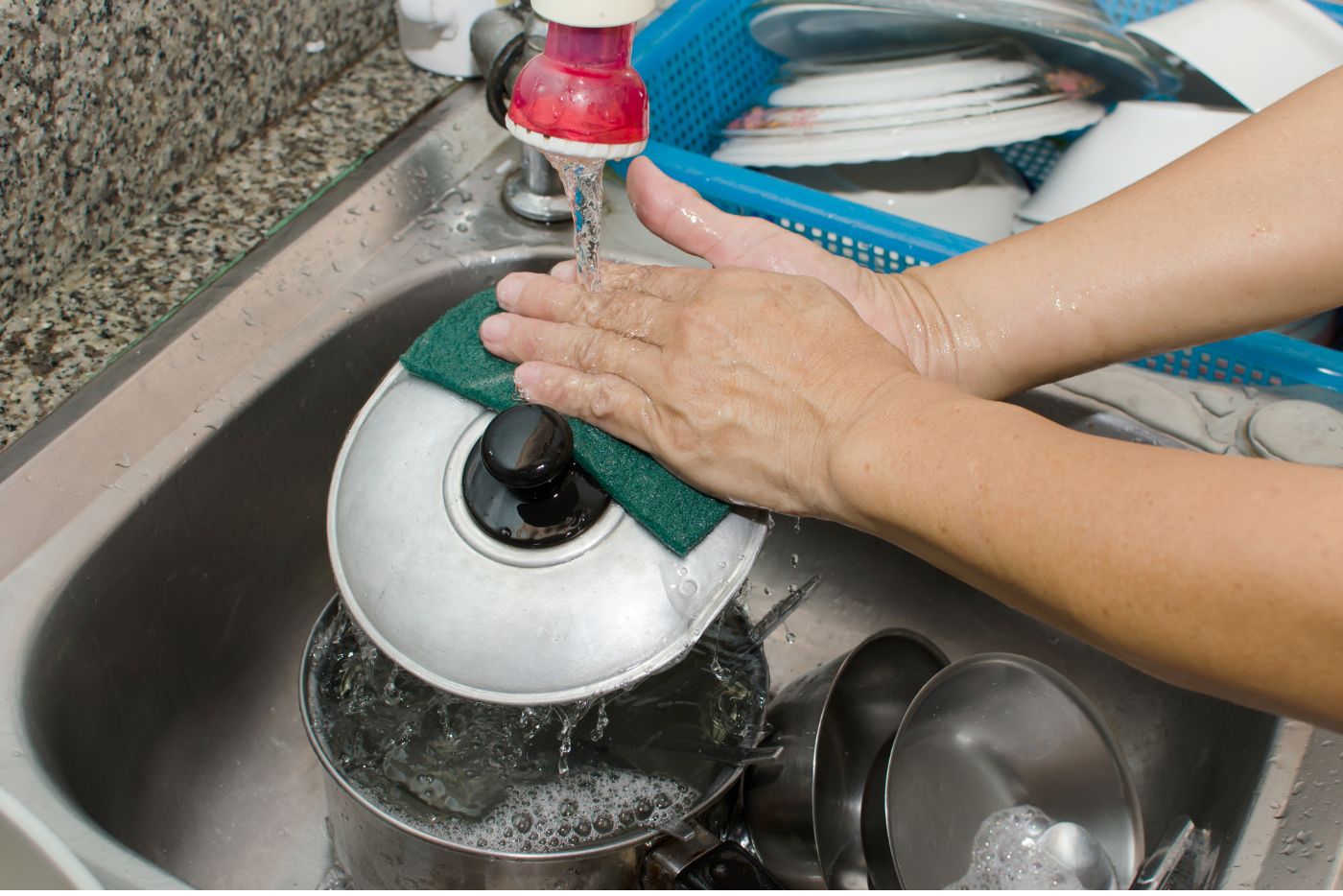
There is no single care routine for all induction-compatible cookware. It depends on the material, coating and manufacturer's instructions.
Stainless-steel care
Steel can be cleaned more vigorously than a non-stick coating, but it is still important to avoid products that are not compatible with the finish. Stains and marks do not necessarily indicate structural damage.
Non-stick care
Use wooden, silicone or manufacturer-approved utensils. Avoid abrasive sponges, thermal shocks and excessively high temperatures.
Protecting the induction hob
Do not drag pots and pans across the surface. Lifting them helps limit scratches and marks on the glass-ceramic surface, especially with heavy cookware such as cast iron.
Which induction cookware should you buy?
Buy cookware that is compatible with your hob, proportionate to the number of people and suitable for the recipes you actually make.
Do not choose a set just because it contains more pieces. Do not choose non-stick cookware just because it always seems easier, and do not choose steel simply because it is perceived as more professional.
Start with these questions:
- What do I cook most often?
- For how many people?
- Which diameters do I actually use?
- Do I prefer delicate cooking or intense searing?
- Do I need more pots or more pans?
- Will I also use the cookware in the oven?
- How much time do I want to devote to care?
Only then should you consider the material, base, dimensions and composition of the set.
That is because many pots and pans can work on induction. The difference lies in choosing the ones that work for the way you cook.
Frequently asked questions about induction cookware
How do I know whether a pot or pan is suitable for induction?
Check the induction symbol and the compatibility stated by the manufacturer. The magnet test can provide an initial indication, but it does not replace the product's technical specifications.
Do I have to replace all my cookware when switching to induction?
No. You can continue using cookware that is already compatible, provided it has a flat, intact base suited to the size of the zones on the new hob.
What is the best material for induction cookware?
There is no best material for every recipe. Stainless steel is versatile and durable, non-stick cookware is practical for delicate cooking, while cast iron retains and holds heat well.
Does aluminium cookware work on induction?
Only if it has a ferromagnetic base designed for induction. Aluminium on its own does not interact properly with the hob's magnetic field.
Does all stainless-steel cookware work on induction?
No. Compatibility depends on the composition and construction of the base. Always check the manufacturer's instructions.
Is it better to buy individual pots and pans or a set?
A set is worthwhile when it contains sizes and types you will genuinely use. If you already own some compatible cookware, buying only the missing pieces may be more convenient.
Which pots and pans do you need to get started?
An essential selection can include a small saucepan, a large pot, a non-stick pan and a steel pan. Sizes depend on the number of people and the recipes you usually cook.
Can induction cookware also be used on gas?
Many models are also compatible with gas, electric and glass-ceramic hobs, but this is not a universal rule. Always check the heat sources stated on the product page.