Professional Frying Pan: How to Choose the Right Material and Model
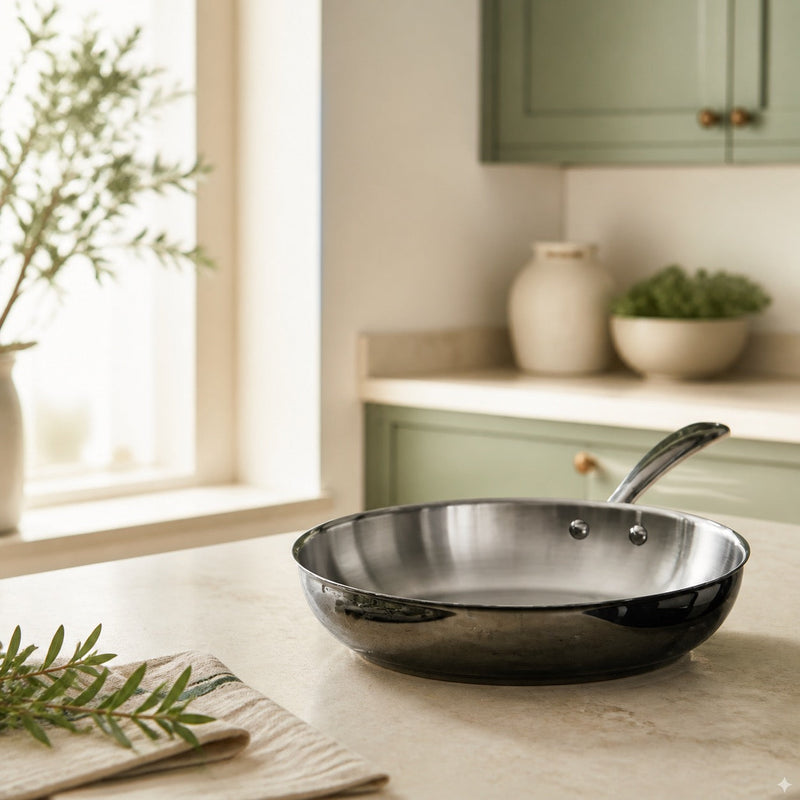
Choosing a professional frying pan means investing in a tool that can genuinely change the way you cook. It is not simply about owning a more robust pan, but using cookware designed to distribute heat evenly, respond quickly to temperature changes and deliver consistent results over time.
This is why professional frying pans are used every day in restaurant and hotel kitchens, but they are also becoming increasingly popular among home cooking enthusiasts. A good frying pan allows you to control every preparation more effectively, from simply browning meat to finishing a risotto or tossing pasta.
Among the brands that represent a benchmark in the sector, Pentole Agnelli stands out. For more than a century, this Italian company has developed professional cookware using different materials and technologies to suit every cooking technique.
On Alberoshop you can find a dedicated selection of Agnelli frying pans and cookware, designed for those who want to bring professional-level performance into the home kitchen.
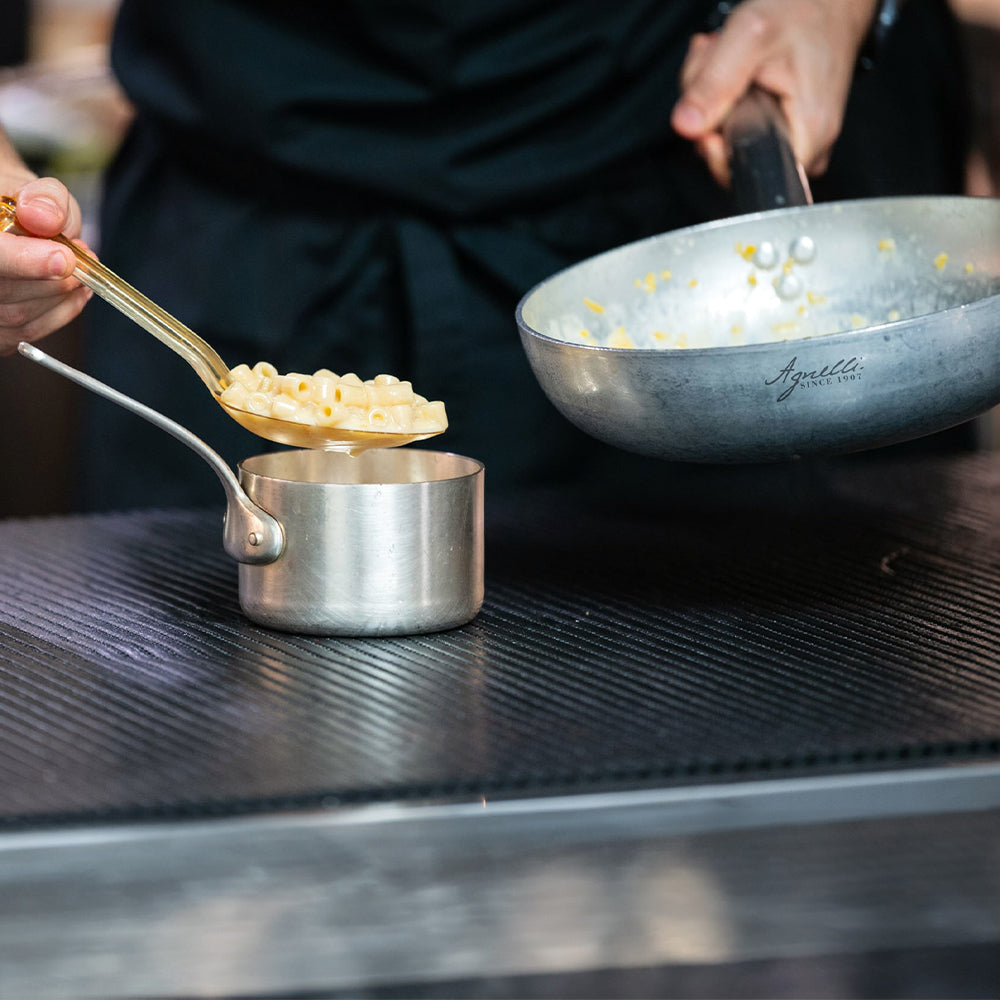
Pentole Agnelli Collection From professional aluminium frying pans to multilayer induction lines: discover Agnelli cookware designed to deliver precision, reliability and high performance in every kitchen.
Why choose a professional frying pan?
The difference between an ordinary frying pan and a professional one becomes clear from the very first preparations. More even heat distribution helps prevent excessively hot spots, reduces the risk of localised burning and produces more uniform cooking.
This means greater control when preparing meat, vegetables, fish, eggs or first courses. Even the simplest recipes become easier to manage because the pan responds quickly to changes in the flame or induction hob power.
Durability is another key factor. Professional frying pans are designed to withstand frequent use, thermal shock and demanding workloads. In the home kitchen, this translates into a tool designed to support everyday cooking for many years.
Professional aluminium frying pans: light, fast and precise
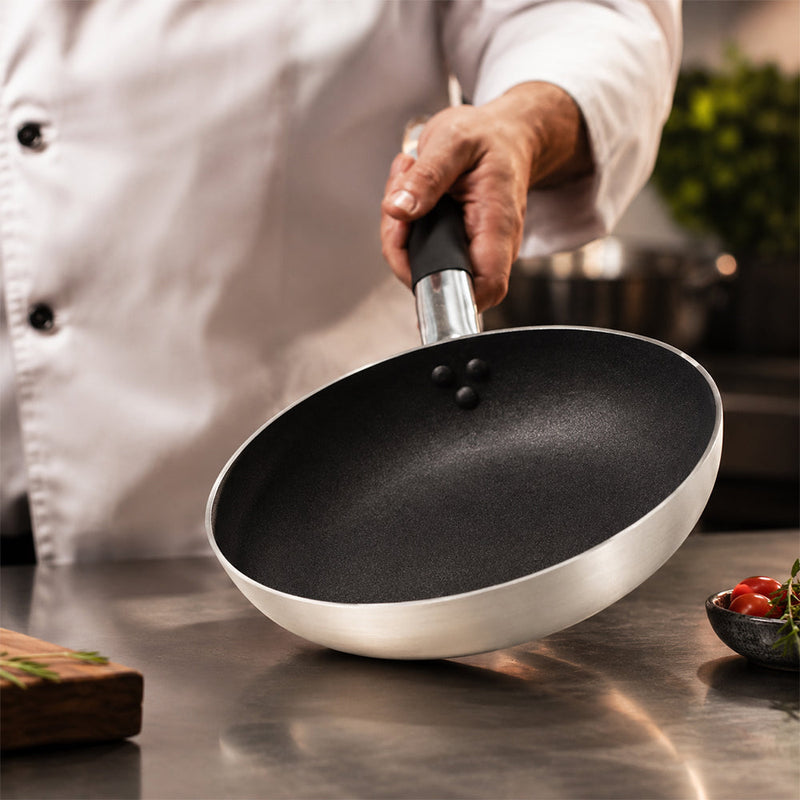
Among all the materials used in professional kitchens, aluminium remains one of the most popular. The reason is simple: it conducts heat very quickly, weighs little and is extremely easy to handle.
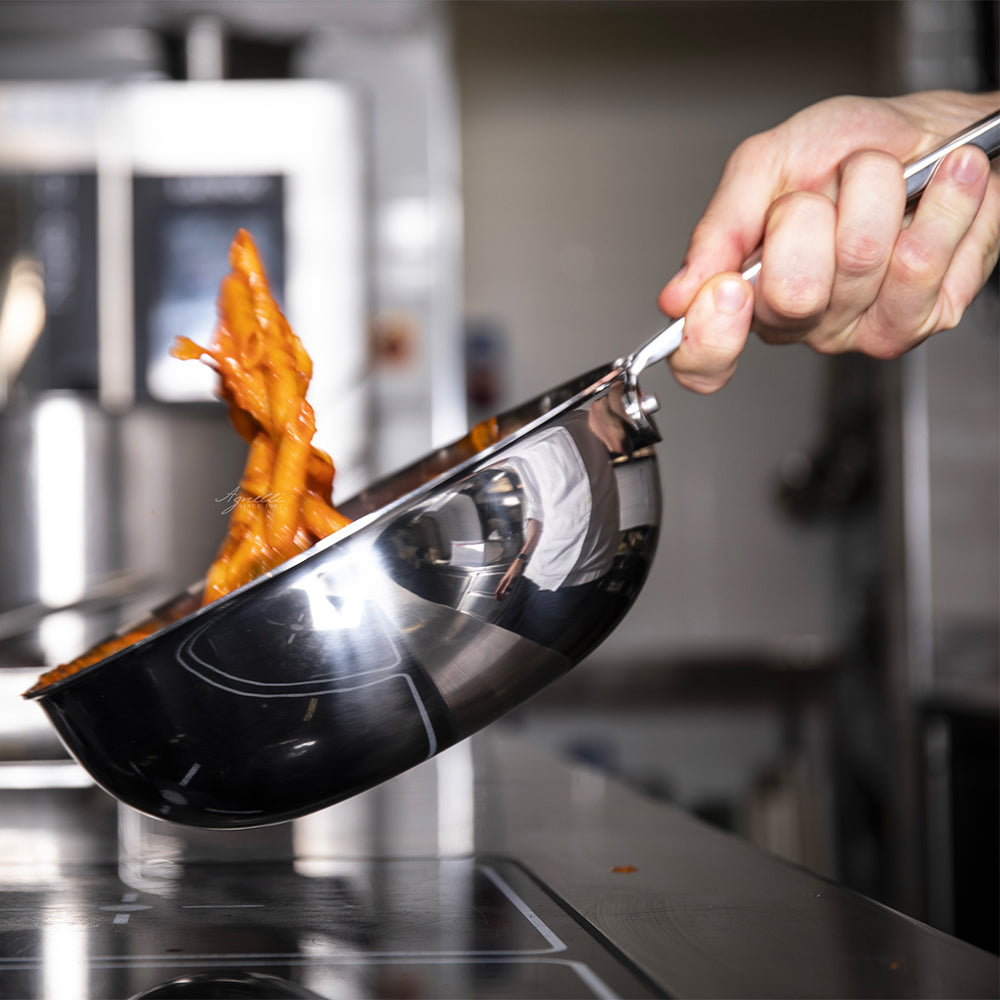
These characteristics make professional aluminium frying pans ideal for preparations that require the pan to be moved continuously, such as tossing pasta, finishing risotto, quickly browning meat or cooking vegetables over a high flame.
According to Pentole Agnelli, aluminium is still one of the most efficient materials for professional kitchens because of its ability to respond immediately to temperature changes. This feature gives cooks very precise control during every stage of preparation.
It is naturally important to choose the correct thickness: a well-constructed professional frying pan maintains thermal stability more effectively and provides more even cooking than cheaper models.
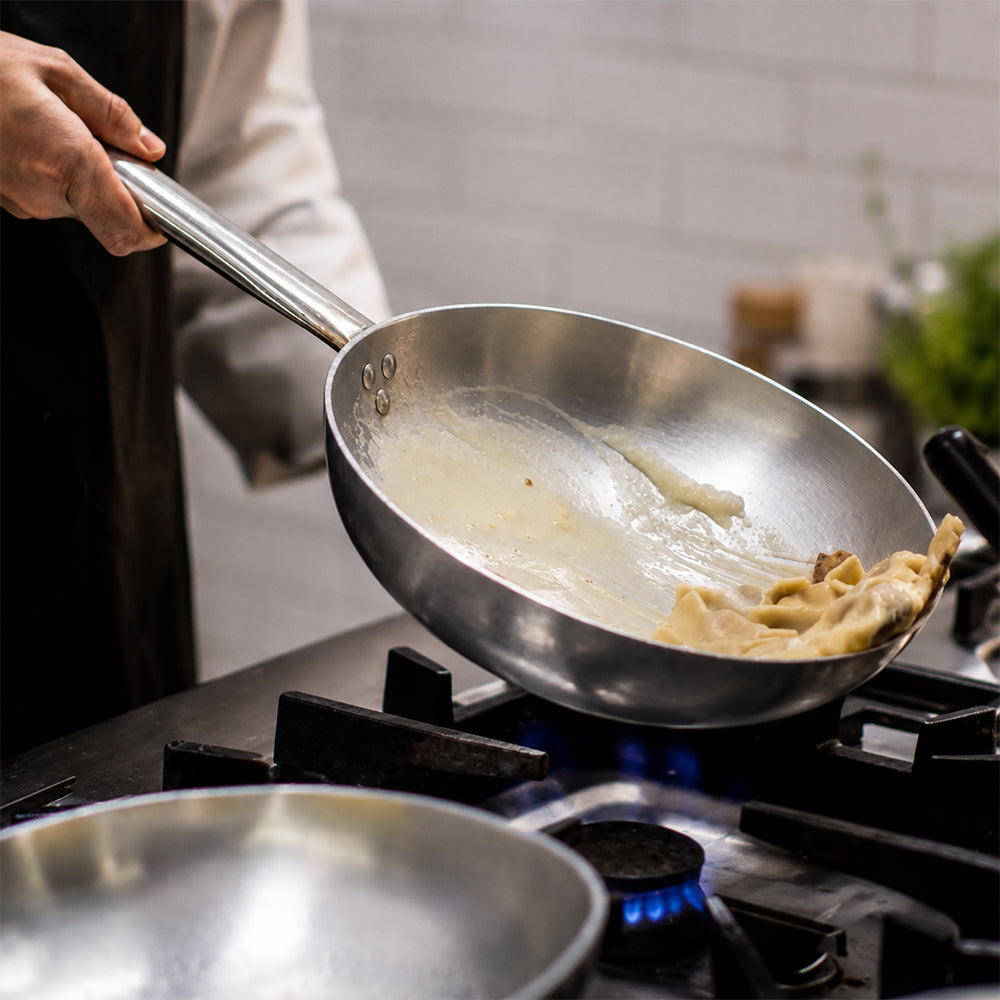
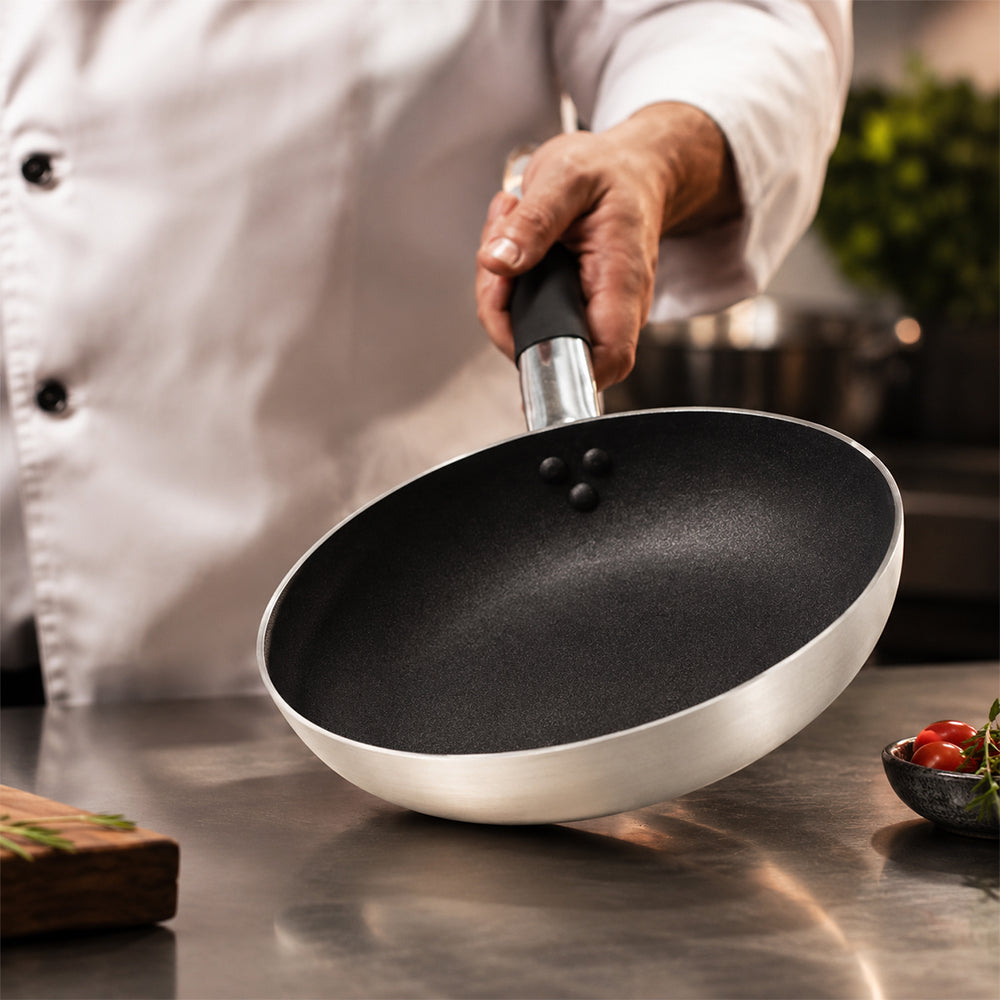
Professional aluminium frying pans Light, responsive and perfect for fast cooking. Professional aluminium responds immediately to heat and is one of the most widely used materials in professional kitchens.
Professional induction frying pans: what really matters
The arrival of induction hobs has changed the way frying pans are chosen. Not all materials are compatible with this technology.
To work correctly, a professional induction frying pan must have a ferromagnetic base capable of interacting with the hob’s magnetic field.
Agnelli professional induction lines use multilayer structures that combine stainless steel and aluminium to provide more even heat distribution, greater stability and compatibility with all major cooking systems.
When choosing an induction frying pan, always check:
- compatibility with the hob;
- the diameter of the base in relation to the cooking zone;
- the presence of a multilayer structure capable of improving heat distribution.
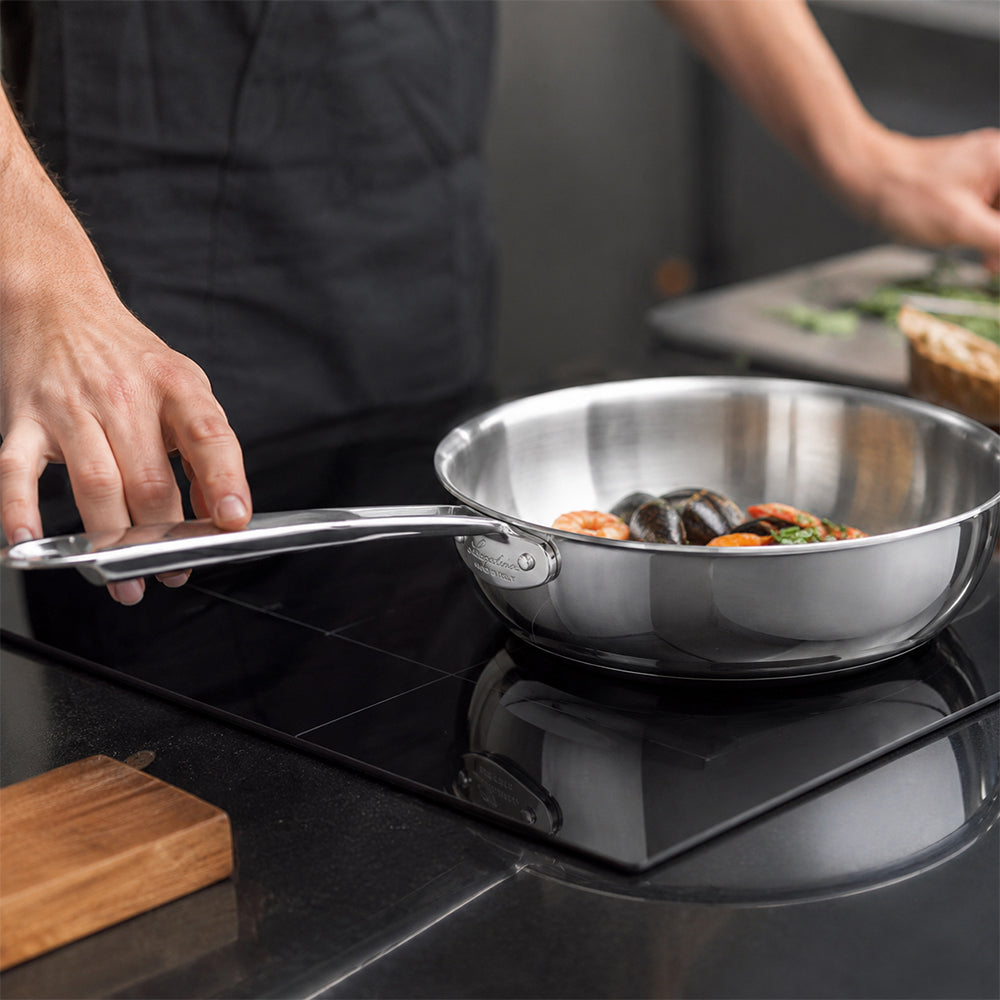
Agnelli Alu-Inox 3 Ply Line Three layers of material work together to provide even heat distribution, greater control during cooking and full compatibility with induction hobs.
Stainless steel, aluminium or non-stick: which material should you choose?
One of the most common questions concerns the material. Is there one frying pan that is better than all the others? Not really. There is simply the one best suited to the type of cooking you do every day.
Professional kitchens use different materials precisely because each preparation requires specific characteristics. Understanding the strengths of each option allows you to choose more confidently.
Aluminium frying pans
Aluminium is the ideal material when speed is required. It heats quickly, responds immediately to changes in the flame and is extremely light to handle.
It is perfect for:
- tossing pasta;
- browning meat and vegetables;
- fast cooking at high temperatures;
- intensive everyday use.
Stainless steel frying pans
Stainless steel is synonymous with strength and durability. It withstands impacts, scratches and corrosion very well and is particularly suitable for those looking for a frying pan designed to last for many years.
In modern professional lines, it is often combined with a central aluminium core, creating multilayer structures that significantly improve heat distribution compared with traditional steel.
This solution is particularly appreciated for:
- controlled cooking;
- even browning;
- induction use;
- preparations requiring high thermal stability.
Non-stick frying pans
Non-stick frying pans are the ideal choice when cooking delicate foods or when you want to use very little fat.
Eggs, fish, vegetables, pancakes and lighter preparations become much easier to manage thanks to the non-stick surface.
To keep them efficient over time, however, it is important to avoid metal utensils, abrasive sponges and overheating the empty pan.
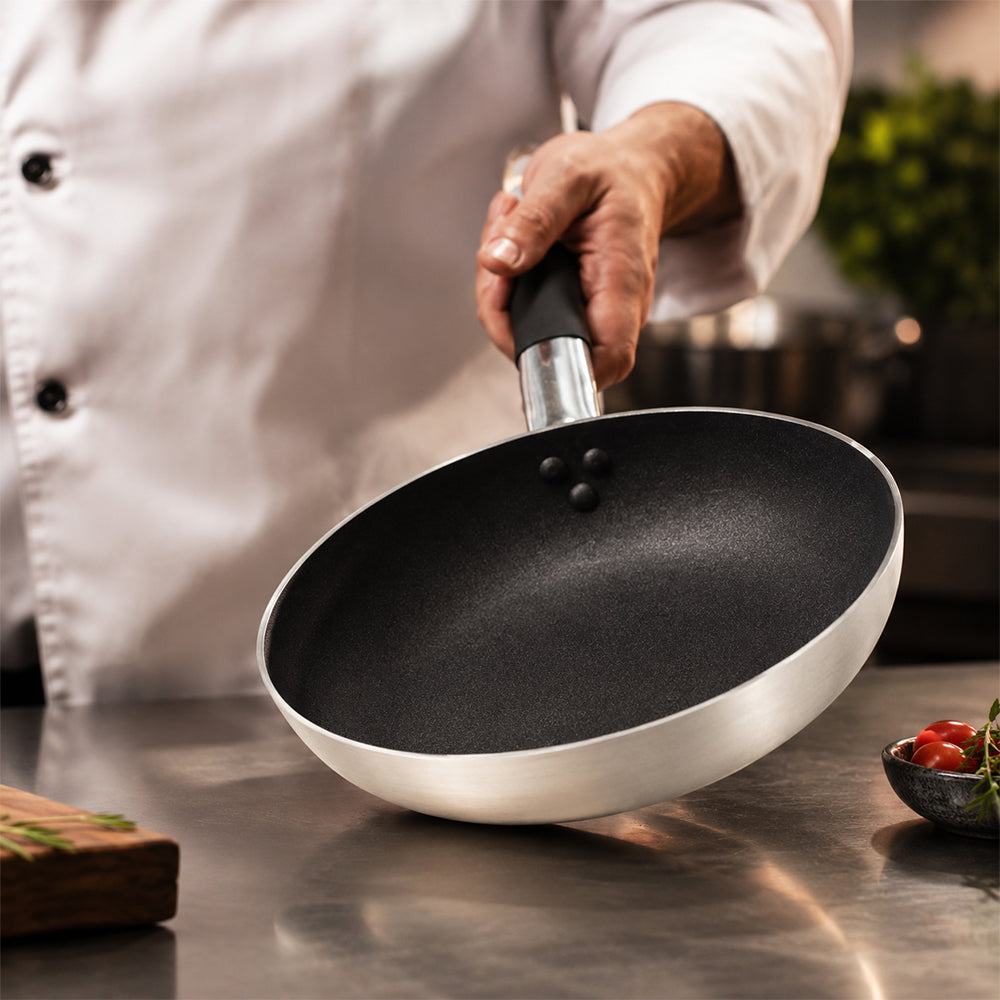
Agnelli non-stick frying pans Perfect for delicate cooking, fish, eggs and vegetables. A practical solution for cooking with little fat while maintaining precise control over the preparation.
Agnelli lines: materials designed for every cooking technique
One of the strengths of Pentole Agnelli is the breadth of its range. Each line is created to meet different needs, both in professional catering and in more advanced home kitchens.
The Alu-Inox 3 Ply and 5 Ply ranges use multilayer structures that combine stainless steel and aluminium. This provides even heat, precise response to temperature changes and full compatibility with induction.
For those seeking even higher performance, there is also the Copper4 line, which combines copper, aluminium and stainless steel to take advantage of copper’s high conductivity while maintaining a modern, durable and easy-to-use structure.
The choice of the best line mainly depends on the type of cooking you do every day. Frequent cooks may find it useful to build a cookware collection over time using different materials, choosing each frying pan for the task in which it performs best.
Which frying pan should you choose for each cooking method?
Rather than asking which frying pan is best, it is more useful to ask which one is best suited to the dishes you prepare most frequently.
- For tossing pasta and vegetables: professional aluminium.
- For browning meat and creating an even crust: stainless steel or a multilayer structure.
- For fish, eggs and delicate foods: non-stick.
- For induction hobs: compatible models with a dedicated base.
- For intensive everyday use: professional lines designed to last.
Many professional chefs do not use just one frying pan, but choose the most suitable one for each preparation. This approach can also noticeably improve home cooking.
Maintenance: how to make a professional frying pan last
A professional frying pan is designed to support you for many years, but like any quality tool, it requires some care. A few good habits are enough to preserve its performance and characteristics over time.
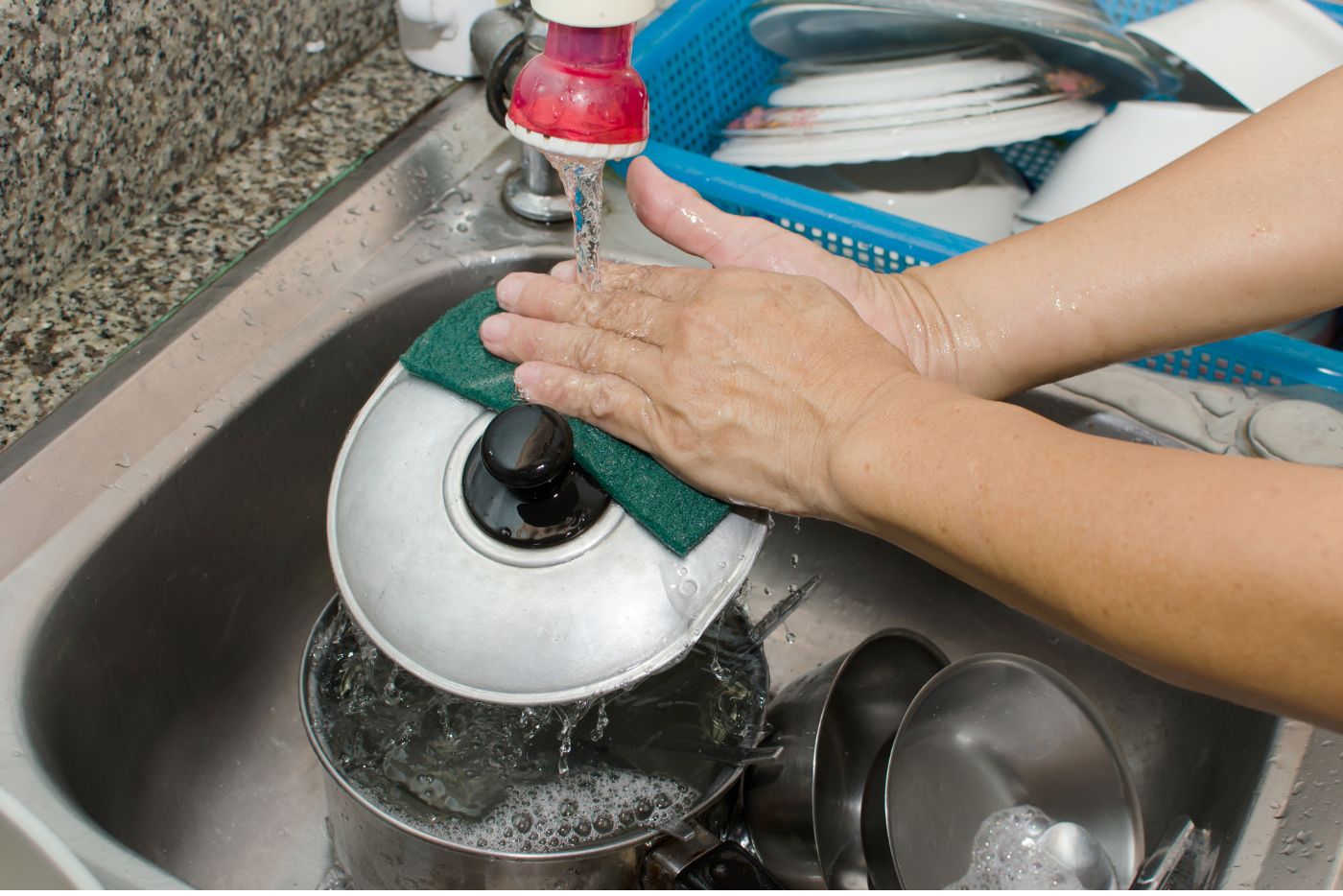
Non-stick frying pans should be used with wooden, silicone or nylon utensils, avoiding contact with metal tools that could damage the coating. Washing with soft sponges also helps preserve the surface.
For aluminium frying pans, especially uncoated ones, hand washing is recommended. Besides preserving the material’s original appearance for longer, this precaution limits the natural oxidation process that may occur over time.
Stainless steel and multilayer structures require minimal maintenance: simply avoid extreme thermal shock and use non-abrasive detergents.
One rule applies to every material: never leave an empty frying pan over the heat for long periods. Overheating can damage the base, alter thermal performance and, in the case of non-stick coatings, reduce their lifespan.
The most common mistakes when choosing a professional frying pan
When buying a new frying pan, it is easy to be guided only by price or appearance. In reality, several far more important aspects directly affect performance.
- Choosing one material for every preparation. Each material is designed for different needs.
- Ignoring the hob. Anyone using induction must always check base compatibility.
- Assuming a heavier pan is automatically better. Construction quality and thickness matter much more.
- Using metal utensils on non-stick surfaces. This is one of the main causes of premature wear.
- Neglecting maintenance. Even the best frying pan loses performance if used incorrectly.
FAQ – Frequently asked questions about professional frying pans
What is the best material for a professional frying pan?
It depends on the type of cooking. Aluminium is ideal for fast cooking, stainless steel provides excellent strength, while multilayer materials offer an excellent balance between heat distribution, stability and induction compatibility.
Are professional frying pans suitable for home kitchens?
Yes. More and more cooking enthusiasts choose professional cookware to achieve more even cooking and greater durability than traditional frying pans.
What is the difference between a professional and a domestic frying pan?
Professional frying pans are designed to withstand intensive use, distribute heat more effectively and provide greater control during cooking.
Can an aluminium frying pan be used on induction?
Only if it has a specific base compatible with induction hobs. Pure aluminium alone is not magnetic.
Is a non-stick or stainless steel frying pan better?
It depends on the preparation. Non-stick is perfect for delicate foods and low-fat cooking, while steel is suitable for browning, searing and high-temperature cooking.
How long does a professional frying pan last?
If used and maintained correctly, a quality professional frying pan can support everyday cooking for many years while retaining high performance over time.
The right frying pan makes every recipe easier
A good frying pan does not only improve the final result, but also makes every movement in the kitchen feel more natural and precise. Whether you are preparing a quick weekday dinner or a more elaborate recipe for guests, having the right tool means working with greater control, using heat more effectively and achieving more even cooking.
Agnelli professional frying pans are created with precisely this goal: offering different materials for different needs and allowing every enthusiast to build a cookware collection genuinely suited to their cooking style.
If you cook often, the advice is to begin with a few carefully chosen tools: an aluminium frying pan for dynamic preparations, a non-stick solution for delicate cooking and, if you use induction or want maximum versatility, a multilayer frying pan already provide a complete base designed to last.
Discover the Pentole Agnelli collection Professional aluminium frying pans, non-stick lines, multilayer induction solutions and cookware designed to deliver high performance in both home and professional kitchens.