How to Serve Wine in Summer: Temperature, Glasses and Useful Accessories
Serving wine in summer requires a little extra attention. Heat changes everything: the bottle warms up faster, the wine loses freshness in just a few minutes and even the wrong glass can make the tasting less enjoyable.
There is no need to complicate the service, but it is important to control three elements: wine temperature, the right glass and useful accessories to keep the bottle fresh at the table. This applies to white wines, rosé wines, sparkling wines and also some red wines.
In this guide, we look at how to serve wine in summer in a simple and correct way: recommended temperatures, differences between wines, the most suitable glasses and accessories that really help during aperitifs, terrace dinners and outdoor lunches.
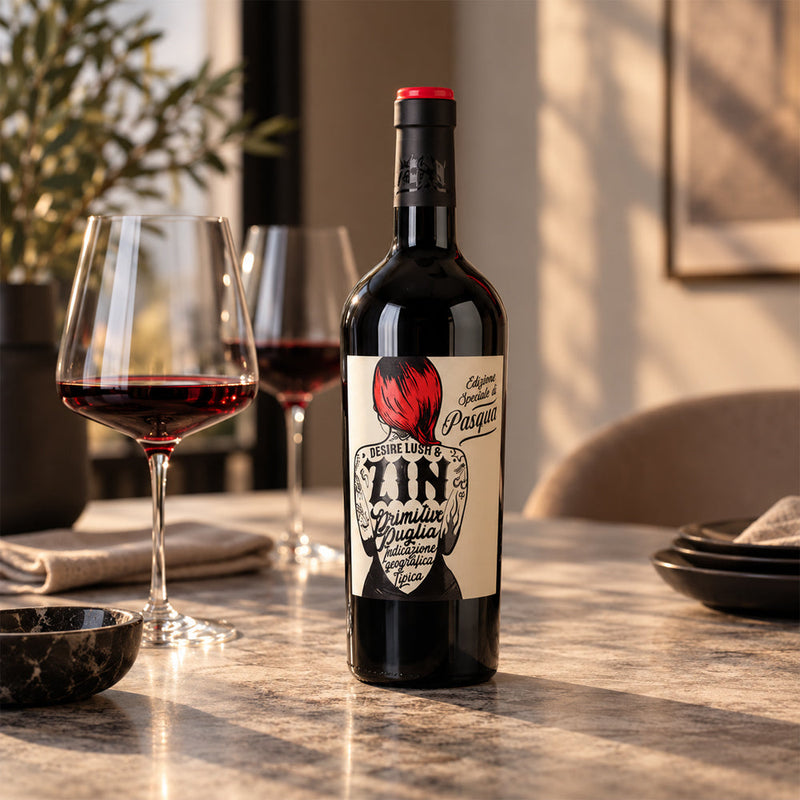
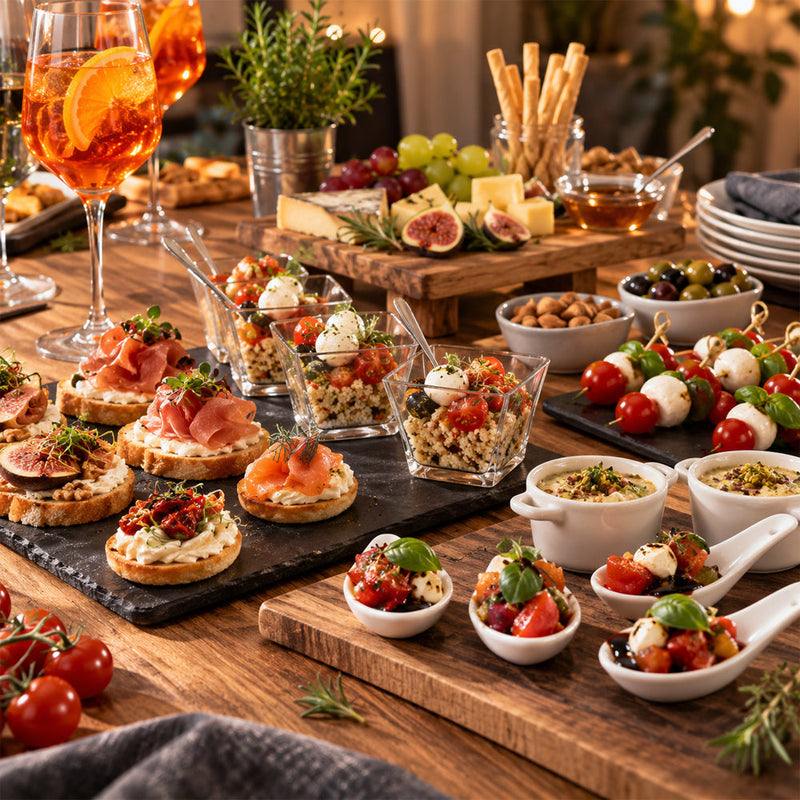
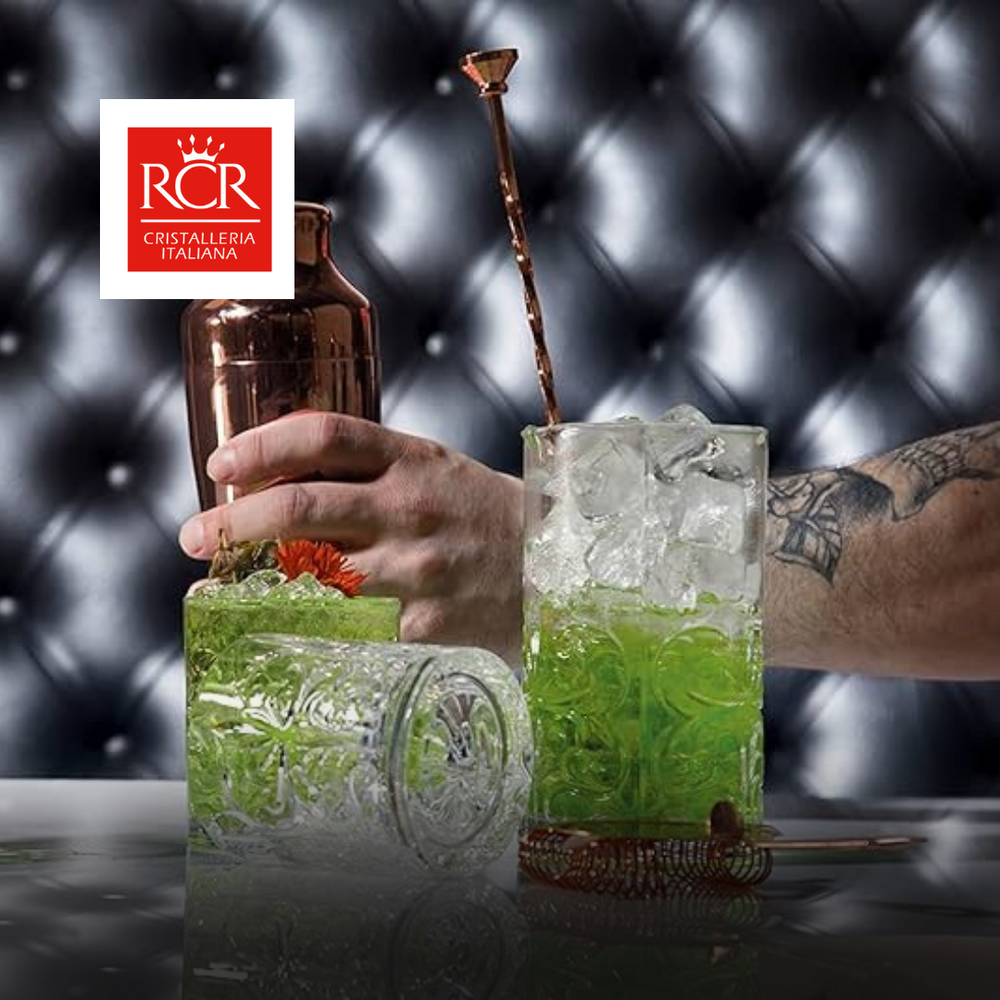
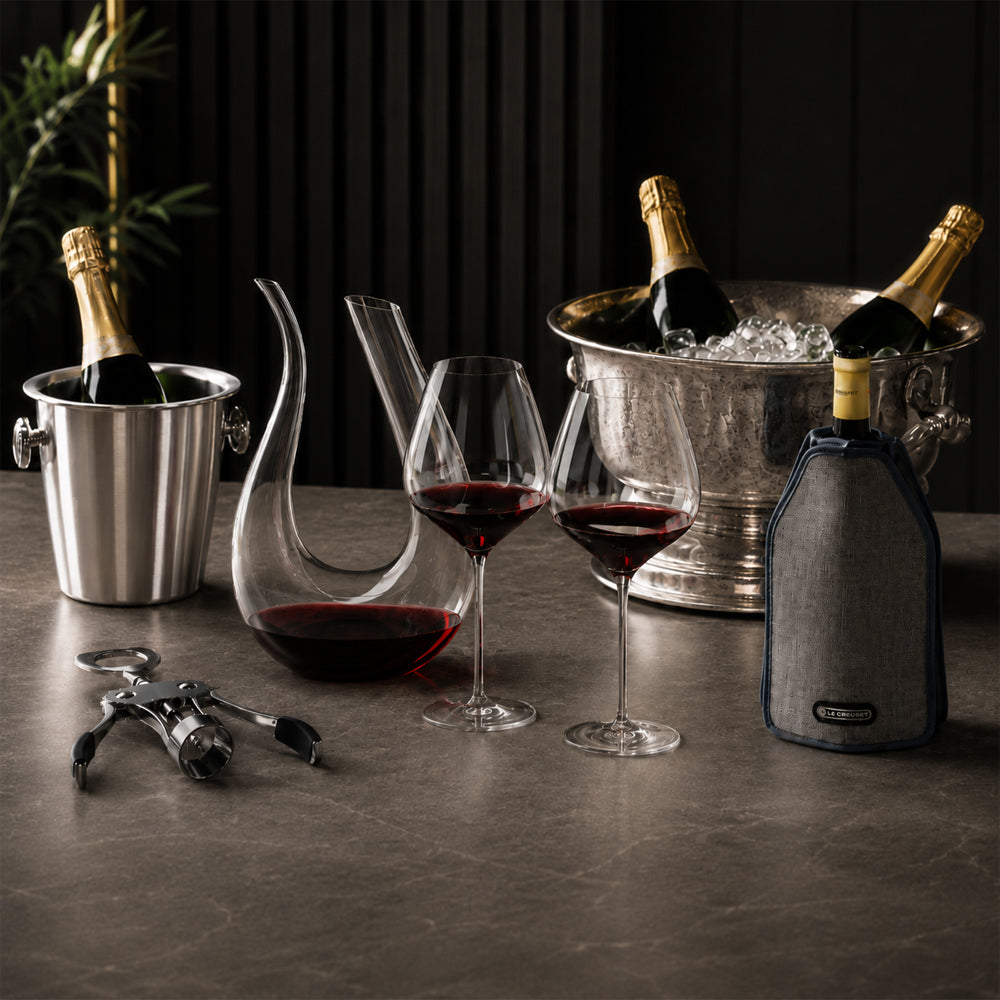
Buckets, glacettes, corkscrews and accessories to serve wine at the right temperature even on the hottest days.
The right temperature for serving wine in summer
Summer wine temperature is one of the most important aspects of service. In hot weather, wine tends to warm up quickly in both the glass and the bottle. That is why it is better to serve it slightly cooler than you would in a colder season, without overdoing it.
A wine served too warm loses balance and seems more alcoholic and less fresh. A wine served too cold, on the other hand, can feel closed, less expressive and less aromatic. The right temperature depends on the type of wine.
White wine temperature in summer
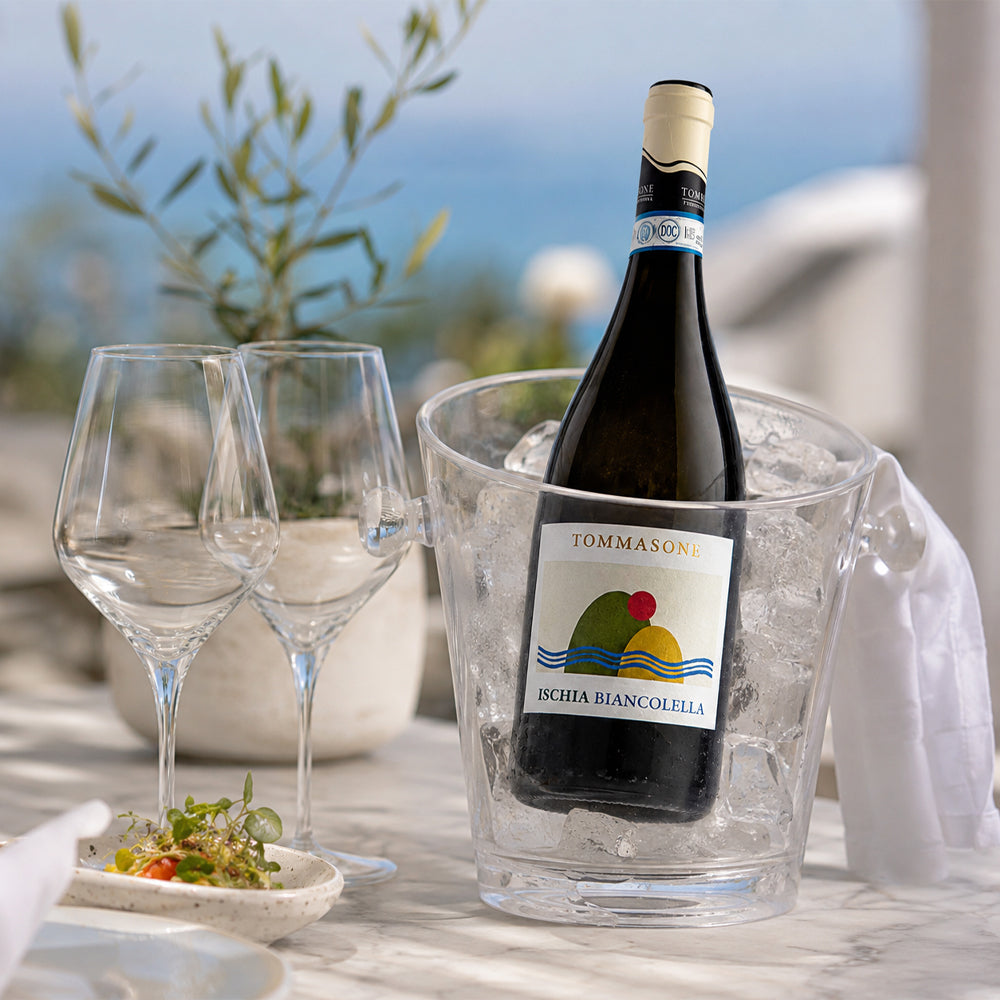
White wine temperature in summer should preserve freshness and aromas. Young, fresh and mineral whites can be served well chilled, while more structured whites need a few degrees more to better express aromas and body.
For practical service, bring white wine to the table chilled and keep it fresh with a wine cooler, a glacette or a bucket with water and ice.
In summer, white wine should be served chilled, but not icy: the cold should enhance acidity and aromas, not hide them.
Rosé wine temperature
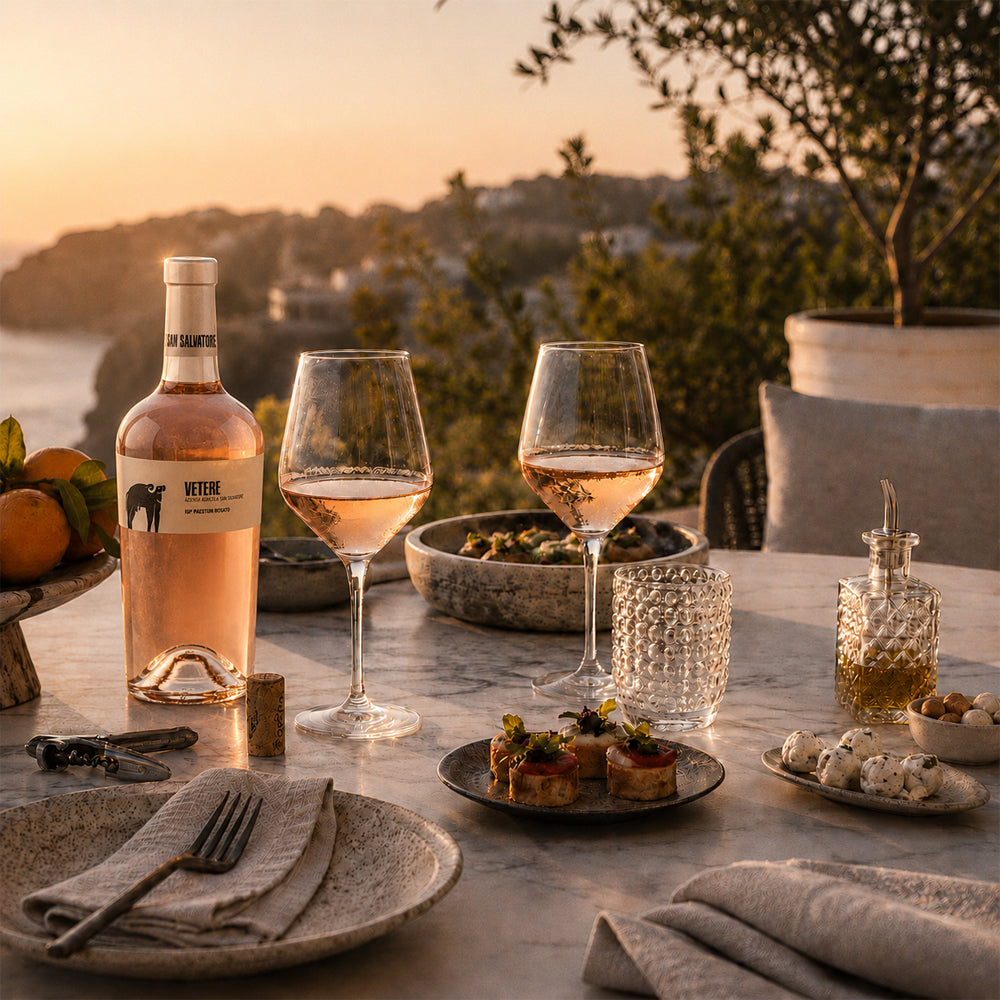
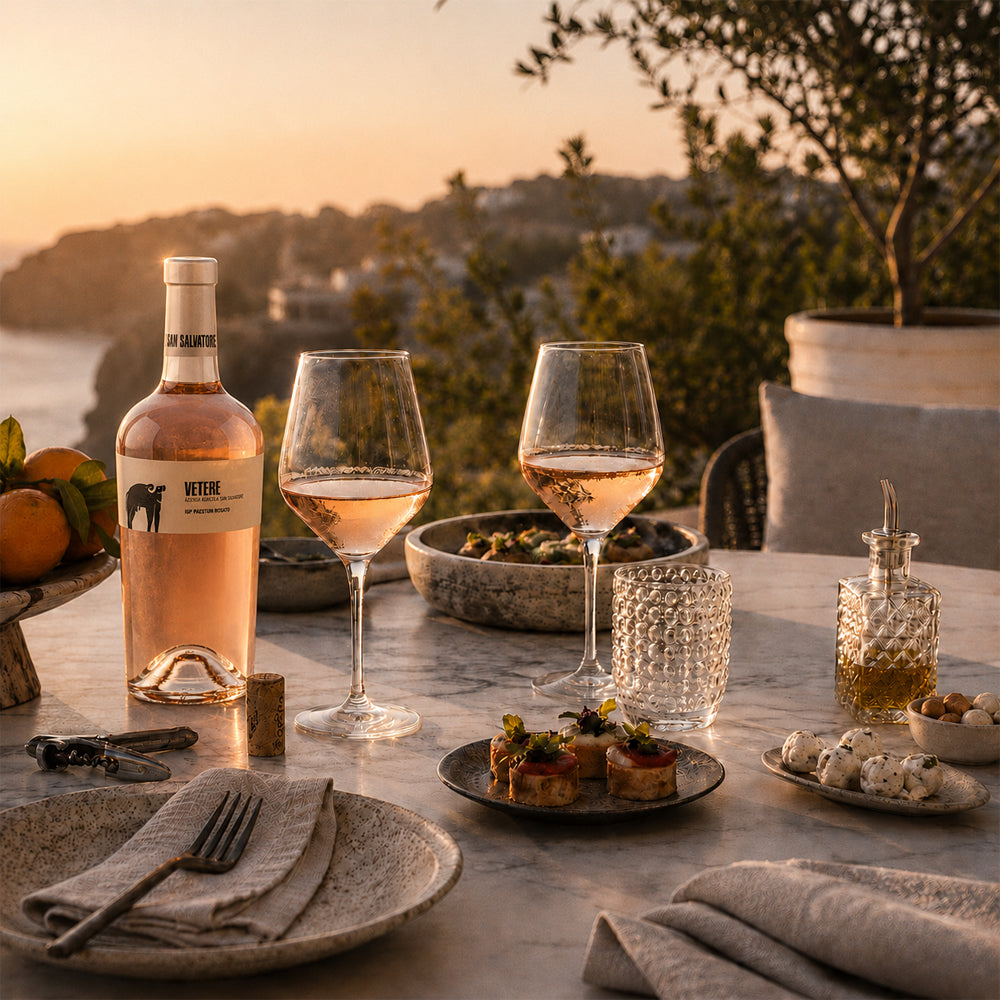
Rosé wine temperature should remain fresh, but not icy. Rosé gives its best when it preserves its fruity side, freshness and easy drinkability. It is perfect for summer aperitifs, light dinners, fish, vegetables, cold dishes and Mediterranean cuisine.
If you serve a rosé wine during an outdoor dinner, avoid leaving it on the table without protection: in just a few minutes it can lose its ideal temperature.
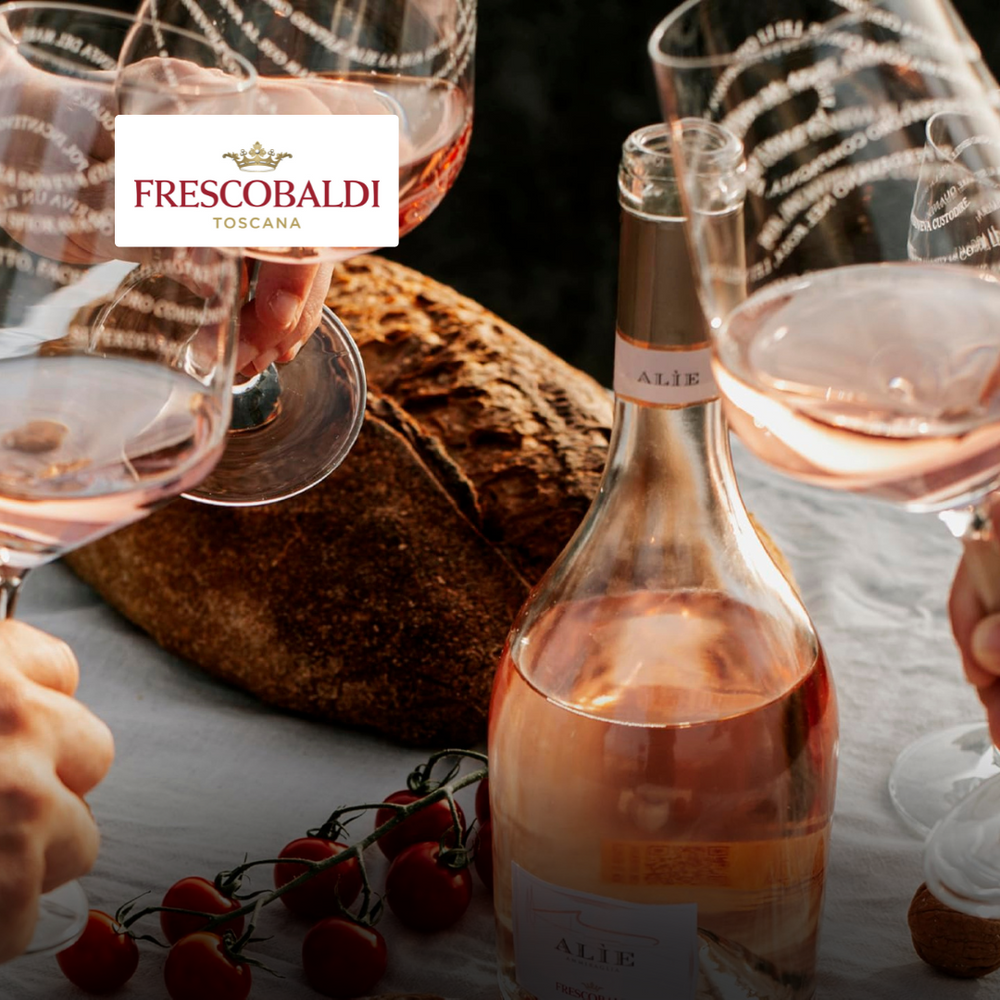
Rosé is one of the most summery wines: fresh, versatile and perfect for aperitifs, light dinners and outdoor tables.
Sparkling wines and spumante
To understand how to serve sparkling wine in summer, the rule is simple: controlled temperature and quick service. Sparkling wines, Franciacorta and Champagne should reach the glass chilled, because heat penalises the perlage and makes the wine less crisp.
For Franciacorta, Champagne and sparkling wines, a bucket with water and ice or a glacette is very useful. The choice of glass also matters: you can use a sparkling wine glass, a Champagne glass or a wider glass if the wine is complex.
Red wine temperature in summer
Red wine should not be served warm, especially in summer. The famous “room temperature” can become a problem when the room easily exceeds 25 degrees. In these cases, even a red wine can be slightly chilled.
Red wine temperature in summer depends on the type of wine. Light, young and fruity reds can be served slightly chilled. Structured reds should not be cold, but not warm either: it is better to bring them to a balanced temperature, avoiding direct sunlight and overly warm environments.
Light red wine
A light, young and low-tannin red can be placed in the fridge for a short time before serving. This helps make it more enjoyable during a summer dinner, especially with cold dishes, white meats, fresh cheeses or informal cuisine.
Structured red wine
An important red needs more attention. It should not be served icy, because it would lose complexity and structure. It is better to keep it away from heat, open it calmly and, if needed, use a decanter only when the wine really requires it.
How to keep wine fresh at the table
Cooling a bottle is one thing; keeping wine fresh during service is another. In summer, this difference is essential.
Cooling means bringing the bottle to the right temperature before serving. Keeping it fresh means preventing the wine from warming up too quickly once it is at the table. This is why accessories such as a wine bucket, wine glacette and wine cooler are useful.
Wine bucket
The wine bucket is ideal when you want to chill or keep a bottle fresh during the meal. It works well with water and ice, because contact distributes the cold more evenly than ice alone.
It is very useful for sparkling wines, white wines, rosés and summer aperitifs. If you serve several bottles during a dinner, it can become one of the most practical accessories to have at the table.
Wine glacette
The wine glacette is mainly used to maintain the temperature of an already chilled bottle. It is convenient because it takes up less space than a bucket, does not require water and can be easily brought to the table.
It is perfect for informal dinners, terraces, balconies, outdoor lunches and situations where you want practical but tidy service.
Wine cooler
The wine cooler is a practical solution for keeping the bottle fresh without repeated trips to the fridge. It can be rigid, thermal or designed to wrap around the bottle. The function is always the same: slowing down the warming of the wine during service.
You can find a selection of wine accessories and coolers designed for serving wine at home, from aperitifs to more curated dinners.
Ice and water: how to use them well
To chill a bottle quickly, water and ice together are more effective than ice alone. Water wraps around the bottle better and helps distribute the cold. You can add a little salt if you need to speed up cooling, but without overdoing it and while paying attention to the bottle.
Ice directly in the glass, however, is another matter: in most cases it dilutes the wine and alters its balance and aromas. It is better to chill the bottle, not correct the wine in the glass.
Which glasses to use for white, rosé, red and sparkling wines
The glass is not just about aesthetics. Its shape influences perceived temperature, aroma concentration and the way wine reaches the nose and palate. In summer, it is even more important to choose proportionate glasses: not too large for fresh wines and not too small for more expressive ones.
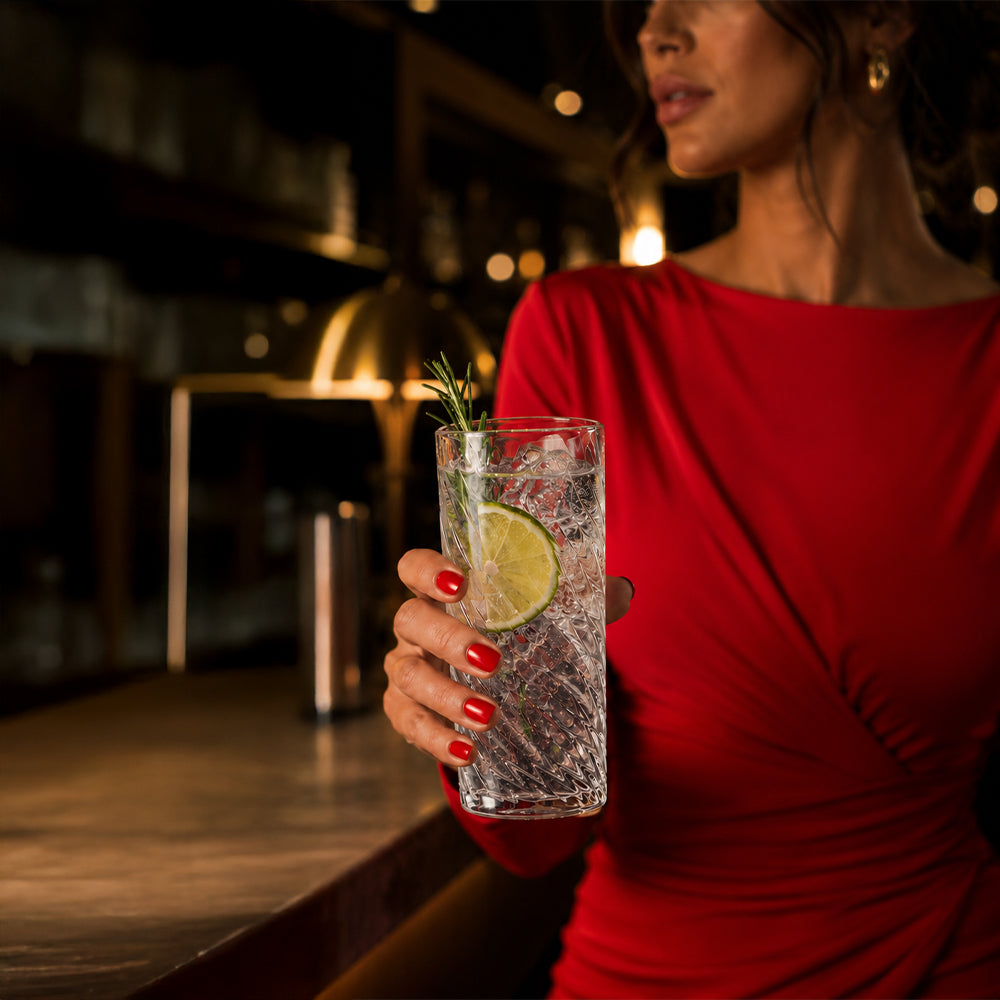
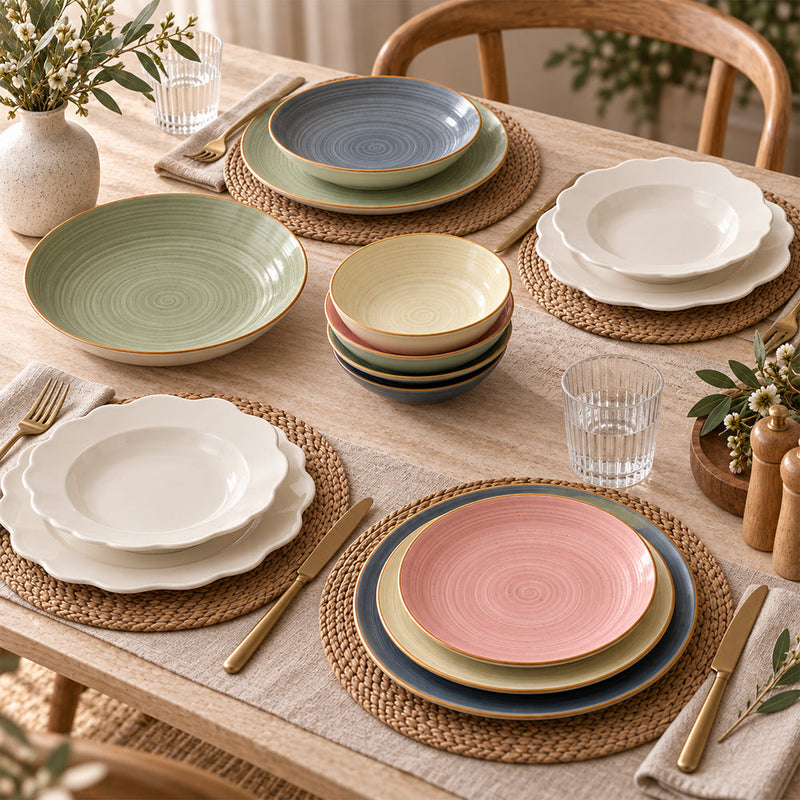
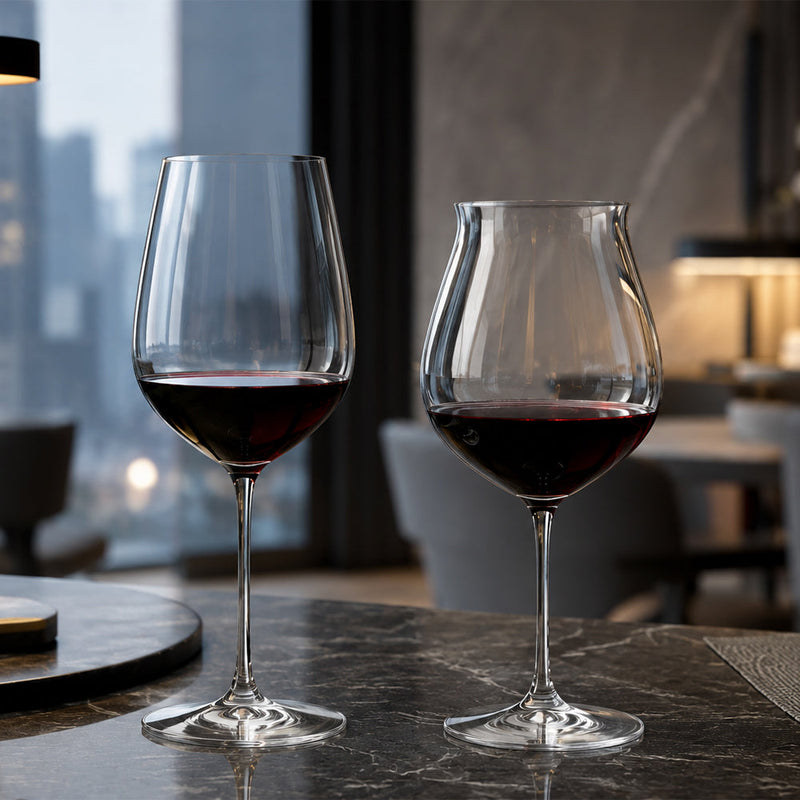
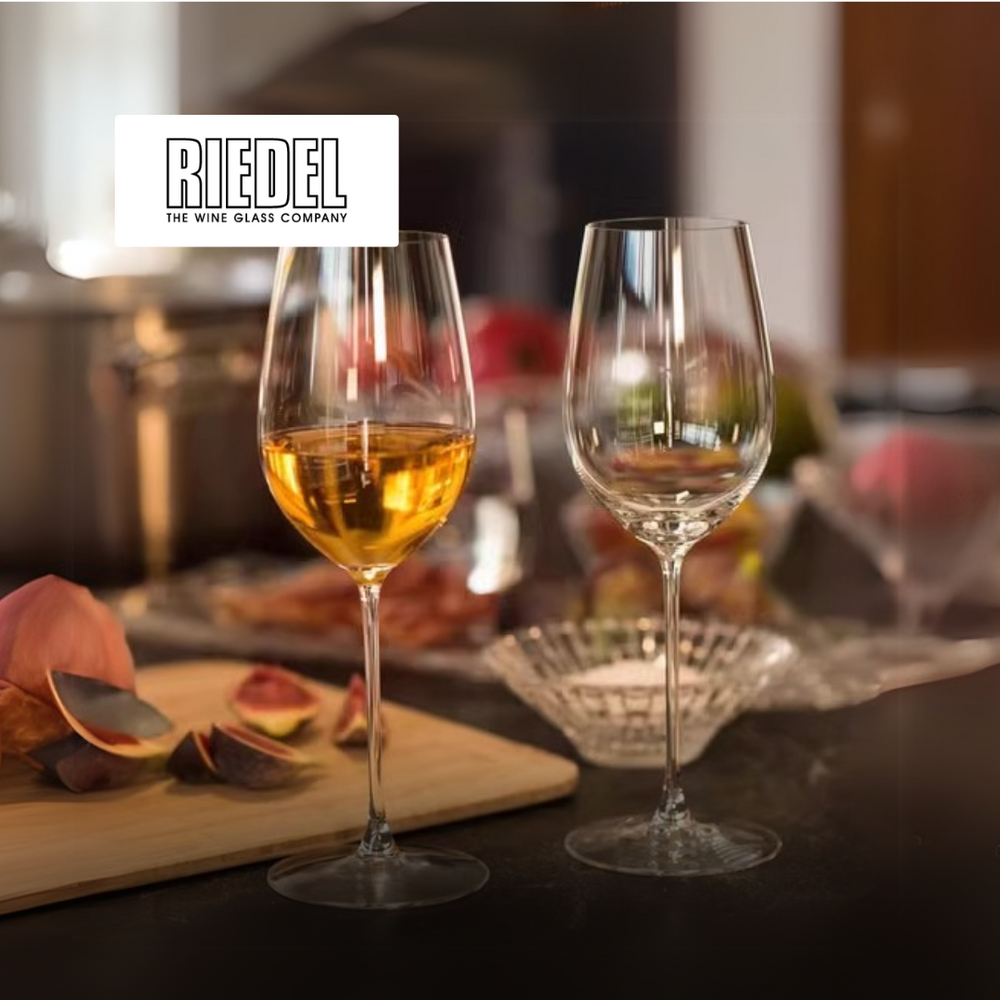
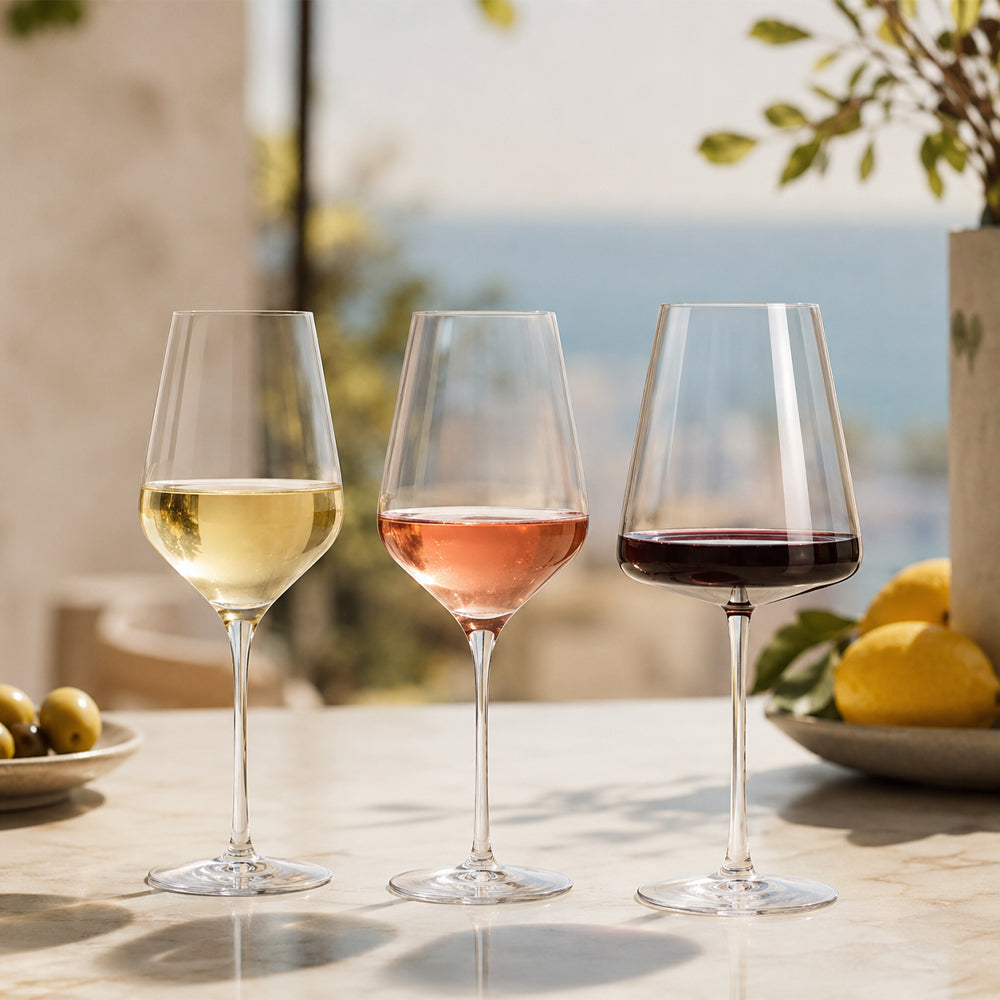
Glasses for white, red and rosé wine designed to enhance aromas, temperature and table service.
Glasses for white wine
White wine glasses are generally smaller and more closed than red wine glasses. They help maintain temperature better and concentrate more delicate aromas. They are ideal for fresh, mineral, aromatic or slightly structured whites.
If you often serve white wines, you can browse the selection of white wine glasses, designed to enhance service, aromas and freshness.
Glasses for rosé
Rosé glasses should enhance freshness and fruity aromas without dispersing them too much. In many cases, a good white wine glass also works well with rosé, especially if the wine is fresh, young and intended for aperitifs or summer dishes.
For more structured rosés, you can choose a slightly wider glass, but still balanced: the wine should remain fresh and easy to read.
Glasses for red wine
Red wine glasses have wider bowls, designed to give space to the aromas and structure of the wine. In summer, however, be careful not to use glasses that are too large with light reds: the wine warms up faster and can lose freshness.
For important reds, on the other hand, a wider glass remains useful. You can choose among red wine glasses based on the type of wine you serve most often.
Flute, coupe or sparkling wine glass?
For sparkling wines and bubbles, you can choose between a flute, a coupe or a wider glass. The flute enhances the perlage and maintains a more vertical sensation. The coupe is scenic, but disperses bubbles sooner. A wider sparkling wine glass is often ideal for Metodo Classico, Franciacorta and more complex Champagne.
For sparkling wine service, you can explore sparkling wine glasses, Champagne glasses and Franciacorta glasses.
Useful accessories for serving wine in summer
The wine accessories that are useful in summer do not need to be many, but they should solve real problems: opening, temperature, service and storage.
Wine bucket
The bucket is useful when you need to chill or keep a bottle fresh during the meal. It is perfect for whites, rosés, sparkling wines and dinners with several guests.
Glacette
The glacette keeps the bottle fresh after it has been in the fridge. It is practical, compact and suitable for summer tables where you do not want to use water and ice.
Cooler
The wine cooler is useful for slowing down the warming of the bottle. It works well for outdoor lunches, terrace aperitifs and long dinners.
Corkscrew
A good corkscrew remains essential. If you open wine often, choose a stable, comfortable model suited to your way of serving. For your kit, you can explore the corkscrews and bottle openers section.
Aroma-saving stoppers
Stoppers are useful when you do not finish the bottle. They help close it better and protect it from excessive contact with oxygen. In summer they are even more important, because heat and oxygen accelerate the evolution of the wine.
Decanter
The decanter is useful only when it makes sense: structured red wines, important bottles or wines that need to open up. In summer it should be used carefully, avoiding leaving the wine exposed to heat for too long.
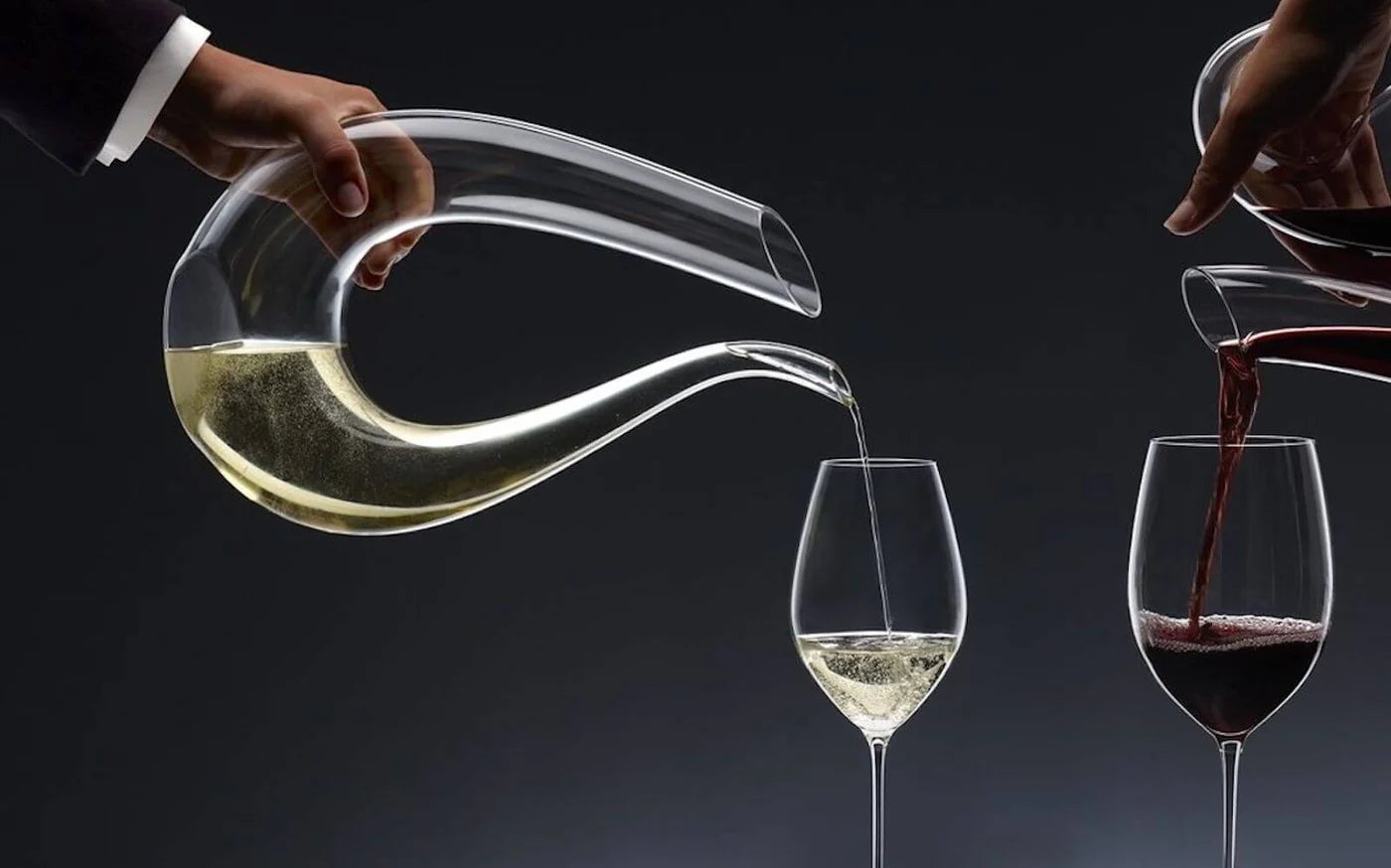
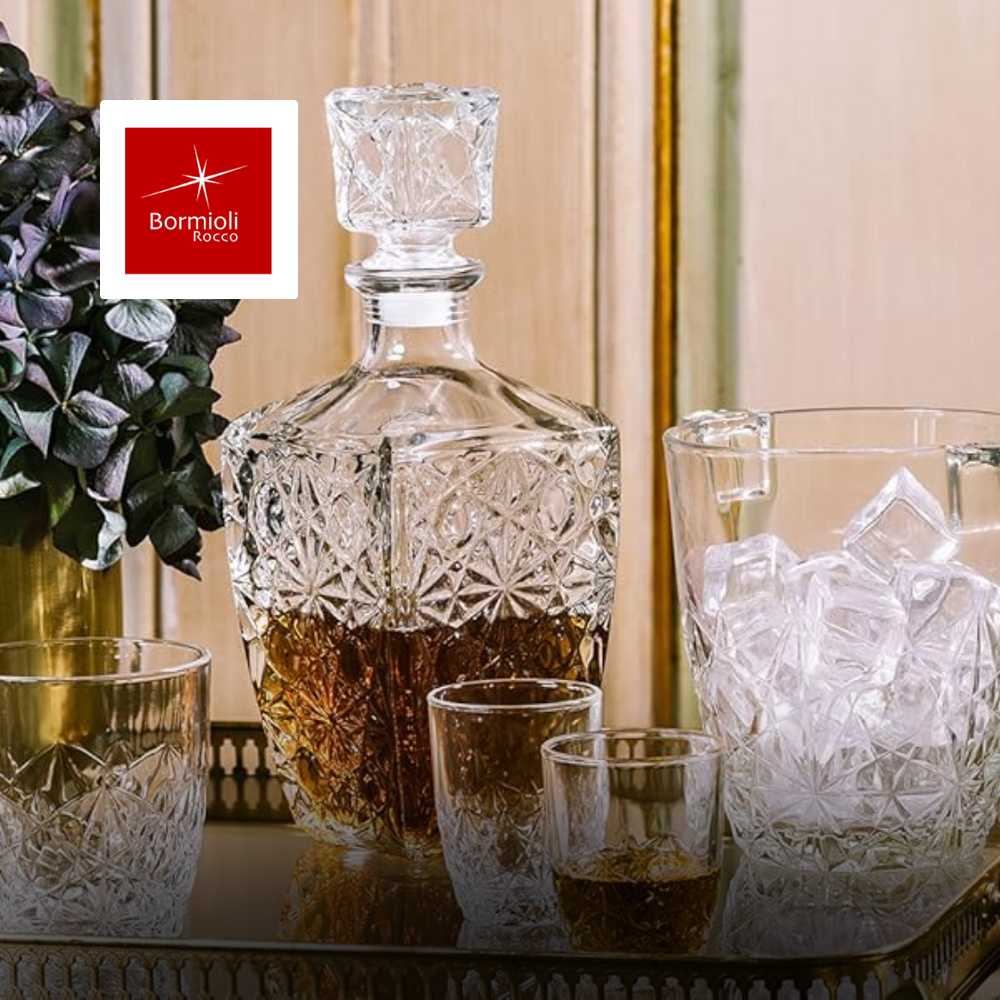
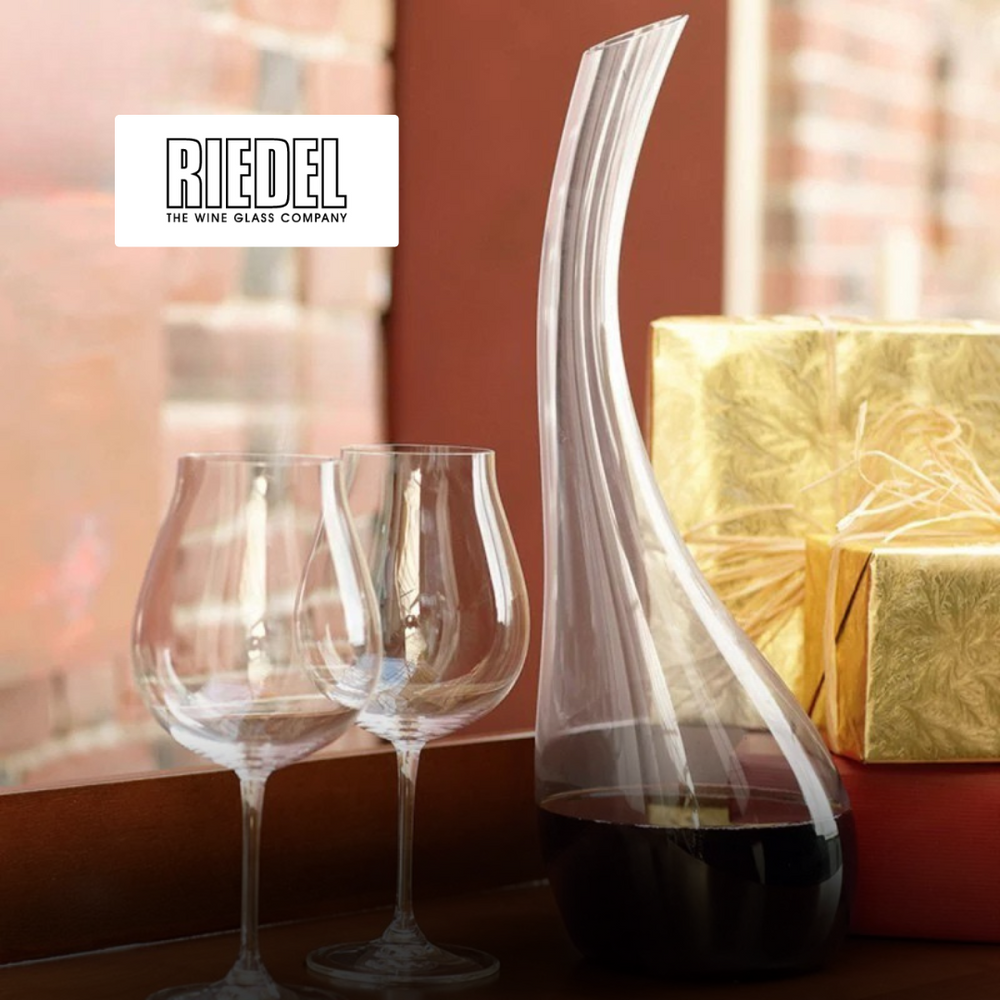
Decanters, pourers and useful tools to complete wine service with attention and practicality.
Correct glasses
The right glasses complete the service. For whites and rosés, you need shapes that preserve freshness and aromas. For reds, wider but proportionate glasses. For sparkling wines, flutes or sparkling wine glasses depending on the type of wine.
Mistakes to avoid when serving wine in summer
Serving wine well in summer mainly means avoiding a few very common mistakes. They are small details, but they can completely change how the wine is perceived.
Serving white wine too cold
An icy white may seem more refreshing, but it often loses aromas and character. It is better to serve it chilled, not numbed by the cold.
Serving red wine too warm
In summer, a red left at room temperature can become heavy, alcoholic and less pleasant. Reds also need control, especially if dinner is outdoors.
Leaving the bottle in the sun
Direct sunlight is one of wine’s worst enemies. It quickly warms the bottle and spoils the balance of service. It is better to keep wine in the shade, in the fridge, in a glacette or in a bucket.
Putting ice directly in the glass
Ice in wine dilutes it and changes its taste. It is better to chill the bottle or use suitable accessories instead of correcting the temperature in the glass.
Using the freezer incorrectly
The freezer can help only for short and controlled cooling. Forgetting a bottle in the freezer can be risky and compromise the wine.
Choosing the wrong glass
A glass that is too large can make a white or rosé warm up quickly. A glass that is too small can compress an important red wine. The shape should follow the wine, not just the aesthetics.
How to serve wine during a summer dinner
During a summer dinner, wine service should be simple, fresh and smooth. There is no need to build a complicated ritual: you just need to organise yourself beforehand.
For an aperitif, keep rosés, whites and sparkling wines already chilled. Bring a bucket or glacette to the table if dinner takes place on a terrace, in a garden or on a balcony exposed to heat.
For dinner, choose glasses consistent with the wine and do not overfill them. It is better to pour a little at a time, so the wine stays fresher in the glass and the experience is more pleasant.
For an outdoor lunch, focus on fresh wines, light service and practical accessories. Wines to discover can be a good starting point for creating less obvious pairings, while whites, rosés and sparkling wines remain the most immediate choices for the season.
A curated summer table does not need to be formal: clean glasses, a bottle at the right temperature, accessories within reach and relaxed service are enough to make wine the protagonist without weighing down the moment.
FAQ: how to serve wine in summer
At what temperature should white wine be served in summer?
White wine should be served chilled, but not icy. Young and light whites can be served cooler; more structured ones need a few degrees more to better express aromas and body.
At what temperature should rosé wine be served?
Rosé wine should be served fresh, similarly to many white wines. It should maintain vibrancy and fruity aromas, without being too cold.
Should red wine be served cold in summer?
Not all red wines should be served cold. Light reds can be slightly chilled; structured reds should be served at a controlled temperature, but not icy.
How do you chill a bottle of wine quickly?
The most practical method is to use a bucket with water and ice. Water helps distribute the cold around the bottle more effectively than ice alone.
How long before serving should wine be put in the fridge?
It depends on the type of wine and the starting temperature. In general, whites, rosés and sparkling wines should be put in the fridge in advance. For light reds, a short passage before service may be enough.
Can you put ice in wine?
It is better to avoid it, because it dilutes the wine and changes its taste, aromas and structure. It is preferable to chill the bottle or use glacettes, buckets and coolers.
What is a wine glacette for?
A glacette keeps an already chilled bottle fresh. It is useful at the table because it slows down the warming of the wine without using water and ice.
What is a wine bucket for?
A wine bucket is used to chill or keep a bottle fresh during service. It is particularly useful with white wines, rosés, sparkling wines and Champagne.
Which glasses should be used for white wine?
For white wine, it is better to use glasses that are not too wide, able to maintain freshness and concentrate aromas. You can choose among white wine glasses.
Which glasses should be used for rosé?
For rosé, you can use white wine glasses or slightly wider glasses, depending on the structure of the wine. The goal is to preserve freshness, fruity aromas and drinkability.
Conclusion: serving wine well in summer is a matter of balance
Serving wine well in summer does not mean complicating the ritual. It means controlling temperature, glass and the right accessories. A fresh bottle, a suitable glass and a cooler within reach can make more difference than many technical gestures.
Whether you are organising an aperitif, a terrace dinner or an outdoor lunch, wine should be protected from heat and served with attention. This way it remains pleasant, balanced and consistent with the moment.
To complete the service, you can explore the selection of wine accessories and coolers, wine glasses, sparkling wine glasses and decanters for bottles that deserve a more curated service.